Trading the neon-lit sensory overload of Tokyo for the serene, cedar-scented air of the mountains is one of the best decisions you can make when traveling through Japan with your family. A weekend in Takayama & Japanese Alps with kids offers a brilliant mix of outdoor adventure, rich cultural heritage, and culinary treats that appeal to both refined adult palates and picky toddlers. From the sizzle of Hida beef skewers in ancient merchant streets to the thrill of soaring Alps gondolas, this region provides a deeply authentic look at traditional Japan without sacrificing the engaging activities that keep young travelers happy.
Planning a trip to a mountainous region with children requires a bit more logistical foresight than navigating the major cities. The weather shifts quickly, the transportation heavily relies on scheduled buses rather than subways that arrive every three minutes, and traditional accommodations often have specific rules. However, the payoff is immense. You will find sprawling nature parks, therapeutic hot springs, and centuries-old thatched-roof villages that look like they were pulled directly from a storybook. For a comprehensive overview of the area, you can always reference our full Takayama & Japanese Alps city guide.
Here is a meticulously planned three-day family itinerary designed to balance awe-inspiring sights with the realistic pace of traveling with kids.
Day 1: Exploring Historic Takayama & Local Flavors
Your first day should be dedicated to acclimating to the mountain air and exploring the incredibly preserved Edo-period streets of Takayama. Unlike massive metropolitan areas, Takayama is compact and highly walkable, making it a gentle introduction to the region for families.
Start your morning at the Miyagawa Morning Market, which runs daily along the riverbank from about 7:00 AM to noon. This is a fantastic place to let kids browse stalls selling local crafts, fresh fruits, and small baked goods. It is incredibly stroller-friendly along the paved path next to the water, though the actual historic Sanmachi Suji district nearby features narrow streets and some uneven surfaces where a baby carrier might be more practical for infants and young toddlers.
For lunch, the area is famous for its street food. Grabbing Hida beef skewers is a must, but stick to the small, humble stalls in the old town rather than the flashy sit-down places near the main roads. If your kids aren't adventurous eaters, you will easily find steamed buns (nikuman) and sweet mitarashi dango (rice dumplings in a soy glaze) that are universally loved by young palates.
In the afternoon, if your family needs a break from walking, consider utilizing the Takayama Onsen (Yu Meguri Tegata / Hot Spring Passport). This budget-friendly wooden plaque grants your family access to multiple hotel baths around the city. It is a brilliant, low-commitment way to introduce children to Japanese bathing culture before committing to a full ryokan stay. Alternatively, if you want an easier, highly accessible cultural outing, the Gero Onsen Gassho Village is a fantastic open-air museum that offers a kid-friendly alternative to the larger heritage sites, complete with authentic relocated houses and craft workshops.
For dinner, securing a reservation at Heianraku is essential. This legendary, tiny family-run restaurant is famous for how the husband-and-wife owners treat every guest like family. They are incredibly accommodating to children and offer fantastic vegetarian options alongside traditional dishes, which is a rarity in the beef-heavy alpine region. Expect to spend around ¥2,000 to ¥3,000 ($13 to $20 USD) per adult for a hearty, comforting meal.
Day 2: Alpine Adventures for a Weekend in Takayama & Japanese Alps with Kids
Your second day is all about gaining elevation and letting the kids experience the sheer scale of the Japanese Alps. Renting a car for this day gives you the ultimate flexibility, but the Nohi Bus network is incredibly reliable if you prefer public transit.
Get an early start and head straight to the Shin-Hotaka Ropeway. This is an absolute highlight for families. It features Japan’s only double-decker gondola, whisking your family 2,156 meters up into the clouds. The novelty of riding on the "top floor" of a cable car is a massive hit with children. At the upper station, there is a sprawling observation deck offering staggering views. Keep in mind that temperatures at the top are significantly colder than in Takayama—often a 10 to 15-degree Celsius drop—so pack warm layers even in summer. The ropeway costs around ¥3,300 ($22 USD) for adults and ¥1,650 ($11 USD) for children for a round trip. Budget about 2 to 3 hours here. Strollers can be taken on the ropeway, but you will need to fold them, and a carrier is much better for navigating the viewing platforms.
🎟️ Find family-friendly tours & activities →
In the afternoon, you have two distinct options depending on your family's energy levels. If you have older, active kids, book the Rail Mountain Bike Gattan Go!!. This is a high-thrill, low-effort adventure where you pedal electric-assisted mountain bikes securely fastened to an abandoned railway track. You cycle over bridges and through dark, echoey tunnels. They offer family carts with bench seats for younger kids who can't pedal. It costs roughly ¥3,200 ($21 USD) per bike.
If you prefer a nature walk, head to Kamikochi (Kamikochi National Park). This stunning alpine valley offers high-impact mountain scenery with surprisingly flat, well-maintained walking trails that are perfect for younger children. The walk from Taisho Pond to the Kappa Bridge takes about an hour at a toddler's pace, and you have a high chance of spotting wild macaques.
End your active day at Hirayu no Mori, a sprawling, rustic hot spring resort featuring over a dozen indoor and outdoor mineral baths set against the forest. It is incredibly welcoming to families and much less intimidating than formal, silent ryokan baths. If you want a more private luxury experience, Shinhotaka Onsen Yarimikan (Ryokan with Family Bath) allows families to rent gorgeous riverside outdoor baths together.
Day 3: Stepping Back in Time at Shirakawa-go
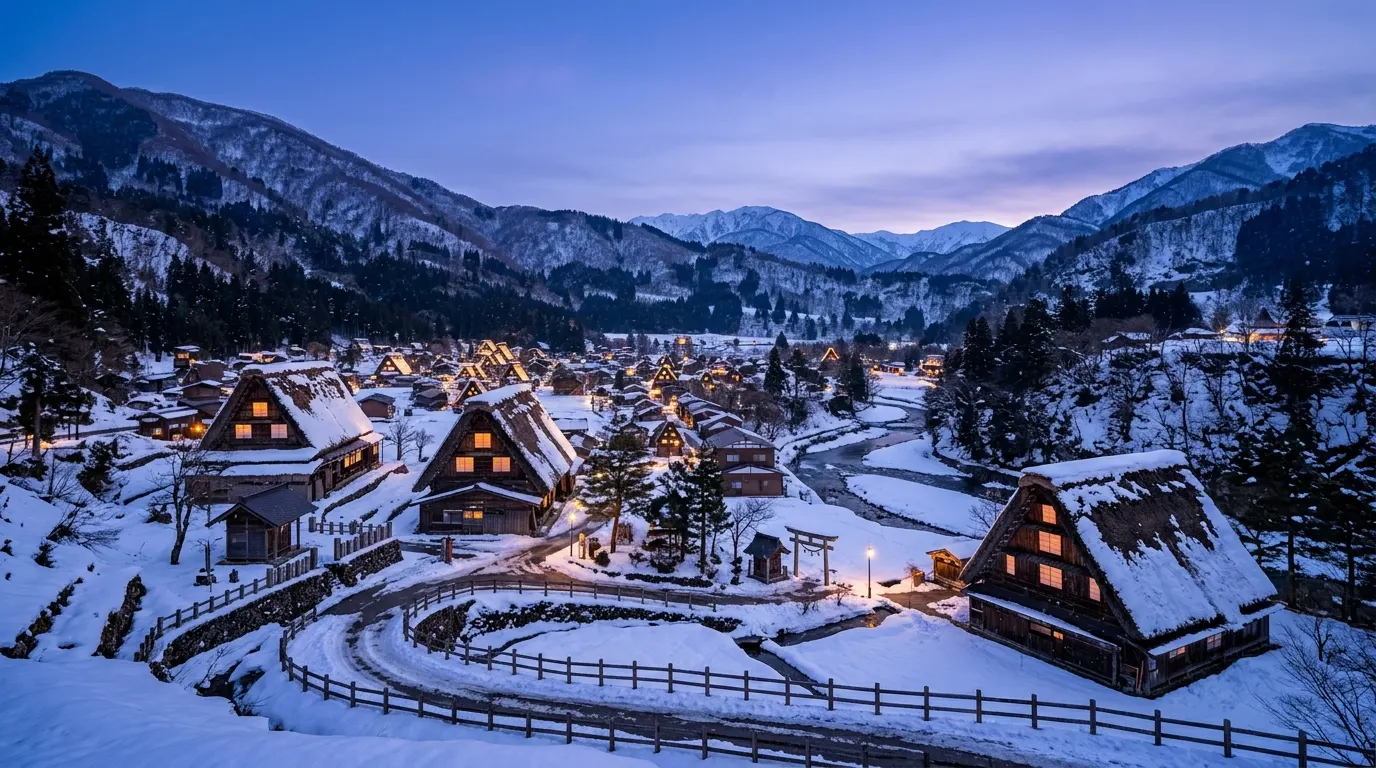
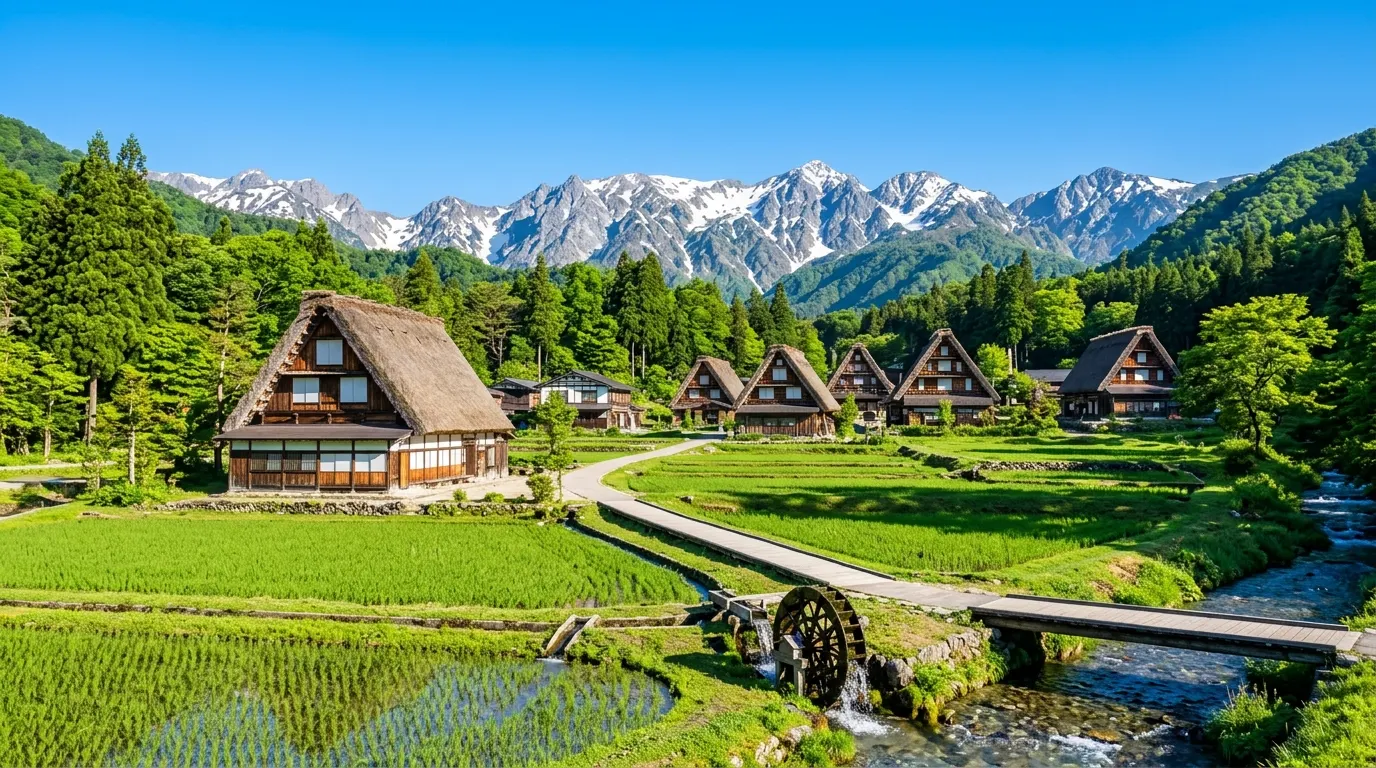
No trip to the region is complete without visiting the iconic Shirakawa-go Gassho-zukuri Village. This UNESCO World Heritage site is famous for its massive thatched-roof farmhouses designed to withstand heavy winter snowfall. It is about a 50-minute bus ride from Takayama.
The village itself is flat and highly walkable. While the main streets can get crowded with day-trippers by 11:00 AM, the atmosphere remains magical. Make sure to step inside Wada House (Wada-ke). This massive, 300-year-old farmhouse offers a rare 'behind the scenes' look at how families lived and raised silkworms in the upper attics. The steep, ladder-like stairs to the top floor are an adventure for kids, though toddlers will need to be carried carefully. Entry is about ¥400 ($2.50 USD) for adults.
To truly elevate your experience and escape the midday crowds, the ultimate family hack is to book a Shirakawa-go Overnight Stay (Gassho-zukuri Minshuku) or a specific Shirakawa-go Gassho-zukuri Experience (overnight stay in a gassho house minshuku). Sleeping inside a UNESCO site on traditional futons, eating local mountain vegetables around an irori (sunken hearth), and having the village entirely to yourselves at dusk is a core memory in the making.
🎟️ Book family tickets & skip-the-line tours →
Age-By-Age Guide: Planning Your Weekend in Takayama & Japanese Alps with Kids
Different stages of childhood require different pacing when tackling the mountains. Here is how to tailor the region to your family's specific needs.
Toddlers (Ages 2-3)
Toddlers thrive on open spaces where they can safely roam. The Miyagawa Morning Market and the flat pathways of Kamikochi are excellent for this age. Skip the steep mountain trails and focus on sensory experiences. A baby carrier is an absolute necessity here; while strollers work on main roads, traditional houses, ropeway decks, and narrow bridges are entirely unsuited for wheels.
Preschoolers (Ages 3-5)
This age group loves novelty. The double-decker gondola of the Shin-Hotaka Ropeway will blow their minds. If you encounter a rainy day, the Hida Great Limestone Cave (Hida Dai-shonyudo) is a fantastic underground adventure featuring illuminated stalactites that feel like a scene from an adventure movie, keeping little legs moving without getting wet.
School-Age (Ages 6-10)
School-age kids are perfectly suited for the full alpine experience. They have the stamina for the hour-long walks in Kamikochi and the curiosity to appreciate the silkworm history in Wada House. This is also the perfect age to introduce them to the communal bathing etiquette at Hirayu no Mori, as they are old enough to understand the rules of washing before entering the tub.
Tweens and Teens (Ages 11-14)
Teenagers will appreciate a bit of independence and thrill. The Rail Mountain Bike Gattan Go!! is an absolute must-do for this age bracket. For older kids craving extreme scenery without a grueling hike, the Norikura Skyline (Route to Mt. Norikura) whisking families up to 2,700 meters on Japan’s highest road provides instant, dramatic alpine views and highly Instagrammable moments.
What to Skip: Overhyped Traps to Avoid
Not everything in the guidebooks is worth your family's precious vacation time. Here are a few things you can confidently cross off your list.
- Takayama Hida Beef Restaurants on Kokubunji-dori (Generic Tourist Trap Restaurants): These large, flashy restaurants capitalize on the 'Hida Beef' brand to charge premium prices—often ¥3,000 or more just for a meager lunch set. The quality rarely matches the price tag, and the atmosphere is chaotic. You are much better off grabbing high-quality skewers from street vendors or booking a table at a dedicated, highly-rated local spot. Similarly, avoid Toyama Suisan (Hida Beef Restaurant near Station), where you pay a premium for mediocre, mass-produced food just for the convenience of the location.
- Takayama Festival (During Actual Festival Days - Accommodation Warning): While the Takayama Spring Festival (Takayama Matsuri - Sanno Matsuri) is a stunning centuries-old spectacle, trying to bring kids during the peak dates (April 14-15 and October 9-10) is a logistical nightmare. Accommodations book out a year in advance, prices triple, and the crowds make navigating with children incredibly stressful. If you want to see the floats, visit the Takayama Festival Floats Exhibition Hall on a quiet weekday instead.
- Hida Takayama Sake Ice Cream (vendor-specific in old town): While it sounds like a fun local novelty, this is an alcohol-infused treat. It creates an awkward scenario where kids see ice cream but are told they can't have it, or worse, accidentally consume it. Stick to standard matcha or vanilla soft serve found everywhere else.
- Shirakawa-go Doburoku Matsuri no Yakata (Doburoku Festival Museum): This is a tiny, one-room museum dedicated to local unfiltered sake. It takes less than five minutes to walk through and offers absolutely nothing to engage children. Spend that time walking along the river instead.
- Takayama City Archives Museum & Kyu-Shidokan: Both of these are incredibly dry, academic buildings focusing on administrative documents and community meetings. They lack interactive exhibits and will result in immediate boredom for younger travelers.
- Suimeikan Ryokan (Gero Onsen): If you venture to Gero Onsen, skip this massive resort ryokan. It feels more like an impersonal convention hotel than a traditional Japanese inn, lacking the intimate, warm hospitality families usually seek when booking a ryokan.
Practical Details: Getting Around and Managing Costs
Navigating the Japanese Alps requires a shift in mindset from the bullet trains of Tokyo. The Nohi Bus network is the lifeline of this region. It connects Takayama to Shirakawa-go, Kamikochi, and the Shin-Hotaka Ropeway. Buses are punctual and clean, but they do not have bathrooms on board, so enforce a strict "try before we board" rule for the kids. A bus ride from Takayama to Shirakawa-go costs about ¥2,600 ($17 USD) per adult each way.
If your budget allows, renting a car in Takayama is highly recommended for families. It removes the stress of bus schedules and allows you to store heavy winter gear or a stroller in the trunk. Driving in the Alps is generally safe and well-signed, though winter months (December to March) require snow tires and experience with icy mountain roads.
Food costs in the region are generally reasonable, aside from premium sit-down Hida beef meals. You can easily feed a family of four a hearty lunch of local Takayama ramen (a soy-sauce based broth with thin noodles that kids universally devour) for under ¥4,000 ($26 USD) total. Convenience stores (Lawson, 7-Eleven) are prevalent in Takayama city but scarce in the deep mountains like Kamikochi or Shirakawa-go, so stock up on snacks and drinks before leaving the city limits.
Pro Tips from Parents for the Japanese Alps
- Utilize Luggage Forwarding (Takuhaibin): Do not attempt to drag massive suitcases onto the Nohi buses or over the cobblestones of Takayama. Use the Yamato Transport service at your Tokyo or Kyoto hotel to forward your large bags directly to your next major city, and just bring a small weekend backpack to the Alps.
- Layering is Non-Negotiable: The temperature difference between the valley floor in Takayama and the observation deck at the Shin-Hotaka Ropeway can be drastic. Dress kids in easily removable layers, and always have a lightweight windbreaker in your daypack, even in July.
- Book Dinners Early: Unlike Tokyo, where you can walk into a restaurant at 8:00 PM, Takayama shuts down early. Many local restaurants close by 7:00 PM or require reservations. Plan your evening meals in advance to avoid wandering the streets with hungry, tired children.
- Prep for the Onsen: If you plan to visit public baths, watch a quick YouTube video with your kids beforehand about Japanese bathing etiquette. Knowing that they need to sit on the small stools, wash thoroughly with soap, and rinse off completely before stepping into the hot water prevents any stressful corrections from locals.
Wrapping Up Your Alpine Journey
Stepping away from the hyper-modernity of Japan's megacities to explore the rustic charm of the Hida region provides a necessary, grounding contrast to your family vacation. The fresh mountain air, the warmth of the local hospitality, and the sheer scale of the nature here create an environment where families can truly disconnect and focus on shared experiences. Whether your kids are marveling at the steep thatched roofs of Shirakawa-go, bravely tasting a new street food, or watching the clouds roll by from a mountaintop gondola, a weekend in Takayama & Japanese Alps with kids will undoubtedly become one of the most cherished chapters of your travels. Take it slow, embrace the mountain pace, and enjoy the incredible beauty this region has to offer.