Planning a family safari feels like unlocking a childhood dream, where storybook animals suddenly appear right outside your vehicle window. Exploring the African bush offers an unparalleled opportunity to disconnect from screens and reconnect with nature on a profound level. If you are researching the best things to do in Kruger National Park with kids, you might be wondering how to balance thrilling wildlife encounters with the practical realities of traveling with little ones. A safari requires early mornings, long stretches of quiet observation, and careful attention to safety, but the reward of seeing your child's eyes light up at their first wild elephant is worth every ounce of effort. This 3-day itinerary is designed specifically for families, prioritizing safety, engagement, and unforgettable memories without exhausting your crew.
Essential Planning for Your Family Safari
Before diving into the daily schedule, understanding the logistics of a Kruger trip is crucial for a smooth family experience. First and foremost, you need to navigate the Kruger Park Malaria Risk Area (Kruger National Park Region). While Kruger is the ultimate family safari destination, it is a malaria-endemic zone. You will need to consult your family pediatrician well in advance regarding prophylactic medication. Preventative measures like long-sleeved clothing in the evenings, air-conditioned rooms, and pediatric-safe mosquito repellent are standard daily practices here.
When choosing your base camp, you have two main options: self-driving and staying in government-run SANParks rest camps, or booking an all-inclusive private luxury lodge. For a shorter 3-day weekend, a private lodge takes the mental load entirely off your shoulders. Properties like Thornybush Game Lodge and Motswari Private Game Reserve are fantastic examples of reserves that balance high-end wilderness experiences with genuine family hospitality, offering specialized kids' programs and flexible dining times.
If you want more context on the different regions of the park, be sure to read our comprehensive Kruger National Park city guide. The southern section of the park generally offers the highest density of wildlife, making it the most rewarding area for impatient younger travelers.
Day 1: Welcome to the Wild and The Legendary River Route
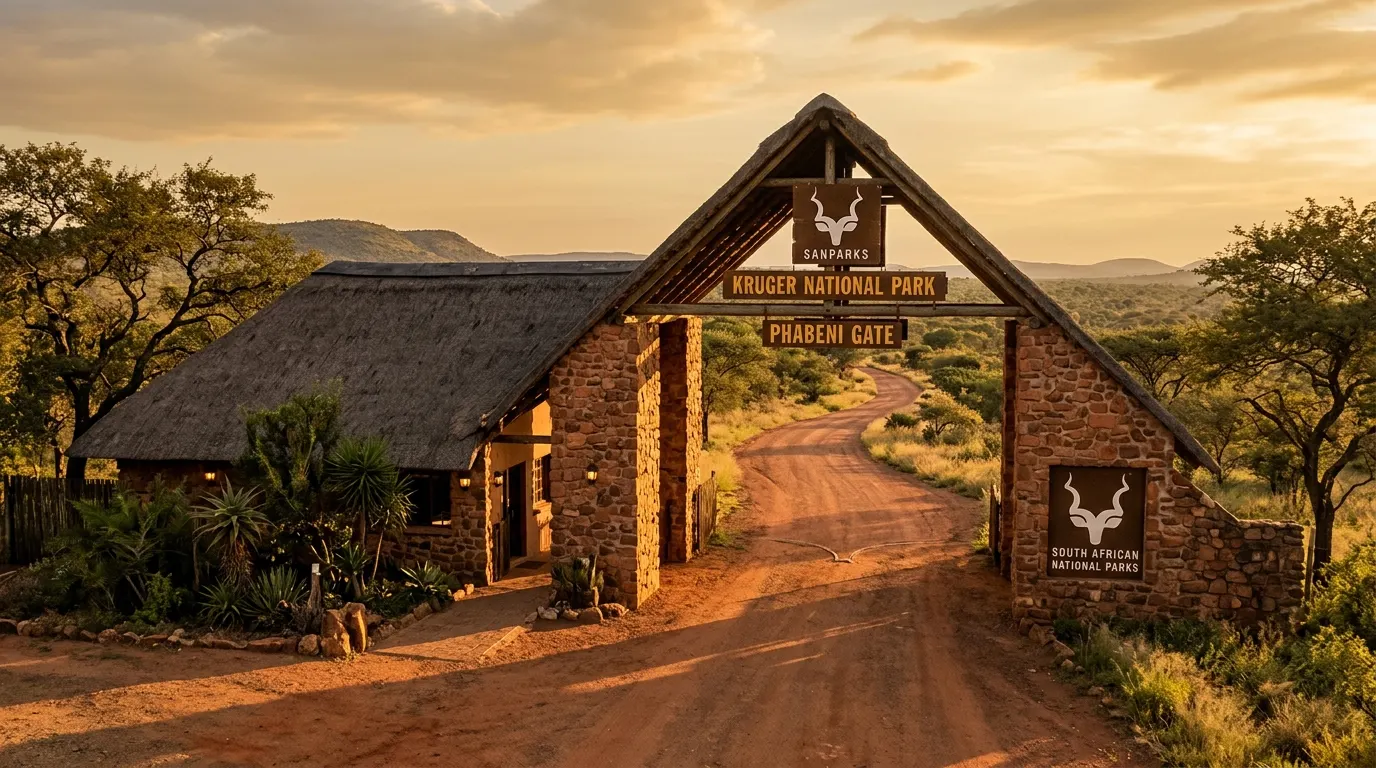
Morning: Arrival and the Sabie River Self-Drive
Whether you fly into Skukuza Airport directly or drive the scenic route from Johannesburg (a solid 5 to 6-hour journey), your first day should be about easing into the rhythm of the bush. Once you pass through the park gates, the safari begins immediately.
For your first afternoon, focus your energy on the H4-1 Road (Skukuza to Lower Sabie). This is widely considered the most legendary self-drive route in Kruger, hugging the Sabie River where wildlife density is incredibly high. Because the road follows the water, you have an excellent chance of spotting bathing elephants, pods of hippos, and even leopards resting in the massive sycamore fig trees.
Practical Details:
- Cost: If you are self-driving as a day visitor, you will pay a daily conservation fee of around 488 ZAR ($26 USD) per adult and 244 ZAR ($13 USD) per child.
- Timing: Mid-to-late afternoon is ideal as animals wake up from their midday naps and head to the river to drink. Allow 2-3 hours to drive this 43km stretch, as you will be driving at roughly 20km/h and stopping frequently.
- Facilities: Strollers are completely unnecessary here, as you must remain inside your vehicle at all times unless at a designated, fenced rest stop. There is a great restaurant and restroom facility at the Lower Sabie rest camp at the end of the route.
🎟️ Find family-friendly tours & activities →
Afternoon: Checking In and Winding Down
After your initial drive, head to your accommodation to unpack and decompress. If you have chosen a private lodge, this is when you will meet your ranger and tracker. Lodges like Sabi Sabi Bush Lodge or the stunning Lion Sands River Lodge offer incredible wildlife viewing right from their main decks. Sabi Sabi is particularly wonderful because they have a dedicated children's facility that feels integrated into the bush experience rather than just a basic playroom.
Spend the late afternoon by the pool. The African sun is intense, and giving the kids a chance to splash and burn off energy after a long travel day or a confined car ride is essential for family harmony.
Day 2: The Safari Rhythm and Spectacular Vistas
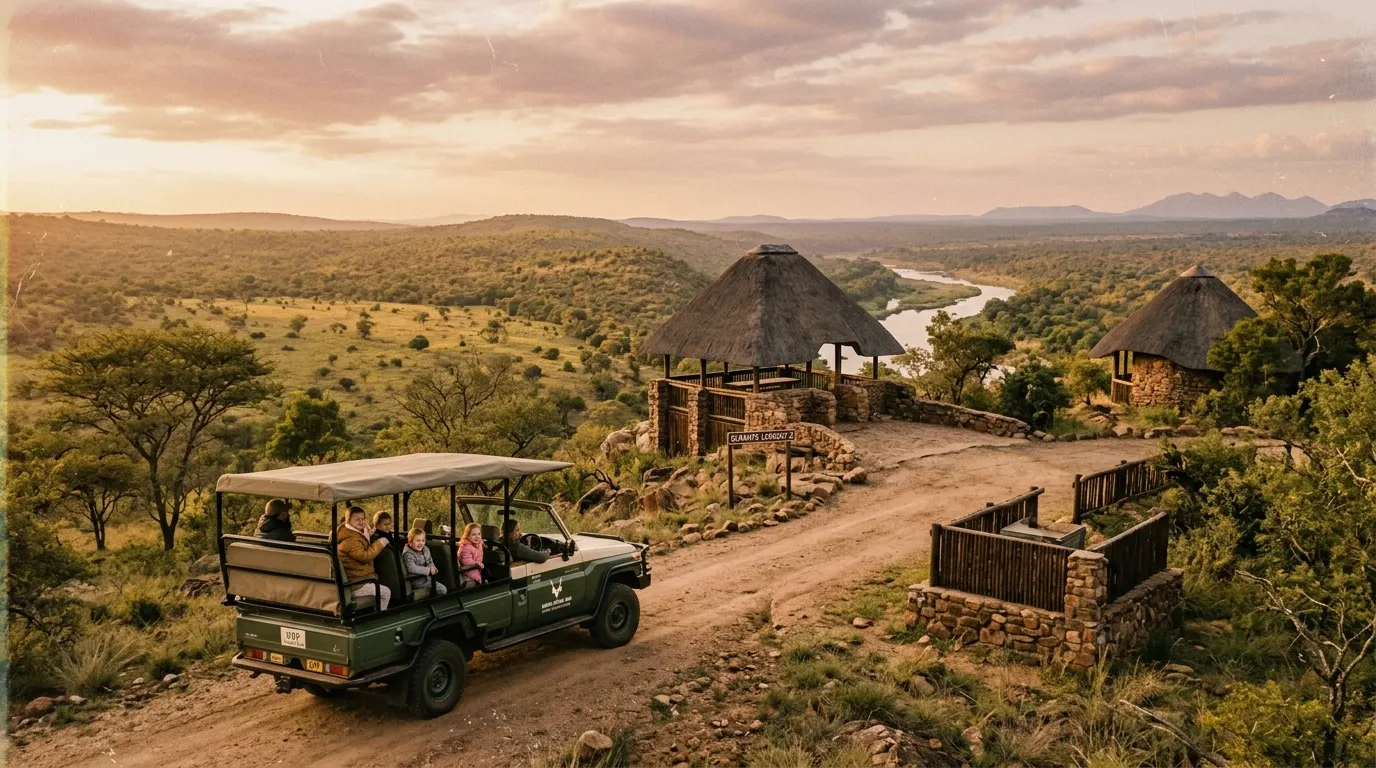
Morning: The Dawn Patrol
A true safari operates on the schedule of the animals, which means waking up before the sun. A 5:00 AM wake-up call might sound daunting to a parent, but the promise of tracking lions makes getting out of bed surprisingly easy for kids.
Wrap the children in layers—early mornings in open 4x4 vehicles are biting cold, even in summer. As the sun rises, the bush comes alive. Your tracker will look for fresh paw prints in the sand, turning the morning into a real-life detective game. If you are staying at a lodge like Kapama River Lodge, the rangers are specifically trained to engage younger guests, pointing out interesting insects, bird calls, and animal tracks to keep them entertained between major sightings.
Midday: High Views and Hippo Spotting
After returning to camp for a hearty breakfast, use the midday heat to relax or take a scenic excursion. If you are staying in the central part of the park, driving up to Olifants Rest Camp for lunch is a must. Perched on a high ridge, the camp's restaurant offers a dramatic 180-degree view of the Olifants River below.
Practical Details:
- Food: The restaurant at Olifants serves basic but kid-friendly fare like toasted sandwiches, burgers, and chips.
- Accessibility: The viewing decks are paved and easily accessible for strollers, making it a comfortable spot to park a sleeping toddler while you scan the river banks with binoculars.
- Activity: Bring your binoculars to the lunch table. You can easily spend an hour just watching elephants cross the water and crocodiles basking on the sandbanks far below.
Afternoon Alternative: Canyons and Thrills
If you have older kids or teenagers who might get restless with a second game drive in one day, consider popping out of the park to explore the Panorama Route (Full Day Self-Drive). This world-class scenic road trip traces the Drakensberg escarpment, featuring dramatic canyons and waterfalls.
For the true adrenaline junkies in your family, the Big Swing at Graskop Gorge is an unforgettable stop along this route. It is a heart-pounding 70-meter freefall into the gorge that reaches 140km/h in three seconds.
Practical Details:
- Cost: The Big Swing costs around 600 ZAR ($32 USD) per person.
- Age Limits: Participants must weigh at least 40kg, making this an activity strictly for older tweens and teens.
- Time: Allow at least half a day if you plan to exit the park, drive a portion of the Panorama route, and return before the park gates close at sunset.
🎟️ Book family tickets & skip-the-line tours →
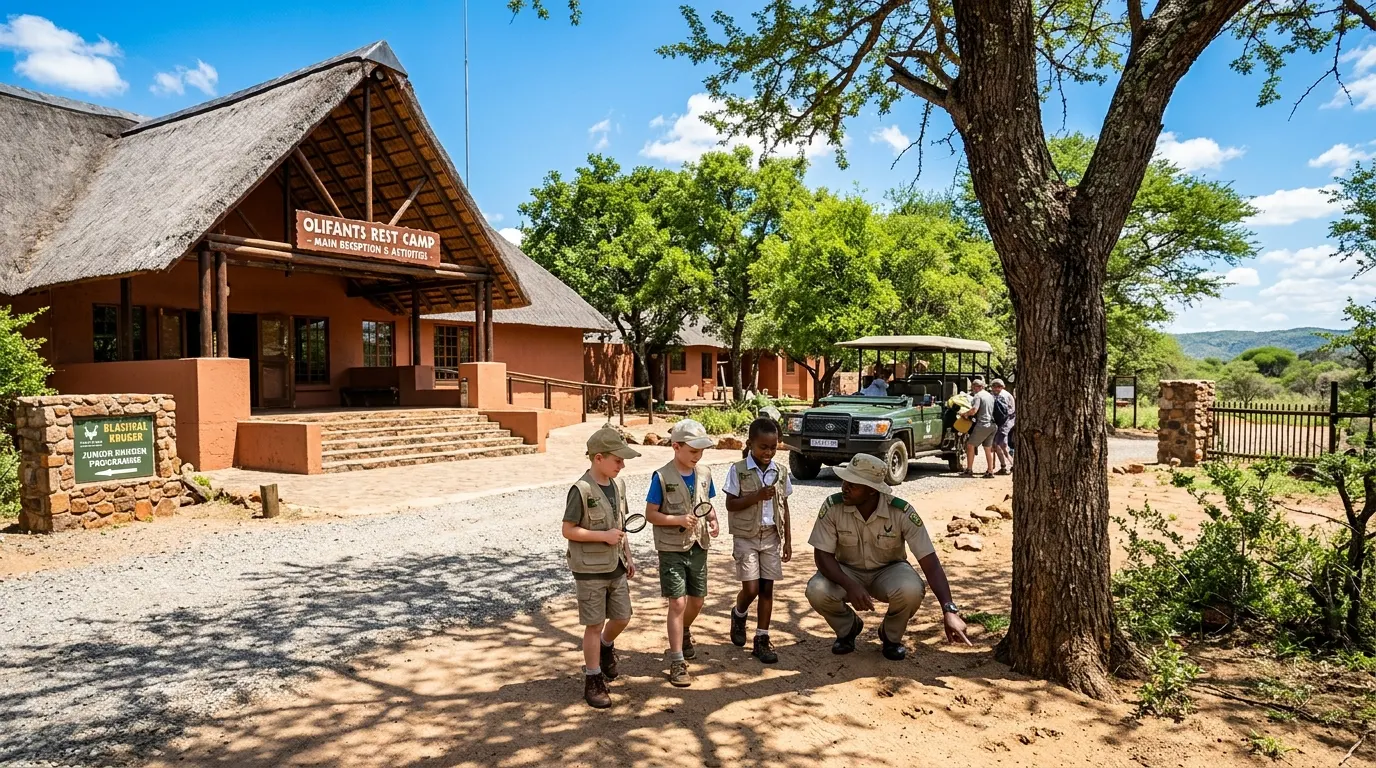
Morning: Immersive Bush Experiences
For your final full day, shift the focus from passive observation in a vehicle to active participation. How you approach this depends entirely on the ages of your children.
If you have kids under 12, take advantage of the immersive camp activities. Lukimbi Safari Lodge and Kambaku Safari Lodge (Timbavati) are rare gems that offer specialized "Junior Ranger" programs. Guides will take the kids on short, safe walks within the fenced camp perimeters to do "poo safaris" (identifying animal droppings), make plaster casts of animal tracks, and learn basic survival skills. It gives parents a two-hour window to pack, rest, or enjoy a quiet coffee on the deck.
For families with teenagers (strictly 12 and older), booking a SANParks Guided Bush Walk (Berg-en-Dal) is a profound experience. Led by two heavily armed rangers, this 3-to-4-hour walking safari strips away the barrier of the vehicle. You learn to walk silently, read the wind, and understand the micro-ecosystems of the bush.
Practical Details:
- Cost: The SANParks guided walk is roughly 700 ZAR ($37 USD) per person.
- Requirements: Neutral-colored clothing (no bright pinks or whites), sturdy closed-toe walking shoes, and absolute silence when requested by the guides.
- Safety: The rangers are highly trained professionals. You are not out there to approach lions; you are there to observe the bush safely, though encounters with big game do happen.
Afternoon: The Final Golden Hour
Your last afternoon game drive is often the most relaxed. The pressure to "see it all" has usually lifted, allowing you to simply enjoy the golden hour light hitting the tall grass. If you want to end your trip with guaranteed spectacular sightings, reserves like MalaMala Game Reserve (Main Camp) or Londolozi Varty Camp offer arguably the best leopard viewing in the world. Toast to the sunset with a traditional "sundowner" stop in the bush—juice boxes for the kids and perhaps a gin and tonic for the adults—before heading back for a final dinner under the stars.
Best Things to Do in Kruger National Park with Kids by Age
A successful safari requires matching the activity to your child's developmental stage. Here is how to tailor the experience:
Toddlers (Ages 2-3)
At this age, safety and containment are your top priorities. Staying at a fully fenced lodge or a SANParks rest camp is non-negotiable, as wildlife freely roams through unfenced properties. Keep game drives very short (under 90 minutes) and stick to self-driving so you can immediately return to camp if a meltdown occurs. Focus their attention on the "little things" that are easy to spot: brightly colored birds, monkeys playing in the trees, and the sheer size of an elephant. Midday pool time is essential for this age group.
Preschoolers (Ages 3-5)
Preschoolers are in the sweet spot for "Junior Ranger" activities. They love having a job to do. Print out a visual checklist of common animals (zebra, giraffe, impala) and let them check off what they see. Buy them a cheap pair of real binoculars; looking through the lenses keeps them engaged far longer than just staring out the window. Lodges with dedicated playrooms and flexible meal times will save your sanity here.
School-Age (Ages 6-10)
Kids in this bracket have the patience to sit quietly and observe. They can handle the longer 3-hour morning and evening drives in an open 4x4. Give them a digital camera—even an old smartphone—and task them with being the family photographer. They will be fascinated by the more gruesome realities of nature, so prepare for lots of questions if you stumble upon a lion eating a kill.
Tweens and Teens (Ages 11-14)
Teenagers thrive on adrenaline and deeper education. They are old enough for the thrilling SANParks bush walks where they can track rhinos on foot. Encourage them to talk to the guides about anti-poaching efforts and conservation; the rangers have incredible stories that resonate deeply with older kids. If they need a break from animals, the Graskop Big Swing on the Panorama Route will provide the perfect mid-trip adrenaline spike.
What to Skip: Overhyped or Unsafe Activities for Families
Not every highly rated activity in the Greater Kruger area makes sense when you have children in tow. Here are a few things you should cross off your family itinerary:
- SANParks Night Drives: SANParks enforces a strict age limit prohibiting children under 6 from joining open-vehicle night drives. However, even for 7-to-10-year-olds, these drives are generally a skip. You are sitting in the freezing dark for two hours, scanning the pitch black with a spotlight just to see a pair of glowing red eyes in the distance. The novelty wears off in 15 minutes, and exhaustion quickly leads to cranky kids.
- Hazyview Elephant Sanctuary: While marketed heavily to families as a magical wildlife encounter, the heavy focus on 'trunk-in-hand' walks, performing tricks, and elephant riding raises serious ethical and animal welfare concerns. A true safari teaches kids to respect wild animals in their natural habitat from a distance, rather than treating them as petting zoo attractions.
- Lion Sands Treehouse Sleepout (Lion Sands): The idea of sleeping under the African stars sounds incredibly romantic, but these sleepouts are open-air platforms situated in the middle of the unfenced bush. For a young child, being exposed to the roaring of lions, the whooping of hyenas, and the rustling of the wilderness in the pitch black is often absolutely terrifying rather than magical. Save this for an adults-only anniversary trip.
- Blyde River Canyon Hiking Trails (various trailheads): While the canyon itself is a must-see from the paved viewpoints, the actual hiking trails down into the gorge are steep, grueling, and often poorly maintained. They are far too strenuous for little legs and the sheer drop-offs will keep parents in a constant state of anxiety. Stick to the viewing decks.
Pro Tips from Parents for a Smooth Safari
- Master the "Onion" Layering Strategy: Safari temperatures swing wildly. You will wake up at 5:00 AM needing a heavy winter coat, a beanie, and gloves. By 10:00 AM, it will be 85 degrees Fahrenheit (29°C), and you will be sweating. Dress kids in multiple thin layers that can be easily peeled off and stuffed into a backpack as the morning progresses.
- The Boredom Bag: Even in the world's greatest national park, there will be long stretches of driving where you see nothing but impalas and dry grass. Pack a small, quiet activity bag for the vehicle. Think coloring books, a Rubik's cube, or an audio tablet with headphones.
- Manage the Bush Bathrooms: You cannot just pull over and pee behind a bush in Kruger—there are predators in the grass. Bathroom breaks must happen at designated, fenced picnic spots or camps. Always force a bathroom trip before leaving camp, and track where the next safe stop is on your park map.
- Manage Expectations Early: A safari is not a zoo. Animals hide, sleep, and migrate. Teach your kids that the search is part of the fun. Celebrate the small victories—a beautiful bird, a massive termite mound, or a funny-looking dung beetle—so that the trip isn't entirely dependent on finding a lion to be considered a success.
- Wind and Sun Protection: Open 4x4 vehicles offer no protection from the wind or the sun. Bring tightly fitting hats (that won't blow off when driving), plenty of high-SPF sunscreen, and sunglasses to protect young eyes from the glare and the dust kicked up by the tires.
Final Thoughts on Things to Do in Kruger National Park with Kids
Taking your children to the African bush is a profound investment in their worldview. It teaches patience, respect for the natural order, and an appreciation for a world far bigger than their day-to-day lives. By pacing your days carefully, choosing accommodations that genuinely welcome families, and balancing long drives with physical activity, you can create a trip that is genuinely enjoyable for everyone. When looking for the best things to do in Kruger National Park with kids, remember that the most magical moments are rarely scheduled. They happen in the quiet minutes when a giraffe gracefully crosses the road right in front of your car, leaving your whole family holding their breath in shared, silent awe.