Taking children across continents to explore history, art, and culture is one of the most rewarding decisions a parent can make. Rather than sticking solely to theme parks or beach resorts, diving into the rich heritage of diverse regions offers an unparalleled opportunity to expand your child's worldview. Some of the best family cities in middle east & africa are redefining what it means to be a kid-friendly destination, offering cultural institutions that are far from the stuffy, quiet galleries of the past. Today, you will find interactive exhibits, sensory-friendly spaces, and hands-on learning opportunities that captivate toddlers and teenagers alike.
Whether you are navigating the bustling streets of West Africa, marveling at antiquities in North Africa, or exploring the modern marvels of the Arabian Peninsula, planning your itinerary around engaging museums is a fantastic way to anchor your trip. The museums in this part of the world tell profound stories, and when approached with a bit of strategy, they provide core memories for your entire family.
Why the Best Family Cities in Middle East & Africa Prioritize Interactive Learning
When evaluating the best family cities in middle east & africa, a common thread emerges: a deep commitment to storytelling. Historically, parents might have hesitated to bring energetic children into formal cultural heritage sites. However, cities across these regions have invested heavily in spaces that bridge the gap between profound historical significance and accessible, child-centric education.
Modern museums in these regions understand that children learn best through tactile experiences and visual storytelling. You will find institutions that blend ancient artifacts with cutting-edge technology, offering augmented reality tours, dedicated children's wings, and shaded outdoor pavilions where kids can run off excess energy. Furthermore, the cultural warmth toward children in both the Middle East and Africa is legendary. Museum staff, guides, and locals generally welcome families with open arms, making you feel accommodated rather than like a nuisance when your toddler inevitably has a loud moment. By mixing world-class institutions with relaxing coastal escapes—perhaps spending a few days exploring history before decompressing on the shores detailed in our Diani Beach or Essaouira guides—you can strike the perfect balance for a family vacation.
Top 10 Kid-Friendly Museums and Cultural Sites
1. OliOli Children's Museum (Dubai, UAE)
Dubai is famous for its towering skyscrapers, but OliOli is a sanctuary specifically designed for childhood development. This interactive children's museum features eight galleries spread over two floors, focusing on science, technology, engineering, arts, and mathematics (STEAM). The centerpiece is Toshi's Nets, a massive, colorful, hand-woven playground suspended in mid-air where kids can safely climb and bounce. It is an absolute must-visit when exploring our Dubai city guide.
- Opening Hours: 9:00 AM – 6:00 PM (varies slightly on weekends).
- Cost: AED 139 (~$38 USD) for children; AED 42 (~$11 USD) for adults.
- Stroller Accessibility: 100% accessible with ramps and wide elevators.
- Nearest Food: On-site café serving healthy kid-friendly snacks and excellent coffee.
- Best Time to Visit: Early morning right at opening to beat the local crowds.
- Duration: Plan for at least 3 hours.
2. Artists Alliance Gallery (Accra, Ghana)
When visiting West Africa, you want a cultural experience that is vibrant and visually stimulating for children. The Artists Alliance Gallery is a massive, three-story treasure trove of Ghanaian art, textiles, and the world-famous Ga 'fantasy coffins' (carved into shapes like cars, fish, and airplanes), which absolutely fascinate children. It overlooks the ocean, providing a lovely sea breeze. Read more in our Accra city guide.
- Opening Hours: Monday to Saturday 9:00 AM – 5:00 PM.
- Cost: Free entry (though purchasing a small souvenir supports the local artists).
- Stroller Accessibility: Limited on upper floors (no elevator), so a baby carrier is highly recommended.
- Nearest Food: Labadi Beach is a short drive away for beachfront dining.
- Best Time to Visit: Late morning.
- Duration: 1 to 1.5 hours.
3. The Grand Egyptian Museum (Cairo, Egypt)
A monumental achievement in museum design, the Grand Egyptian Museum (GEM) brings ancient history to life in a way that is highly engaging for older children and teens. The sheer scale of the statues in the grand atrium, including the colossal statue of Ramses II, leaves kids wide-eyed. While full opening phases are ongoing, the accessible areas offer an incredible introduction to Egyptology. It pairs perfectly with the recommendations in our Cairo city guide.
- Opening Hours: 9:00 AM – 6:00 PM.
- Cost: EGP 1000 (~$32 USD) for adults, half price for kids.
- Stroller Accessibility: Excellent, with wide, sweeping ramps and modern elevators.
- Nearest Food: High-quality on-site food courts and cafes.
- Best Time to Visit: First thing in the morning before the tour buses arrive.
- Duration: 3 to 4 hours.
🎟️ Book family tickets & skip-the-line tours →
4. Zeitz Museum of Contemporary Art Africa (Cape Town, South Africa)
Housed in a repurposed grain silo, the architecture of Zeitz MOCAA is an adventure in itself. Kids love looking up into the cavernous, honeycomb-like interior. It is the largest museum of contemporary African art in the world. The museum frequently offers family-friendly workshops and interactive installations that encourage kids to engage with the vibrant, sometimes massive, art pieces. Check out our Cape Town city guide for more nearby attractions.
- Opening Hours: Tuesday to Sunday, 10:00 AM – 6:00 PM.
- Cost: ZAR 250 (~$13 USD) for adults; under 18s enter free.
- Stroller Accessibility: Fully accessible via large glass elevators.
- Nearest Food: The museum has a rooftop café with stunning views of Table Mountain.
- Best Time to Visit: Mid-afternoon on a weekday.
- Duration: 2 hours.
🎟️ Find family-friendly tours & activities →
5. The Children's Museum Jordan (Amman, Jordan)
Nestled within the King Hussein Park, this museum is a brilliant space for active learning. With over 185 indoor and outdoor interactive exhibits, children can explore a mock archaeological dig, learn about physics through water play, and engage in a dedicated toddler area. It is a fantastic palate cleanser for kids after a few days of touring ancient ruins, as noted in our Amman-Petra city guide.
- Opening Hours: 9:00 AM – 5:00 PM (Closed Tuesdays).
- Cost: JOD 3 (~$4 USD) per person.
- Stroller Accessibility: Fully accessible throughout the indoor and outdoor spaces.
- Nearest Food: On-site family café with standard kid-friendly fare.
- Best Time to Visit: Mornings during the week.
- Duration: 3 hours.
6. Museum of Islamic Art (Doha, Qatar)
Rising from the waters of the Corniche, the MIA is visually stunning. Inside, the museum offers family trails and treasure hunts designed to help children engage with the intricate geometric patterns and historical artifacts. The adjacent MIA Park features one of the best playgrounds in the city, making it a perfect half-day outing. For more local tips, see our Doha city guide.
- Opening Hours: 9:00 AM – 7:00 PM (Fridays 1:30 PM – 7:00 PM).
- Cost: QAR 50 (~$14 USD) for adults; children under 16 are free.
- Stroller Accessibility: Exceptional, with wide corridors and easy elevator access.
- Nearest Food: MIA Park Café offers great snacks and outdoor seating.
- Best Time to Visit: Late afternoon so you can transition to the park for sunset.
- Duration: 2 hours inside, plus 1-2 hours in the park.
7. W.E.B. Du Bois Centre (Accra, Ghana)
For families wanting a calm, educational introduction to Pan-African history, the W.E.B. Du Bois Centre is a hidden gem. Located in a quiet, leafy compound, this was the final home of the famous civil rights leader. Unlike the more intense historical sites in the region, this center provides a peaceful environment where school-aged kids and teens can learn about global civil rights in a digestible way.
- Opening Hours: Monday to Friday 9:00 AM – 4:30 PM.
- Cost: GHS 50 (~$4 USD) for adults; discounts for students.
- Stroller Accessibility: The grounds are accessible, but the historic house has a few steps.
- Nearest Food: Several quiet cafes in the surrounding Cantonments neighborhood.
- Best Time to Visit: Mid-morning.
- Duration: 1 hour.
8. National Museum of Ethiopia (Addis Ababa, Ethiopia)
This museum is world-famous as the home of "Lucy," the ancient hominid fossil that fundamentally changed our understanding of human evolution. Seeing Lucy (or her exact replica on display) is a thrilling experience for school-aged kids learning about science and history. The basement level, dedicated to paleontology, feels like a real-life Indiana Jones adventure. It is a cornerstone of our Addis Ababa city guide.
- Opening Hours: 8:30 AM – 5:00 PM daily.
- Cost: ETB 50 (~$1 USD).
- Stroller Accessibility: Poor; the building is older, and navigating stairs is required. Use a carrier.
- Nearest Food: Lucy Lounge and Restaurant is located right on the museum grounds.
- Best Time to Visit: Early morning.
- Duration: 1.5 to 2 hours.
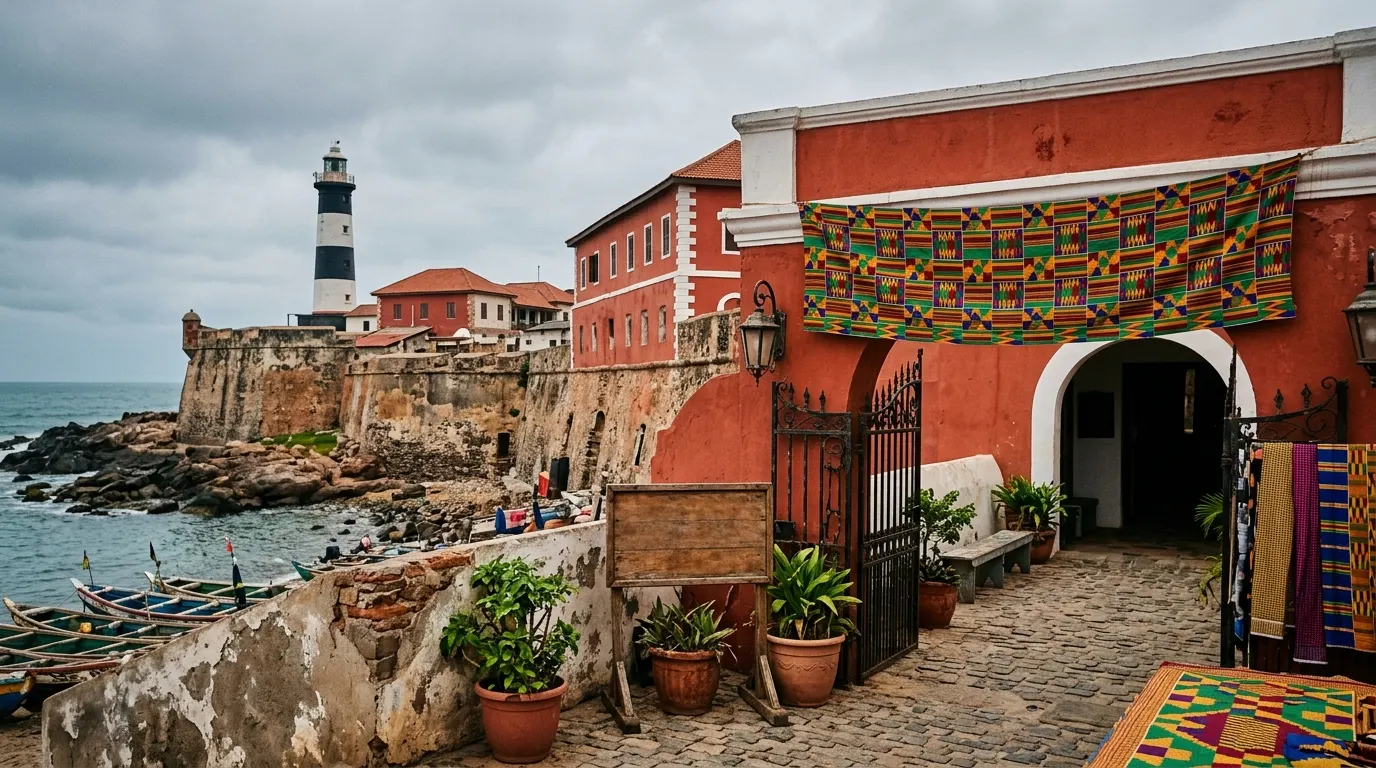
9. Cape Coast Castle (Central Region, Ghana)
While technically a fortress rather than a traditional museum, Cape Coast Castle is a profoundly moving UNESCO World Heritage site that served as a major hub for the trans-Atlantic slave trade. This is an essential, albeit heavy, educational experience. We strongly recommend this site for tweens and teens who have the emotional maturity to process the history. (Similarly, the nearby Elmina Castle is a powerful, UNESCO-listed fortress).
- Opening Hours: 9:00 AM – 4:30 PM daily.
- Cost: GHS 100 (~$8 USD) for non-Ghanaian adults; discounts for kids.
- Stroller Accessibility: Very difficult due to uneven stone grounds, narrow dungeons, and stairs.
- Nearest Food: Baobab House in Cape Coast offers excellent vegetarian-friendly meals.
- Best Time to Visit: Early morning to avoid the intense midday heat.
- Duration: 2 hours.
10. Cultural Heritage Centre (Arusha, Tanzania)
Before or after heading out on a safari, the Cultural Heritage Centre in Arusha is a spectacular stop. Housed in a unique drum-shaped building, it features an incredible collection of African art, masks, and historical artifacts from tribes across the continent. It is highly visual and engaging for kids who love spotting different animal carvings and colorful beadwork. Find more safari prep tips in our Arusha city guide.
- Opening Hours: 8:00 AM – 6:00 PM daily.
- Cost: Free entry.
- Stroller Accessibility: Good on the main floors, with ramps available.
- Nearest Food: On-site restaurant serving a mix of local and international dishes.
- Best Time to Visit: Any time of day works well here.
- Duration: 1 to 2 hours.
Age-Specific Museum Tips for Middle East & African Travel
Toddlers (Ages 2-3): Toddlers have short attention spans and need space to move. When visiting grand, quiet museums, plan to stay no longer than an hour. In cities like Accra, if museum fatigue sets in, pivot to dedicated play spaces. We highly recommend The Little Explorers, a premium, Montessori-inspired indoor play center that prioritizes developmental growth and extreme cleanliness. It provides the perfect sensory break.
Preschoolers (Ages 3-5): At this age, children need tactile engagement. Look for museums with dedicated children’s wings or outdoor gardens. If you are exploring West Africa and your preschooler needs a break from formal tours, check out Impact Hub Accra (Kids Events), a modern, multi-functional space that frequently hosts high-energy indoor soft play and creative sessions.
School-Age (Ages 6-10): This age group thrives on missions. Before entering places like the Grand Egyptian Museum or the National Museum of Ethiopia, create a simple scavenger hunt (e.g., "Find three animal statues" or "Find a piece of jewelry"). Engage local tour guides, as many in these regions are fantastic storytellers who know exactly how to tailor their historical facts to captivate young minds.
Tweens and Teens (Ages 11-14): Older kids are ready for deeper, more complex histories. Sites like Cape Coast Castle or the Apartheid Museum provide crucial global context. Encourage your teens to document their visits through photography or journaling. Treat them as co-travelers by letting them choose which museum wing or gallery to explore next.
What to Skip: Overhyped Sites When Traveling with Kids
Not every famous landmark translates to a good family experience. When curating your itinerary, protect your family's energy by avoiding spots that look good on postcards but are logistical nightmares with kids.
- Osu Castle (Fort Christiansborg): While historically significant, Osu Castle is a somber site with long, lecture-heavy guided tours that will quickly bore young children. The grounds are not particularly engaging for kids, and the heavy historical focus is better suited for adult history buffs. Stick to the W.E.B. Du Bois Centre for a more accessible history lesson.
- Makola Market: Often recommended as a "must-do cultural experience," Makola is a high-intensity working market characterized by unorganized chaos, crushing crowds, and extremely narrow, muddy paths. Avoid Makola Market with toddlers or young children; it is physically exhausting, completely impassable for strollers, and highly overwhelming for little ones.
- Osu Night Market: Skip the Osu Night Market with kids in tow. The market is famous for its delicious street food, but navigating this market with kids means dodging open charcoal grills at eye-level, breathing in thick smoke, and dealing with heavy traffic in narrow alleys. It is simply not a safe or relaxing environment for a family evening.
Pro Tips from Parents for Navigating the Region
Drawing from our extensive on-the-ground experience, here are the most critical practical tips to keep your museum days running smoothly across these vibrant regions:
- Prioritize Safe Hydration: Walking through expansive museum grounds or historical forts will quickly dehydrate your family. Stick to reputable bottled water brands like Voltic or Bel-Aqua for children rather than the ubiquitous 'sachet water' sold on the streets, which can carry bacteria young stomachs are not accustomed to.
- Simplify Transportation: Negotiating taxi fares with tired children in tow is a recipe for stress. Download Uber or Bolt before arriving to avoid the stress of haggling with street taxi drivers. These apps allow you to lock in your rate, track your route, and ride in air-conditioned comfort between cultural sites.
- Plan Your Potty Breaks: Museum restrooms can sometimes be out of order or lack toilet paper. Plan your 'potty breaks' around major shopping centers (like Marina Mall or Accra Mall if you are in Ghana) or high-end hotel lobbies near your museum destinations. Public restrooms on the street are nearly non-existent.
- Prepare for the Climate: If visiting West Africa during the Harmattan season (December to February), the dry, dusty winds can cause nosebleeds and dry skin in children. Pack extra moisturizer and saline nasal spray for your kids to keep them comfortable during long days of exploring.
- Ditch the Stroller for a Carrier: Outside of the ultra-modern museums in places like Dubai or Doha, stroller accessibility is incredibly spotty. Avoid walking busy cultural districts (like Osu Oxford Street) with a stroller; the areas lack continuous sidewalks and feature deep, open gutters. A high-quality, breathable baby carrier is your best friend.
Wrapping up your travel plans in these regions means preparing for a trip unlike any other. By carefully selecting the right cultural institutions, respecting your children's limits, and utilizing these practical tips, you will ensure that your family trip is both educational and deeply joyful. The best family cities in middle east & africa are waiting with open doors, ready to share their stories, art, and history with the next generation of global citizens.