You have finally hit "confirm" on those family flights to Japan. The group chat is buzzing, the excitement is off the charts, and then the heavy reality of itinerary planning sets in. As you stare at the map, you are faced with a massive travel dilemma: should you spend the bulk of your time in the neon-drenched, hyper-modern megalopolis, or the ancient, temple-filled cultural capital? When deciding between Tokyo or Kyoto with kids, there is no wrong answer, but there is absolutely a right answer for your specific family’s travel style, stamina, and ages.
Japan is arguably one of the safest, cleanest, and most fascinating countries on earth to visit with children. However, the day-to-day reality of traveling with a stroller, navigating picky eaters, and managing jet-lagged meltdowns looks vastly different depending on which city you call home base. Tokyo is a futuristic playground of sensory wonders, indoor theme parks, and unparalleled convenience. Kyoto is a sprawling, slower-paced immersion into traditional Japan that requires more walking, more patience, and a totally different strategy to keep kids engaged.
As a parent who has navigated both cities with kids in tow—dealing with everything from peak-hour subway crowds to temple fatigue—I am here to give you the straightforward, practical breakdown. We are going to dive deep into the ultimate showdown: Tokyo vs Kyoto with kids, and figure out exactly how to build a trip that maximizes the magic and minimizes the stress.
The Vibe Check: Tokyo or Kyoto with Kids?
Before we get into specific itineraries and attractions, you need to understand the fundamental difference in the daily "vibe" of each city. The rhythm of your days will completely shift depending on whether you are navigating the concrete jungle or the historic temple districts.
Tokyo: Neon Dreams and Endless Entertainment
Tokyo is high-energy, vertically built, and constantly moving. It is a city of extremes where you can walk out of a serene, centuries-old shrine and immediately into a blindingly bright arcade district. For kids, Tokyo is essentially a giant amusement park. The sheer scale of the city means that no matter what your child is into—trains, anime, animals, science, or just running around—there is a world-class, multi-story facility dedicated to it.
The primary advantage of Tokyo is its infrastructure. It is built for absolute convenience, which is a lifesaver for parents. If your toddler has a meltdown, you are never more than a three-minute walk from a pristine convenience store (konbini) selling warm rice balls, clean public restrooms (often equipped with child seats), or a vending machine dispensing hot cocoa. However, the downside is the sensory overload. The lights, the sounds, and the sheer volume of people in areas like Takeshita Street (Harajuku) can easily overwhelm sensitive kids. You will need to actively schedule downtime in quiet parks to balance the high-stimulation environments.
Kyoto: Temples, Nature, and Slower Paces
Kyoto, by contrast, forces you to slow down. While it is still a large, bustling city (do not expect a quiet country village), its main attractions are spread out horizontally along the mountains that border the city limits. Kyoto is about outdoor exploration: crunching along gravel paths in Zen gardens, walking through towering bamboo groves, and climbing stone steps to shrines.
For kids, Kyoto offers much more open space to breathe. There are wide rivers to skip stones in, mountains to hike, and a profound sense of history. The challenge? Kyoto relies heavily on a bus network rather than subways. Navigating crowded buses with a stroller is incredibly difficult—you often have to fold the stroller, hold a squirming toddler, and manage your transit card all at once. Furthermore, children—especially younger ones—can quickly develop "temple fatigue." Once they have seen one beautiful wooden pavilion, they have kind of seen them all in their eyes. You have to work a little harder in Kyoto to mix cultural sightseeing with kid-friendly bribes, like stopping for matcha ice cream or searching for ninja stars in the local shops.
Top Things to Do: Tokyo vs Kyoto with Kids
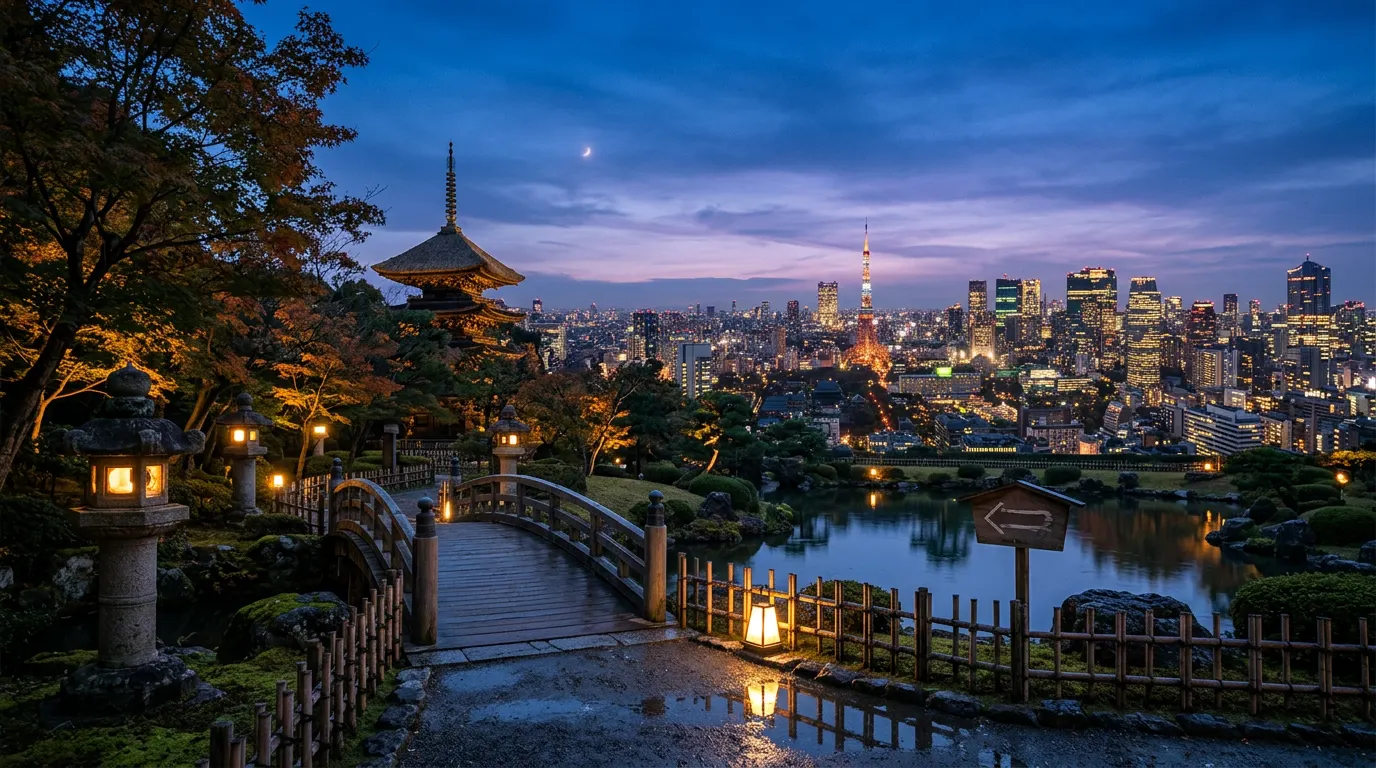
When you are weighing Tokyo or Kyoto with kids, looking at the actual daily activities is usually the tiebreaker. Here is how the heavy-hitting attractions stack up from a parent's perspective.
Tokyo Highlights: Immersive Worlds and Theme Parks
Tokyo excels at indoor, weather-proof, highly interactive experiences that will blow your kids' minds. At the top of the list is teamLab Planets TOKYO (Toyosu). This is not your average museum; it is a sensory-heavy, barefoot "body immersive" experience where families walk through knee-deep milky water, crawl through mirrored rooms filled with giant glowing spheres, and lay on the floor watching digital flowers bloom. Just remember to dress the kids in shorts or pants that easily roll up above the knee! If you prefer staying dry, the newly opened MORI Building DIGITAL ART MUSEUM: teamLab Borderless (Azabudai Hills) offers a sprawling, dark, and mesmerizing labyrinth of interactive digital art where the art actually moves from room to room with you.
🎟️ Book family tickets & skip-the-line tours →
For theme park lovers, Tokyo is unparalleled. Tokyo DisneySea is widely considered the best theme park on the planet. It is the world's only nautical-themed Disney park, feeling more like a meticulously detailed Italian port city than a traditional theme park. The snack culture here is legendary—your kids will love hunting down alien mochi and unique popcorn flavors. If you want classic hospitality, Tokyo Disneyland remains the gold standard for perfectly executed, family-friendly magic.
If you want something uniquely Japanese, grab tickets for Kidzania Tokyo (Toyosu). It is an immersive, two-thirds-scale indoor city where children role-play over 100 professional careers. They can put out "fires" in a mini fire truck, bake real bread, or perform surgery, earning currency they can spend in the mini-city. And you absolutely cannot leave Tokyo without indulging in capsule toy culture. Take the kids to the Gachapon Bandai Official Shop or the Akihabara Gachapon Hall, a dense, wall-to-wall maze of hundreds of capsule toy machines. A great parenting hack here is to give each child a set daily coin allowance so they can budget their own capsule toy spending.
Kyoto Highlights: Monkeys, Trains, and Torii Gates
Kyoto’s magic happens outdoors. The Fushimi Inari Shrine is iconic, featuring thousands of vermilion torii gates winding up a mountain. Parent Pro-Tip: Do not attempt to hike the entire mountain with kids. Walk up about 30 minutes to the halfway point where the crowds thin out, take your photos, grab a drink from the vending machines, and head back down before the whining starts.
To break up the temple sightseeing, the Arashiyama Monkey Park Iwatayama is a massive hit. It requires a steep, 20-30 minute hike up a mountain, so definitely bring water and ditch the stroller at the bottom. The effort is completely worth it when you reach the open-air park where wild snow macaques roam freely. The twist that kids love? The humans go inside a wire cage to feed the monkeys who hang on the outside.
If it rains in Kyoto, your absolute saving grace is the Kyoto Railway Museum. Even if your kids are not massive train enthusiasts, this sprawling facility is incredible. They can drive train simulators, walk underneath actual bullet trains, and even ride in cars pulled by a real, working steam locomotive. It is spacious, loud, and encourages hands-on play.
🎟️ Find family-friendly tours & activities →
Age-by-Age Breakdown: Which City Wins?
The "Tokyo or Kyoto with kids" debate often hinges entirely on how old your children are. A destination that thrills a 12-year-old might be a logistical nightmare with a 2-year-old. Here is a practical age-by-age breakdown based on real travel experience.
Toddlers (2-3 years)
Winner: Tokyo.
Toddlers generally do not care about the cultural significance of a 14th-century Zen garden. They care about snacks, playgrounds, and taking naps. Tokyo wins for this age group purely based on logistics and indoor play spaces. Kyoto’s beautiful shrines often feature miles of crushed gravel paths that will completely destroy the wheels of a travel stroller. Tokyo, while busy, has elevators at nearly every subway station (even if you have to hunt for them), pristine baby care rooms in every department store for easy diaper changes, and incredible indoor play areas like the Asobono indoor playground.
Preschoolers (3-5 years)
Winner: Tokyo.
Preschoolers are at the prime age for magic, and Tokyo delivers endlessly. This is the perfect age for Ghibli Museum, Mitaka, a whimsical, hand-crafted "house" designed by Hayao Miyazaki that features a giant plush Catbus specifically for kids to climb on. It is also the perfect age for the classic rides at Tokyo Disneyland. In Kyoto, preschoolers will quickly tire of looking at historic buildings they are not allowed to touch. You can make Kyoto work by visiting the monkeys or feeding the deer in nearby Nara, but Tokyo offers a much higher density of activities designed specifically for their developmental stage.
School-Age Kids (6-10 years)
Winner: Tie.
At this age, kids finally have the physical stamina to handle Kyoto's walking and the cognitive ability to appreciate the history, especially if you gamify the experience. You can rent kimono for them to wear through the streets of Gion, or take them to the Toei Kyoto Studio Park where they can dress up as ninjas and navigate laser mazes. However, Tokyo still holds massive appeal. They will lose their minds at Shin-Yokohama Ramen Museum, a meticulously detailed recreation of a 1958 Tokyo streetscape housed entirely indoors, where families can sample mini-bowls of regional ramen. They are also the perfect age to appreciate the high-energy cultural spectacle of a sumo match at Ryogoku Kokugikan (Sumo arena).
Tweens and Teens (11-14 years)
Winner: Tokyo.
If you are traveling with teenagers, Tokyo is basically their Mecca. They will want to shop for vintage video games in Akihabara, hunt for the latest streetwear in Harajuku, and take epic social media photos at Shibuya Sky, Tokyo’s most cinematic observation deck featuring a completely open-air rooftop 229 meters above the scramble crossing. For sheer awe-factor, take them to see the Gundam Factory Yokohama, a massive engineering marvel featuring a life-sized, 18-meter-tall moving robot. Kyoto is beautiful, but Tokyo offers the independence, pop-culture relevance, and cool factor that older kids crave.
🎟️ Book family tickets & skip-the-line tours →
Logistics: Navigating Tokyo or Kyoto with Kids
Getting Around
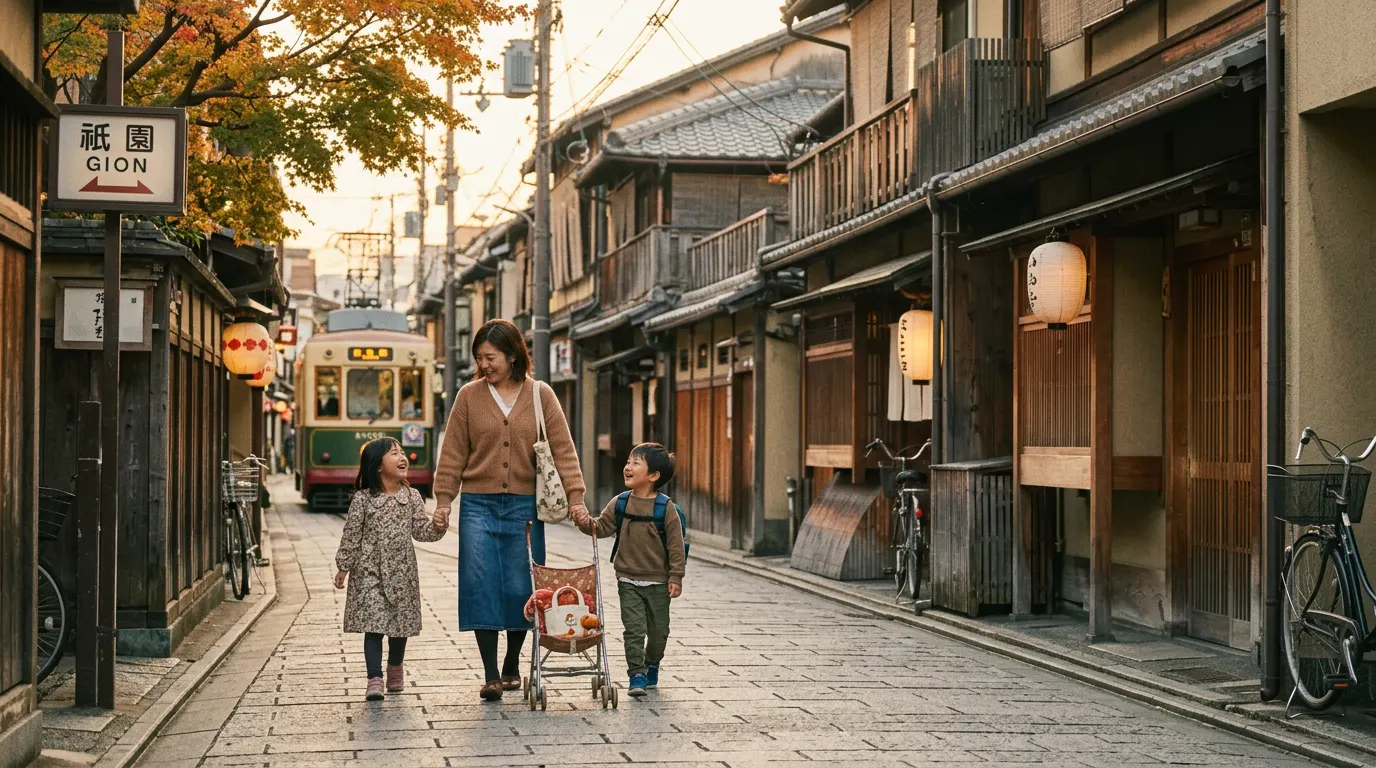
Tokyo’s transportation is legendary, but it has a steep learning curve. The subway system is a spiderweb of different company lines. Navigating Tokyo's subway with a stroller requires patience, as many primary exits are stairs-only. Always look for the yellow signs pointing to elevators on the platform, even if it means walking an extra block above ground once you exit. Kyoto is much simpler on paper—a basic grid system—but it relies heavily on city buses. During peak tourist seasons (cherry blossoms in spring, red leaves in autumn), these buses are packed like sardine cans. If you are in Kyoto with small kids, budget extra money for taxis. They are clean, polite, and will absolutely save your sanity when your kids' legs give out at the end of a long temple-hopping day.
Food and Dining
Feeding kids in Japan is surprisingly easy, even for the pickiest of eaters. Both cities excel at convenience store food—do not sleep on 7-Eleven egg salad sandwiches or FamilyMart fried chicken (FamiChiki) for a quick, cheap park picnic. In Tokyo, prioritize a visit to Kura Sushi. It is a massive hit with kids because they can "win" a Gachapon toy by inserting five empty sushi plates into a table-side slot. It gamifies eating and encourages them to try new things! In Kyoto, Nishiki Market is a fun place to graze on skewers of tamagoyaki (sweet rolled omelet) and candied strawberries, though it gets incredibly crowded by midday, so keep a tight grip on little hands.
What to Skip: Tourist Traps in Both Cities
Part of knowing whether to choose Tokyo or Kyoto with kids is knowing what not to do. Save your time, money, and sanity by avoiding these overhyped traps.
In Tokyo:
- Toyosu Fish Market Auction: Dragging kids out of bed for a 4:00 AM start to watch silent tuna bidding through glass in a sterile, modern building is a recipe for a ruined, cranky day. Skip the auction, let everyone sleep in, and just go get fantastic sushi for lunch instead.
- Owl and Exotic Animal Cafes: Beyond the significant ethical concerns regarding animal welfare and nocturnal birds kept in bright, noisy rooms, these spaces are often cramped, smell terrible, and are incredibly stressful for young kids who do not understand how to handle the animals gently.
- Robot Restaurant & Kabukicho: The original Robot Restaurant in Shinjuku closed, and any pop-up variations remain expensive ($100+), sensory-overloading tourist traps located in the heart of Tokyo's primary red-light district. Kabukicho is packed with adult-oriented entertainment and "host" clubs—not a place you want to push a stroller at 8:00 PM.
- Nakamise-dori at Midday: The shopping street leading up to Senso-ji Temple in Asakusa is beautiful, but at midday, this historic path becomes a claustrophobic gauntlet where the primary activity is avoiding getting hit in the face by selfie sticks. Go at 8:00 AM to give kids room to walk, or skip the shopping street altogether.
In Kyoto:
- Kiyomizu-dera at Sunset: While stunning, the narrow, sloping streets leading up to this famous temple become dangerously crowded in the late afternoon. With a stroller or small children, you will literally be shoulder-to-shoulder in a crush of people.
- The Philosopher's Path with Toddlers: It is a gorgeous, contemplative walk along a canal, but it is exactly that—a long walk. There are no playgrounds, no interactive elements, and nothing to keep a 3-year-old engaged.
Pro Tips from Parents for Japan
To make your trip seamless, regardless of which city you choose, keep these hard-won parent tips in your back pocket:
- Download the Right Transit App: Google Maps is okay, but to survive the trains, use the Japan Transit by Jorudan app. It tells you exactly which train car to board to be closest to the elevators or exits at your specific destination, saving you massive amounts of walking underground.
- Book Months in Advance: Post-pandemic tourism in Japan is booming. Attractions like the Ghibli Museum, teamLab Planets, and the Pokémon/Kirby Cafes require reservations weeks or months ahead. Set phone alarms for the 10th of the prior month (or whenever tickets release for your specific dates) and be ready to click fast.
- Carry Trash Bags: Public trash cans are extremely rare on Japanese streets (a holdover from anti-terrorism measures in the 1990s). Keep a few small plastic bags or Ziplocs in your daypack for sticky snack wrappers, dirty wipes, and empty drink bottles. You will have to carry your trash back to your hotel.
- Embrace the "Depachika" (Department Store Basements): Visit the basement (B1) of department stores like Mitsukoshi, Takashimaya, or Isetan for high-quality pre-made meals. Grab bento boxes, fresh fruit, and incredible pastries, then head to a local park or back to your hotel room for a stress-free, delicious dinner when the kids are simply too tired for a sit-down restaurant.
- Seek Wide Open Spaces in Tokyo: For a necessary break from narrow, crowded Shinjuku or Shibuya streets, head to Odaiba. This reclaimed island in Tokyo Bay features wide pedestrian walkways, beaches, and massive shopping malls that are incredibly stroller-friendly.
- Plan for Rain: It rains frequently in Japan. Many Tokyo museums close on Mondays, so plan accordingly. If it is raining, head to the Tokyo Fire Museum or Tokyo Toy Museum; they offer extensive, multi-floor indoor play areas that will absolutely save a wet afternoon.
Final Verdict: Should You Choose Tokyo or Kyoto with Kids?
At the end of the day, making the call between Tokyo or Kyoto with kids comes down to what kind of vacation you actually want. If you want high-octane entertainment, seamless convenience, mind-blowing digital art, and endless indoor activities to keep the kids engaged from dawn until dusk, Tokyo is your undisputed champion. It is the ultimate playground for families.
If your family prefers nature, history, hiking, and a slightly slower pace—and your kids are old enough to handle long walking days without a stroller—Kyoto will provide those quintessential, traditional Japanese memories you have been dreaming of.
My honest advice? If you have two weeks, do both. But if you only have 5 to 7 days and are traveling with kids under the age of 7, anchor your trip in Tokyo. The infrastructure, the accessibility, and the sheer volume of child-centric activities will make your life as a parent infinitely easier. Whichever you choose, Japan is a magical destination that will completely redefine how you view family travel. Pack your comfortable walking shoes, leave room in your suitcase for capsule toys, and get ready for the adventure of a lifetime.