Choosing the right European destination for a family vacation often feels like a high-stakes balancing act. You want culture and history to broaden your children’s horizons, but you also need space for them to run, play, and decompress without triggering a monumental meltdown. When deciding between Rome vs split with kids, you are essentially weighing two entirely different flavors of Mediterranean travel.
On one hand, you have the eternal grandeur of Italy’s capital, a sprawling metropolis where every street corner hides a millennium of history. On the other, you have Croatia’s coastal gem, a breezy, sun-drenched Adriatic hub built inside the ruins of a Roman emperor’s retirement palace. Both cities boast spectacular ancient architecture, incredible local cuisine, and highly welcoming locals who adore children. However, the day-to-day rhythm of navigating these destinations with a stroller, a jet-lagged toddler, or an energetic tween is vastly different.
Whether you are leaning toward tossing coins into iconic fountains or eating gelato while watching ferries glide across the Adriatic Sea, this comprehensive guide will help you determine which city is the ultimate fit for your family’s travel style. For deeper dives into either destination, be sure to check out our complete City Guide: /city/rome and City Guide: /city/split.
The Vibe: Rome vs Split with Kids
Before diving into the specific attractions, it is crucial to understand the baseline energy of each city. The atmosphere will dictate your daily schedule, your transportation methods, and ultimately, your stress levels.
Rome is a magnificent, chaotic, sensory overload. It is a city that demands your energy. Colosseum quests, irresistible gelato, and ancient legends make Rome thrilling for every family, but it is also loud, crowded, and vast. You will walk miles every single day, often over uneven cobblestones, dodging scooters and fellow tourists. The payoff is immense—there is nothing quite like watching your child's eyes widen at the sheer scale of ancient monuments—but it requires military-grade planning, strategic snack breaks, and a willingness to embrace the beautiful chaos.
Split, conversely, operates on "fjaka," a Dalmatian concept roughly translating to a relaxed state of mind where time slows down. The historic center of Split is incredibly compact and entirely pedestrian-only. You do not need to figure out bus routes or navigate chaotic traffic to see the main sights; you simply step out of your accommodation and wander. The sea breeze keeps the city cooler than landlocked Rome, and the immediate access to beaches and ferries provides a built-in release valve for overstimulated children. Split is less about checking off a massive bucket list of world wonders and more about sinking into a comfortable, coastal rhythm.
Top Things to Do in Rome for Families
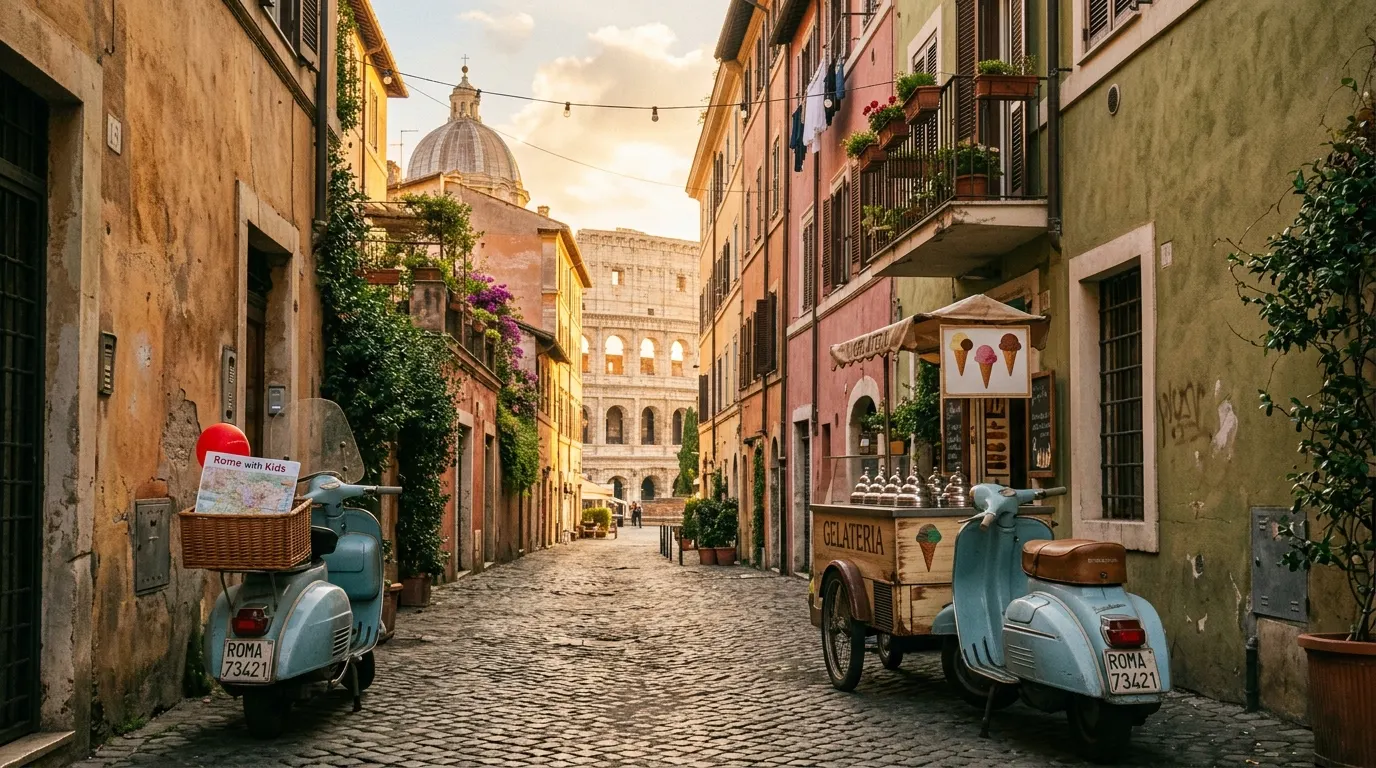
Rome is a living history book, but the key to conquering it with children is mixing the heavy-hitting ancient sites with interactive, kid-focused experiences.
Ancient Wonders and Gladiators
You cannot visit Rome without seeing the Colosseo. The world's most famous amphitheater is a high-stakes visit that requires booking tickets months in advance, but it is an absolute must-do. To make it engaging for kids, frame it as a storytelling adventure rather than a dry history lesson. Talk about the trap doors, the exotic animals, and the gladiator battles.
🎟️ Book family tickets & skip-the-line tours →
Just a short walk away is the Circus Maximus (Circo Maximo Experience). Today, it looks like a massive, empty dirt field, but this augmented reality experience transforms the space into the world's largest chariot racing stadium, allowing kids to visually grasp the history right before their eyes.
When navigating the city center, the Pantheon is a brilliant, quick stop. This nearly 2,000-year-old architectural masterpiece remains the world's largest unreinforced concrete dome. Because it is a single, awe-inspiring room, it is perfect for short attention spans. Afterward, let the kids run off some energy at Piazza Navona, a massive, car-free Baroque square that serves as Rome's grandest outdoor living room. It’s the perfect spot to grab a gelato and watch street performers.
Interactive History and Hidden Gems
If your kids are struggling to visualize the ruins, take them to the Welcome to Rome (multimedia show). This immersive multimedia experience uses 3D projections, holograms, and detailed physical models to bring the ancient city to life in a way that resonates perfectly with visual learners.
For a true Indiana Jones-style adventure, head to the Basilica di San Clemente al Laterano. This 'history layer cake' allows families to literally descend through time, moving from a glittering 12th-century church down to a 4th-century basilica, and finally into a 1st-century Roman house complete with the rushing sound of an underground spring. It is dark, mysterious, and universally loved by older kids and tweens.
Another fantastic option for families who want to escape the crushing crowds of the city center is the Ostia Antica Archaeological Park (Parco Archeologico di Ostia Antica). A massive, well-preserved ancient Roman harbor city, Ostia Antica offers families a much more relaxed and interactive alternative to Pompeii. Kids can safely climb on low walls, explore ancient bakeries, and run through the ruins of an ancient theater without the suffocating crowds.
Castles, Fountains, and Play Time
Every child loves a good fortress, and Castel Sant'Angelo delivers. A massive circular fortress that evolved from an Emperor's tomb to a Papal hideout, it comes complete with weapon rooms, secret passageways, and panoramic views of the city.
No trip to Rome is complete without a visit to the Trevi Fountain. It is an iconic Baroque masterpiece where the simple magic of tossing a coin over your shoulder makes it a memorable ritual for kids. Practical tip: Go before 8:30 AM if you actually want to get close to the water without throwing elbows.
If you need a complete break from history, Rome has modern comforts too. Luneur Park is Italy's oldest amusement park, recently reimagined as a colorful, safe haven specifically for children under 12. For gaming enthusiasts, Vigamus - The Video Game Museum of Rome is a hands-on shrine to gaming history where kids can actually play their way through the evolution of consoles.
Top Things to Do in Split for Families
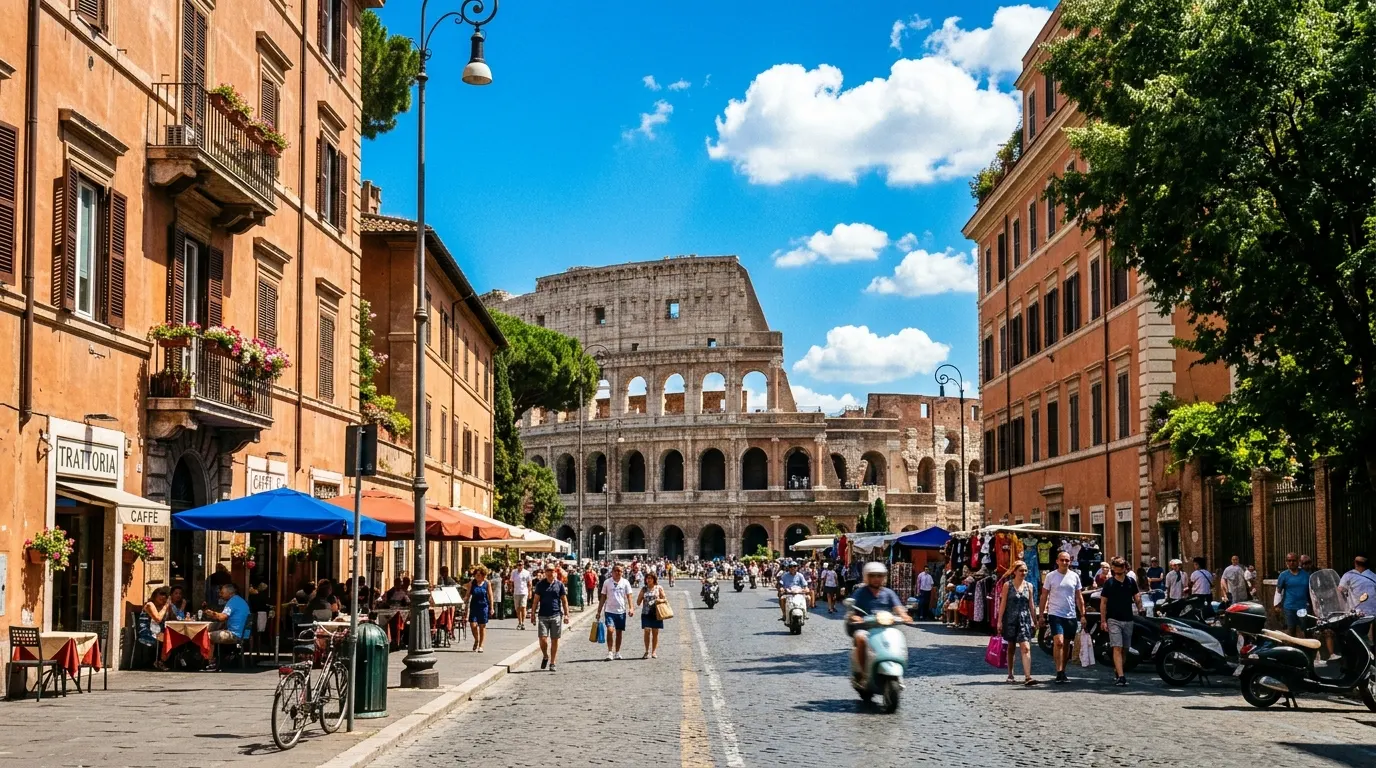
Split offers a totally different kind of historical immersion, heavily intertwined with beach days and island excursions.
Diocletian’s Palace: The Living Living Room
The heart of Split is Diocletian's Palace, but unlike the roped-off ruins of Rome, this is a living, breathing neighborhood. Over 3,000 people still live within the ancient Roman walls. Kids adore wandering through the maze-like limestone alleys, discovering hidden courtyards, and exploring the subterranean cellars (which older kids might recognize as the dragon dungeons from Game of Thrones). You don’t need a strict itinerary here; the joy is simply getting lost, grabbing a slice of pizza, and listening to traditional Klapa singers in the Peristyle (the main square).
🎟️ Find family-friendly tours & activities →
Beaches and Marjan Hill
When the kids hit a wall, Split offers immediate relief. Just a ten-minute walk from the ferry port is Bacvice Beach. While it can get crowded in peak summer, its shallow, sandy bottom is absolutely perfect for toddlers and preschoolers. Older kids will enjoy watching the locals play "picigin," a traditional, acrobatic water sport played with a small ball.
For a nature escape, head to Marjan Hill, a massive nature reserve sitting right on the edge of the city. The shady pine forests offer miles of stroller-friendly walking paths, playgrounds, and tiny, secluded pebble beaches where you can swim in crystal-clear water away from the crowds.
Island Hopping Adventures
One of the greatest advantages of Split is its role as the main ferry hub for the Dalmatian coast. You can easily take a quick, massive car ferry (which kids usually find thrilling) to nearby islands like Brač or Hvar. A day trip to the town of Supetar on Brač offers inflatable water parks, gentle pebble beaches, and a slow, family-friendly pace that feels worlds away from the busy mainland.
Age-by-Age Breakdown: Rome vs Split with Kids
Tailoring your expectations to your children's developmental stages is the secret to a successful European vacation. Here is how Rome vs split with kids breaks down by age group.
Toddlers (Ages 2-3)
Rome: This is arguably the toughest age for Rome. The city's famous 'sampietrini' (cobblestones) are brutal on strollers. You will absolutely need a baby carrier for sites like the Colosseum and the Roman Forum, where strollers are either impractical or outright banned. The lack of green space in the immediate historic center means you have to actively seek out parks like Villa Borghese to let them safely run.
Split: Split is incredibly toddler-friendly. The main Riva (waterfront promenade) is flat, wide, and perfectly paved—ideal for stroller naps. The pedestrian-only palace center means you don't have to worry about traffic, and the shallow waters of Bacvice beach are perfect for splashing.
Winner: Split.
Preschoolers (Ages 3-5)
Rome: At this age, Rome starts to become magical. They are old enough to enjoy the novelty of tossing coins in fountains, eating pizza for lunch every day, and marveling at the sheer size of the Basilica di San Pietro in Vaticano. When they need a break, you can visit the Cinema dei Piccoli, tucked away in the lush Villa Borghese gardens. This historic wooden structure holds the Guinness World Record for the smallest cinema in the world.
Split: Preschoolers will love the freedom of Split. Chasing pigeons in the squares, taking short boat rides, and eating ice cream on the seawall are top-tier activities.
Winner: Tie. Both offer great sensory experiences, though Split remains logistically easier.
School-Age Kids (Ages 6-10)
Rome: This is Rome’s sweet spot. Kids this age are learning about ancient history, mythology, and gladiators in school. The stories of Rome are perfectly tailored to their imaginations. Taking a day trip out to Villa Adriana (Hadrian's Villa, Tivoli), the sprawling, 120-hectare country estate of Emperor Hadrian, feels like exploring an ancient mini-city.
Split: School-age kids will love the independence of Split. They can lead the way through the palace corridors, try snorkeling in the clear Adriatic waters, and enjoy a day trip to the nearby Krka National Park to see the massive cascading waterfalls.
Winner: Rome. The educational payoff and sheer volume of "wow" moments are unbeatable.
Tweens and Teens (Ages 11-14)
Rome: Teenagers thrive in Rome. They can appreciate the art, handle the long walking days, and dive into the food culture. Football fans will absolutely love the Stadio Olimpico Tour, a high-octane behind-the-scenes look at the shared home of AS Roma and SS Lazio. They are also old enough to appreciate evening passeggiatas (strolls) and later dinners.
Split: Tweens and teens who love the outdoors will gravitate toward Split. Sea kayaking tours around Marjan Hill, stand-up paddleboarding, and the slightly more relaxed, beachy teenager vibe make it a fantastic, low-stress vacation for older kids.
Winner: Rome for culture and food; Split for outdoor adventure.
What to Skip in Rome (and Split)
Not every famous monument is worth your family's precious time and energy. Knowing what to cut from your itinerary is just as important as knowing what to include.
In Rome:
- Bocca della Verità: Skip this entirely. You are essentially waiting in a 30-to-60-minute line on a crowded, unshaded sidewalk for a 30-second photo op with your hand in a stone mouth. Kids get incredibly bored and cranky waiting for this.
- Spanish Steps (Sitting): While iconic to walk past, the Piazza di Spagna (Spanish Steps) are no longer a place to rest. Since 2019, Rome has strictly enforced a 'no sitting' rule on the steps, with police blowing whistles and issuing heavy fines to anyone who sits down. It is stressful with tired kids who just want to rest their legs.
- Museo Leonardo da Vinci Experience: Skip this privately run, high-priced exhibition. It is mostly reproductions and often feels like a bait-and-switch tourist trap near the Vatican.
- Museo della Cripta dei Cappuccini: Walking through six small chapels decorated with the skeletal remains of 3,700 monks is deeply polarizing. While a morbid teen might find it fascinating, it can easily cause nightmares for younger children.
In Split:
- Froggyland: This quirky museum features hundreds of taxidermy frogs posed in human scenarios (playing tennis, going to school). While it’s a funny novelty, it’s quite expensive for what takes about 15 minutes to walk through, and some young kids find the dead, stuffed animals unsettling rather than amusing.
- Mid-day Palace Tours in July/August: Avoid booking any walking tours between 11:00 AM and 4:00 PM in the peak summer. The limestone reflects the intense sun, turning the palace walls into an oven.
Pro Tips from Parents for Rome and Split
Navigating foreign cities requires a bit of insider knowledge to keep the family moving smoothly. Here are some heavily vetted tips from parents who have been there.
- Hydration is Free: In Rome, instead of buying overpriced plastic bottles, look for the curved iron 'nasoni' fountains scattered across the city. The water runs constantly, is ice cold, and is perfectly safe to drink. Kids love plugging the bottom hole to make the water shoot out the top spout like a water fountain.
- Treats Over Tourist Traps: In Rome, skip the standard industrial popsicles at convenience stores. Instead, find a 'Grattachecca' kiosk along the Lungotevere riverbank. This hand-shaved ice topped with fresh fruit syrup is a legendary Roman summer treat that kids adore.
- Navigating Medical Hiccups: If a child gets a fever or a scrape in Italy or Croatia, look for the bright green neon crosses indicating a Pharmacy (Farmacia/Ljekarna). European pharmacists are highly trained, speak English well, and can dispense many medications over the counter that would require a doctor's visit back home.
- Beware of Costumed Characters: In Rome, actively avoid the men dressed as gladiators hanging around the Colosseum. They are notorious for pulling kids in for a photo and then aggressively demanding €20-€50.
- Stroller Strategy: Rome's cobblestones will destroy high-end strollers with small wheels. Bring a lightweight, durable umbrella stroller that you can easily fold and carry up stairs. In Split, a standard stroller is perfectly fine for the promenade, but you will need to fold it to navigate the narrow, stepped alleys of the palace interior.
- Dining Times: In Rome, aim for a 7:00 PM dinner in neighborhoods like Trastevere, which is the earliest most authentic spots open. By 9:00 PM, the narrow alleys become incredibly crowded. In Split, dining is a bit more flexible, with many waterfront restaurants serving food continuously throughout the afternoon.
- Transportation Quirks: Unlike NYC or London, Roman taxis rarely stop if you wave them down in traffic. You must either walk to a designated 'Taxi Stand' (marked with an orange sign) or use the FreeNow app. In Split, rely on your feet for the center, and use Uber for trips slightly further out (like to the local malls or outer beaches).
The Final Verdict
So, when weighing Rome vs split with kids, which is the better choice? It ultimately comes down to your family's current season of life. If you have school-aged children or teenagers who are ready to absorb world history, walk 15,000 steps a day, and dive headfirst into one of the world's greatest culinary capitals, Rome is an unparalleled, monumental adventure.
However, if you are traveling with toddlers or preschoolers, or if you simply need a vacation that actually feels like a vacation, Split is the winner. The combination of pedestrian-only historical streets, immediate beach access, and a laid-back coastal culture makes it a phenomenally easy and rewarding place to travel with young children. Whichever you choose, both cities offer unforgettable Mediterranean memories that your family will be talking about for years to come.