When planning a South American family getaway, parents are often torn between majestic mountain peaks and iconic tropical coastlines. Deciding between Quito vs Rio de Janeiro with kids is a classic travel dilemma. Both cities offer dramatic landscapes, rich cultural tapestries, and unforgettable experiences, but they cater to entirely different family travel styles.
Quito, perched high in the Andes, is a gateway to cloud forests, active volcanoes, and hands-on colonial history. It requires a bit more physical preparation due to the altitude but rewards intrepid families with unparalleled wildlife encounters and a deeply authentic Andean atmosphere. Rio de Janeiro, on the other hand, pulses at sea level with its world-famous beach culture, lush urban jungles, and a vibrant, energetic rhythm that sweeps you up the moment you arrive.
If you are looking at Quito and Rio de Janeiro for your next major trip, you need to look beyond the glossy travel brochures and consider the practical realities of navigating these sprawling metropolises with little ones in tow. We are breaking down the logistics, the best activities, and the distinct vibes to help you choose the perfect destination for your family.
The Vibe: Quito vs Rio de Janeiro with Kids
Quito: High-Altitude Adventure and Colonial Charm
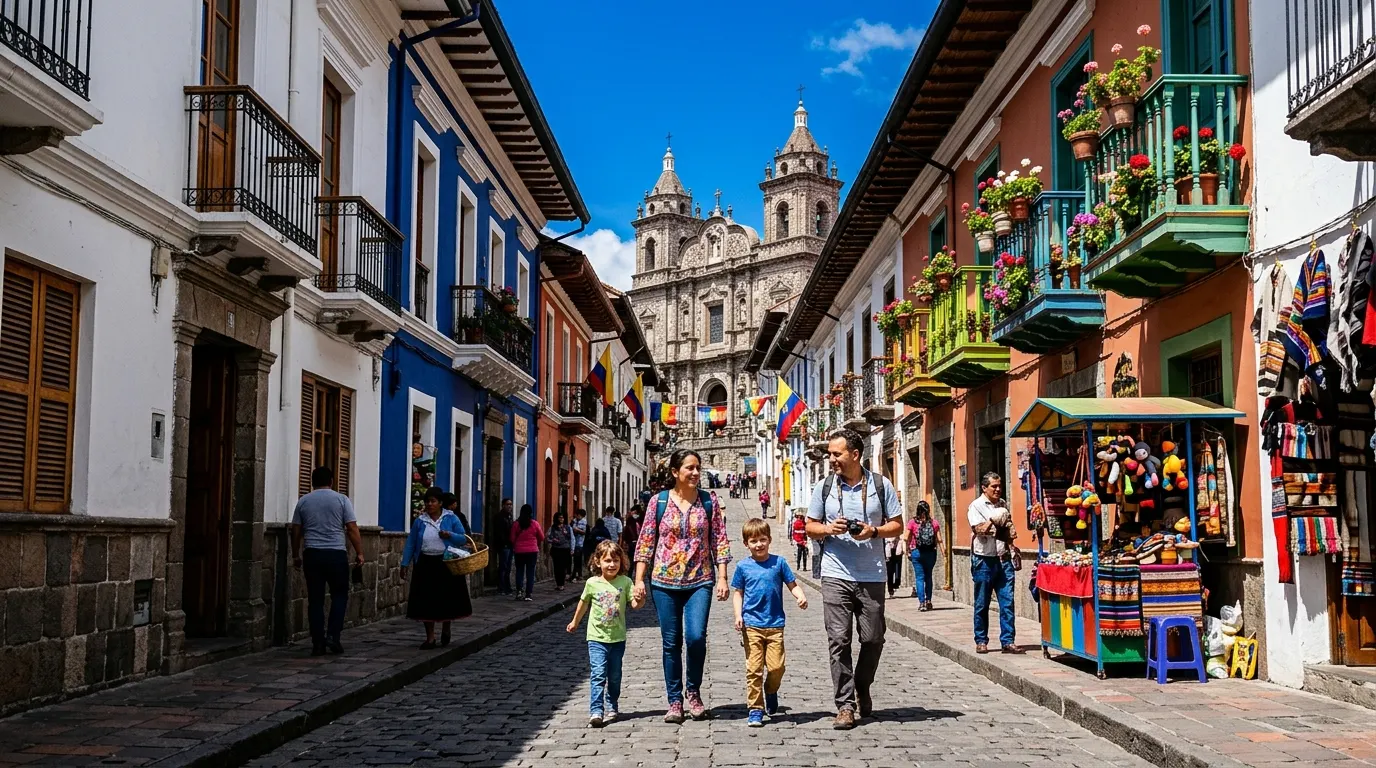
Quito is nestled in a valley surrounded by towering Andean peaks at an elevation of 9,350 feet. The atmosphere here is crisp, historical, and deeply connected to nature. The city’s historic center is a beautifully preserved labyrinth of cobblestone streets, gold-leafed churches, and bustling plazas where indigenous culture blends seamlessly with Spanish colonial architecture.
For families, the pace in Quito is naturally dictated by the altitude. You will find yourselves taking slower, more deliberate walks, stopping for warm drinks, and spending your days exploring the incredible natural wonders that sit just outside the city limits. It is a destination that feels educational without trying to be, where science, history, and ecology are baked into everyday activities.
Rio de Janeiro: Tropical Energy and Beachside Living
Rio de Janeiro is a city that lives outdoors. The vibe is loud, colorful, and heavily focused on the coastline. Surrounded by dramatic granite monoliths and the dense Tijuca rainforest, Rio offers a unique blend of dense urban life and accessible tropical nature.
Families visiting Rio will spend their days navigating the wide, stroller-friendly boardwalks of Copacabana and Ipanema, drinking fresh coconut water, and riding cable cars up towering peaks. The culture is incredibly welcoming to children—Brazilians adore kids, and you will find that locals are highly accommodating of noisy toddlers in restaurants or crowded spaces. However, the heat and the sheer bustling scale of the city require a different kind of stamina than the cool, high-altitude climbs of Ecuador.
Top Family Activities in Quito
Cloud Forests and Volcanic Ranches
Quito’s greatest asset for families is its immediate proximity to some of the world’s most biodiverse ecosystems. A favorite day trip is the Mindo Cloud Forest (Pueblo de Mindo), a lush, high-altitude jungle town about two hours from the city. Here, kids can marvel at giant butterflies and watch hummingbirds dart through the mist. While in Mindo, the Tarabita de Mindo (Cable Car to Waterfalls) is an absolute must—an exhilarating open-air cable car ride that whisks your family across a deep canyon into the heart of the forest.
For a truly unforgettable stay, look into Mashpi Lodge (Mashpi Cloud Forest Reserve), a luxury, glass-walled eco-lodge hidden in a 3,000-acre private reserve. It feels like stepping into a real-life terrarium.
If your kids love animals, head south to Cotopaxi National Park (Parque Nacional Cotopaxi). This high-altitude volcanic wonderland allows families to spot wild horses and llamas grazing against the backdrop of a snow-capped volcano. Pair this with a visit to Hacienda El Porvenir (Cotopaxi), a working ranch at the foot of the volcano where kids can swap screens for llama feeding and horseback riding in the crisp Andean air.
🎟️ Find family-friendly tours & activities →
Historic Old Town and the Equator
Quito’s Old Town is a UNESCO World Heritage site that feels remarkably alive. Start your exploration at Plaza Grande (Plaza de la Independencia), the vibrant heart of the historic center. It is a masterclass in people-watching, surrounded by grand architecture. A short walk away is the Iglesia de la Compañía de Jesús, known as the 'Gold Church.' Draped in seven tons of 24-karat gold leaf, it is visually spectacular enough to hold the attention of even the most easily distracted school-aged kids.
Stroll down Calle La Ronda, a beautifully preserved pedestrian-only street where history comes alive through hands-on artisan workshops. Stop for traditional sweets or watch local craftsmen spin wooden tops.
No trip to Quito is complete without defying gravity at the equator. Head to the Museo de Sitio Intiñan, a quirky, hands-on museum claiming to sit on the 'real' GPS-verified equator line. Kids love the interactive experiments, like balancing an egg on a nail or watching water drain straight down.
🎟️ Book family tickets & skip-the-line tours →
Urban Sanctuaries and Chocolate Making
When you need a relaxed morning within the city, Parque La Carolina is Quito’s massive urban heart. It is a high-altitude playground featuring paddle boats, vast green spaces, and even a retired airplane that kids can climb inside. In the south of the city, Parque de las Cuadras offers a sprawling 24-hectare ecological oasis that feels more like a nature reserve than a city park, perfect for a quiet, stroller-friendly walk.
For a unique indoor activity, book the Tandana Cocoa Experience (Quito). This hands-on, urban chocolate workshop teaches families the 'bean-to-bar' process, allowing kids to roast, grind, and taste Ecuadorian chocolate without having to trek deep into the Amazon.
Top Family Activities in Rio de Janeiro
Iconic Peaks and Golden Beaches
Rio’s geography is its main attraction. Taking the glass-paneled cable cars up Sugarloaf Mountain (Pão de Açúcar) is a thrilling experience for kids of all ages. The ride is smooth, and the enclosed cars are completely safe for toddlers. At the top, the panoramic views of the city meeting the ocean are breathtaking, and you can often spot tiny marmoset monkeys in the trees.
The beaches of Copacabana and Ipanema are legendary, but they require a bit of strategy with kids. Stick to the early mornings or late afternoons to avoid the blistering midday sun. The wide, mosaic-tiled promenade (calçadão) is flat and perfect for strollers. Look for specific lifeguard posts (postos) that cater to families; Posto 9 and Posto 11 in Ipanema tend to have a more relaxed, family-friendly atmosphere compared to the bustling center of Copacabana.
The Urban Jungle
Rio contains the largest urban forest in the world: Tijuca National Park. Hiring a jeep to tour this dense rainforest is a massive hit with school-aged kids and teens. You can hike to hidden waterfalls, spot colorful toucans, and watch capuchin monkeys swing through the canopy.
Taking the historic cog train up Corcovado Mountain to see Christ the Redeemer is another must-do. The train ride itself, winding steeply through the jungle, is often just as exciting for young kids as the massive statue at the summit.
Which City is Better for Your Kids' Ages?
Toddlers (Ages 2-3)
For the toddler crowd, Rio de Janeiro often feels slightly easier logistically. The altitude in Quito can disrupt toddler sleep patterns and make them cranky or lethargic during the first few days. Rio’s sea-level environment, wide beachfront promenades, and generally flat tourist zones make pushing a stroller much simpler. Brazilians are also incredibly welcoming to young children, making dining out a low-stress affair.
If you are visiting Quito with a toddler, prioritize flat, open spaces like Parque de las Cuadras and keep your itinerary light.
Preschoolers (Ages 3-5)
Preschoolers thrive on sensory experiences, making both cities highly appealing. In Quito, preschoolers will be mesmerized by the iridescent hummingbirds at Reserva Yanacocha, a high-altitude cloud forest sanctuary where the birds flutter mere inches away.
In Rio, the calm waters of Praia Vermelha (Red Beach) near the base of Sugarloaf Mountain provide a safe, wave-free spot for little ones to splash and build sandcastles.
School-Age Kids (Ages 6-10)
This age group is where Quito really starts to shine. School-aged kids have the stamina to handle the altitude and the curiosity to appreciate the culture. The hands-on experiments at the equator line, exploring the Calle La Ronda, and the chocolate-making workshops are perfectly tailored to this age.
In Rio, kids this age will love the thrill of the cog train up Corcovado and exploring the botanical gardens, where they can search for sloths high up in the palm trees.
Tweens and Teens (Ages 11-14)
For teenagers, the choice between Quito vs Rio de Janeiro with kids comes down to their personal interests. If your teens are into adventure, wildlife, and dramatic landscapes, Quito is unbeatable. Taking them to spot Andean condors at the Reserva Ecológica Antisana or horseback riding near Cotopaxi will provide memories for a lifetime.
If your teens prefer beach culture, surfing, and vibrant city energy, Rio is the clear winner. They can take surf lessons in Arpoador, bike around the Rodrigo de Freitas Lagoon, and enjoy the lively, colorful street art found throughout the city.
What to Skip in Quito and Rio de Janeiro with Kids
What to Skip in Quito
Not every highly-rated attraction is suitable for families. When planning your Quito itinerary, bypass the nightlife hubs. Plaza Foch (Plaza Quinde) and Calle Reina Victoria (nightlife strip) are the center of Quito's party scene. During the day they are unremarkable, and by evening they are magnets for aggressive touts and loud music—definitely not a family-friendly environment.
Be extremely cautious with high-altitude treks. The Teleferico Quito summit trail to Rucu Pichincha reaches extreme altitudes of nearly 15,500 feet. The terrain is rocky, exposed, and entirely unsuitable for children due to the high risk of severe altitude sickness and sudden weather changes.
Finally, while Quito has incredible history, skip the deeply academic museums. The Museo de la Ciudad and the Museo Numismático del Banco Central del Ecuador are text-heavy, dry, and will quickly bore younger travelers. Similarly, the Guayasamin Museum (Capilla del Hombre) features intentionally somber artwork focusing on themes of human suffering and oppression—powerful for adults, but far too heavy for kids.
What to Skip in Rio de Janeiro
In Rio, avoid the beaches during the peak midday heat. The sun is punishing, and the sand becomes too hot for little feet. Plan beach trips for before 10 AM or after 3 PM.
Additionally, skip the unguided or heavily commercialized favela tours. While some community-led tours offer valuable cultural insights for older teens, the steep, uneven stairs, unpredictable environments, and complex socio-economic realities make them inappropriate for families with young children.
Practical Considerations: Quito vs Rio de Janeiro with Kids

Weather and Packing
The climates could not be more different. Quito is known as the city of eternal spring, but that spring includes distinct daily patterns. Mornings are typically bright, crisp, and sunny, but it almost always rains in the mid-afternoon. Schedule your outdoor park visits, like Parque La Carolina, for the morning and keep indoor activities or a long lunch reserved for the afternoon showers. Pack layers—fleeces, rain jackets, and comfortable walking shoes are essential.
Rio is tropical, hot, and humid year-round. You will need lightweight, breathable clothing, high-SPF sunscreen, rash guards for the kids, and comfortable sandals. Rio also experiences sudden, heavy tropical downpours, especially in the summer months (December to March), so a compact travel umbrella is handy.
Getting Around
Navigating Quito with a stroller can be challenging. The historic center features narrow, often crowded sidewalks and heavily cobbled streets. A lightweight travel stroller is manageable, but a baby carrier is far more practical for toddlers. When moving around the city, while most yellow taxis do not offer car seats, the Cabify app allows you to request larger vehicles where you can more easily install your own portable car seat.
Rio is significantly more stroller-friendly along the coast. The beach promenades and the neighborhoods of Copacabana, Ipanema, and Leblon are flat with wide sidewalks. The metro system is clean, safe, and air-conditioned, making it an excellent way to bypass notorious Rio traffic.
Food and Digestion
A major consideration for Quito is the altitude's effect on the body. Digestion slows down significantly at high altitudes. Avoid heavy meat dishes or large portions on your first evening in the city to prevent stomach aches and restless sleep for the kids. Instead, introduce them to local street treats. Instead of coffee, let the kids try 'Morocho,' a thick, sweet, spiced corn drink sold by street vendors and in markets. It tastes like a warm, drinkable pudding and is incredibly comforting on a cool Andean afternoon.
Rio’s food scene is highly accessible for kids. Fresh fruit stands are everywhere, serving up cold açaí bowls and fresh juices. Pão de queijo (warm cheese bread) is a ubiquitous, inexpensive snack that even the pickiest eaters will devour.
Pro Tips from Parents for These South American Hubs
- Secure your belongings: In both cities, petty theft is a reality. When visiting crowded areas like Quito's Mercado Central or Rio's Copacabana promenade, wear your daypack on your chest. Pickpocketing is common in dense tourist zones.
- Time the ceremonial shifts: In Quito, every Monday at 11 AM in Plaza Grande (Plaza de la Independencia), the Presidential Guard performs a ceremonial shift with horses and music. Arrive by 10:30 AM to secure a good viewing spot for the kids.
- Watch the clouds in Quito: If the Pichincha volcano is shrouded in clouds from the city floor, skip the cable car trip up the mountain. You will pay full price only to stand in freezing fog with zero visibility.
- Avoid weekend monument crowds: The main monument complex at the equator becomes extremely crowded with local tour groups on Saturdays and Sundays, leading to long lines. Visit on a weekday morning for a much smoother experience.
- Embrace the early Rio mornings: Because Rio gets so hot, the city wakes up early. Head to the beach or the parks by 8 AM. You will beat the heat, the crowds, and experience the city at its most serene.
The Verdict: Quito vs Rio de Janeiro with Kids
Choosing between these two incredible destinations ultimately comes down to what your family values most in a vacation. If you are seeking an active, educational adventure filled with unique wildlife, volcanic landscapes, and rich indigenous history, Quito will exceed your expectations. It requires a bit more physical resilience due to the altitude, but the rewards are immense. Conversely, if your family is looking for a vibrant, energetic escape where you can blend world-class sightseeing with relaxed beach days and tropical warmth, Rio is unparalleled. Whichever you choose, navigating the decision of Quito vs Rio de Janeiro with kids guarantees you will be embarking on a deeply memorable South American adventure that your children will talk about for years to come.