Taking your family across borders, navigating distinct transit systems, and waking up in a new time zone is an incredibly rewarding way to show children the world. However, organizing a multi city trip with kids requires a completely different approach than booking a single resort stay or a simple beach getaway. When you are coordinating train schedules, managing varying climates, and hauling luggage across cobblestone streets while keeping small humans fed and happy, the logistics can quickly become overwhelming. The key to maintaining your sanity—and actually enjoying the adventure alongside your children—is strategic pacing, ruthless prioritization, and building flexibility into every single day of your itinerary.
The Core Strategy for a Multi City Trip With Kids
Successfully hopping from one destination to another relies on establishing a sustainable rhythm. Children thrive on predictability, which is inherently disrupted when you change locations. To counter this, your underlying travel strategy needs to prioritize stability over checking boxes on a map.
Pacing is Everything: The Three-Night Minimum
The most common mistake families make when planning an expansive itinerary is moving too quickly. A two-night stay in any destination is essentially a trap when traveling as a family. Consider the reality of the timeline: you arrive on the first afternoon exhausted from transit, spend the second day desperately trying to see the highlights while figuring out the local public transportation, and wake up on the third morning only to pack your bags and leave.
To create a sustainable multi city trip with kids, implement a strict three-night minimum for every stop. Four nights is even better. This allows for a "rest and reset" afternoon, gives you a buffer day in case of bad weather or unexpected tantrums, and most importantly, means you aren't packing and unpacking your suitcases every forty-eight hours.
Connecting the Dots: Strategic Transit Planning
How you move between cities is just as important as the cities themselves. Whenever possible, prioritize high-speed trains over budget flights. While a one-hour flight might look faster on paper than a three-hour train ride, the flight requires traveling to an airport outside the city center, arriving two hours early for security, and waiting at baggage claim. Trains, particularly in regions like Europe or Japan, take you directly from city center to city center, offer ample space for kids to walk around, and have no strict liquid restrictions for snacks and drinks.
How to Choose Destinations for a Multi City Trip With Kids

Selecting your route requires balancing world-class attractions with geographical logic. Zigzagging across a continent wastes precious vacation time and drains your family's energy.
Anchor Cities vs. Day Trips
Instead of staying in five different cities over fifteen days, choose two or three major "anchor cities" and utilize day trips. This allows you to experience distinct regions without the burden of moving your luggage. For example, if you are exploring the United Kingdom and France, you can base yourself in London and Paris, utilizing the Eurostar to connect them seamlessly.
Example Connection: The London to Paris Travel Day
To illustrate how to balance sightseeing with transit, consider a morning in London before catching an afternoon train to Paris. You can visit a major site early, grab lunch, and head to St Pancras International. If you are following our London guide, the Tower of London is an excellent morning activity before a travel day.
- Opening Hours: 9:00 AM - 5:30 PM (Summer), 9:00 AM - 4:30 PM (Winter).
- Rough Costs: £34.80 (approx. $44 USD) for adults, £17.40 (approx. $22 USD) for children ages 5-15. Under 5s are free.
- Best Time of Day to Visit: Arrive right at 9:00 AM to see the Crown Jewels before the massive queues form.
- Stroller Accessibility: Partial. The grounds are highly uneven with historic cobblestones, and strollers must be parked before entering the White Tower or the Crown Jewels exhibit. A baby carrier is highly recommended.
- Nearest Food Options: Borough Market is a short walk over Tower Bridge, offering incredible international street food that caters to picky eaters and adventurous palates alike.
- How Long to Spend: 2 to 3 hours is plenty for kids before their attention spans wane.
🎟️ Book family tickets & skip-the-line tours →
By finishing up around noon, you have ample time to retrieve your bags from your hotel and comfortably make a 3:30 PM train to Paris, arriving in time for a late dinner near your new accommodations.
Age-Specific Tips for Hopping Between Cities

A multi city trip with kids looks vastly different depending on the ages of your children. Tailoring your transit days and city transitions to their developmental stages is crucial for a smooth journey.
Toddlers (Ages 2-3)
Toddlers are creatures of habit, making frequent location changes challenging. The goal here is to maintain a bubble of familiarity. Bring their favorite blanket, a specific cup they love, and a white noise machine to replicate their home sleep environment in every new hotel room. When navigating train stations or airports, a highly compact, travel-certified stroller that fits in overhead bins is essential. Rely on baby carriers for navigating crowded transit hubs where elevators might be broken or hard to find. Plan your inter-city travel to align perfectly with their midday nap—the hum of a train or a rental car is often the perfect sleep aid.
Preschoolers (Ages 3-5)
At this age, children understand that they are moving, but they lack the concept of time and distance. "Are we there yet?" will be a constant refrain. Visual aids work wonders here. Print out a simple, colorful map of your itinerary and let them put a sticker on the new city every time you arrive. Preschoolers are also prone to sensory overload in busy, unfamiliar environments like major train stations. Keep transitions calm by giving them a specific, simple job, such as holding the family's snack bag, which gives them a sense of purpose and keeps them close to you.
School-Age (Ages 6-10)
School-age children are in the sweet spot for multi-city travel. They have the stamina for longer days and the curiosity to appreciate new environments. Get them heavily involved in the logistics. Teach them how to read the departure boards at the train station to find your platform. Give them a dedicated digital camera or a travel journal to document the differences between the cities you visit. At this age, they are also entirely capable of carrying their own small backpack with their entertainment, water bottle, and a change of clothes, which slightly lightens your load.
Tweens and Teens (Ages 11-14)
Older children crave autonomy, and moving from city to city is the perfect opportunity to grant it. In each new destination, assign your tween or teen a specific leadership role. Perhaps they are in charge of navigating the subway system from the train station to your apartment rental, or they are given a daily budget to select and purchase the family's afternoon gelato or bakery treats. To keep them engaged with the changing itinerary, require that they research and select one activity or restaurant in every city you visit. When they have ownership over the itinerary, their engagement levels skyrocket.
Packing Strategies for Multiple Climates and Transit
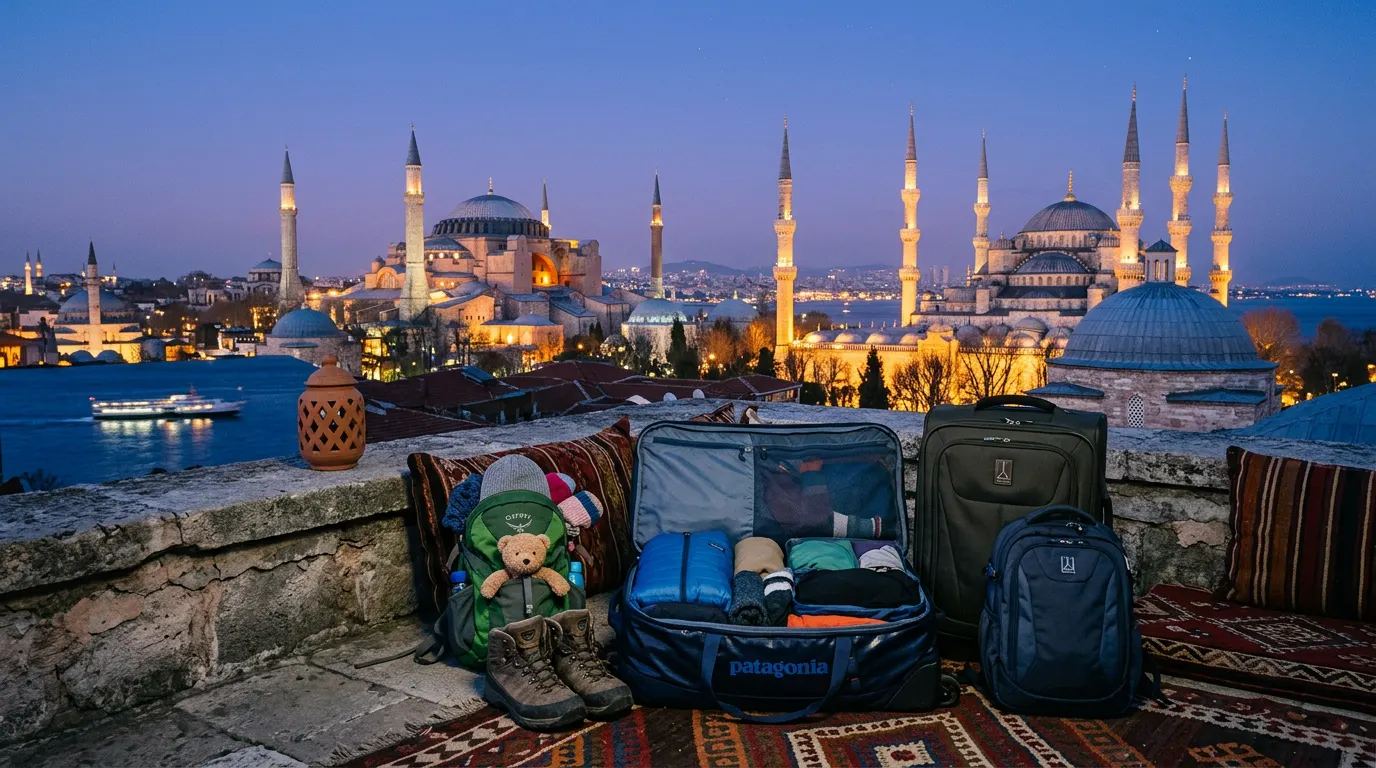
The sheer physical effort of hauling luggage on and off trains, up narrow apartment staircases, and across uneven pavements is the most physically taxing part of city-hopping. Overpacking is the enemy of the multi-city traveler.
The Capsule Wardrobe Approach
You will likely be dealing with varying climates, especially if you are traveling between northern and southern regions. The solution is not to pack more, but to pack smarter through a capsule wardrobe. Choose a single, neutral color palette for the entire family so that all tops match all bottoms. Every item packed must serve at least two purposes. Plan to do laundry every four to five days. Booking an apartment with a washing machine midway through your trip is a strategic move that allows you to pack half the clothing you normally would.
Managing Luggage on Trains and Budget Airlines
European trains and regional budget airlines have strict space limitations. If you are wrestling with three massive hard-sided suitcases, you will struggle to get them up the steep steps of a train car before the doors close. Aim for medium-sized rolling bags or, even better, high-capacity travel backpacks. When adults have their hands free because their luggage is on their backs, it is infinitely easier to hold onto wandering toddlers or grab boarding passes. Always keep a separate, easily accessible tote bag with your "transit essentials"—passports, wet wipes, heavy snacks, and electronics—so you don't have to open your main luggage in the middle of a crowded station.
Managing the Logistics of Lodging
Where you sleep dictates how easily you can explore. When you are moving between multiple cities, your lodging needs to function as a seamless basecamp rather than a source of stress.
Hotels vs. Apartment Rentals
Both options have distinct advantages depending on the length of your stay in a specific city. For shorter stops (the minimum three nights), centrally located hotels are often better. You benefit from luggage storage if you arrive before check-in, on-site breakfast that gets the family fed quickly, and a concierge to help with immediate local questions. For longer stays of four nights or more, apartment rentals become invaluable. The ability to cook a simple pasta dinner when the kids are too exhausted for a restaurant, separate bedrooms for better sleep, and access to laundry facilities are game-changers.
Location, Location, Location
When you only have a few days in a city, you cannot afford to waste an hour commuting from the distant suburbs. Pay the premium to stay in a central neighborhood that is within walking distance of major transit hubs and green spaces.
For instance, if you are utilizing our Rome guide as part of an Italian multi-city adventure, staying in the central Monti neighborhood puts you within a short walk of Roma Termini (the main train station) and major historical sites.
- Opening Hours (Colosseum): 8:30 AM - 7:15 PM (Spring/Summer), closes earlier in Winter.
- Rough Costs: €18 (approx. $19.50 USD) for adults. Children under 18 are free, though a €2 reservation fee still applies.
- Best Time of Day to Visit: 8:30 AM right at opening, or late afternoon to avoid the brutal midday sun and peak crowds.
- Stroller Accessibility: Yes, there is an elevator, but the ancient Roman cobblestones inside and outside the monument make pushing a stroller incredibly bumpy. A carrier is highly preferred.
- Nearest Food Options: The Monti neighborhood offers fantastic, family-friendly trattorias just a ten-minute walk away, perfect for authentic pizza and pasta away from the immediate tourist traps.
- How Long to Spend: Plan for about 2 hours to cover the Colosseum, plus another hour if you venture into the adjacent Roman Forum.
🎟️ Find family-friendly tours & activities →
What to Skip When City-Hopping
Knowing what to leave out of your itinerary is just as critical as knowing what to include. To protect your family's energy reserves, absolutely avoid the following pitfalls.
The "See It All" Mega-Itinerary
Skip the temptation to cram five countries into fourteen days. A multi-city trip should not feel like a forced march. If you try to see London, Paris, Amsterdam, Berlin, and Rome in a single two-week vacation, all your children will remember is the inside of train carriages and their parents stressing over departure times. Cut your planned destinations by at least one-third. Depth in a few cities is infinitely more enjoyable than a shallow, exhausted sprint through many.
Changing Hotels Every Single Night
Never plan a route that requires one-night stopovers. The process of arriving, checking in, unpacking toiletries, repacking the next morning, checking out, and moving again consumes roughly four hours of your day. It completely destroys any momentum and leaves kids feeling unmoored. If a destination is only worth one night, it should be done as a day trip from a larger anchor city, or skipped entirely.
Overly Ambitious Morning Travel Times
Skip booking the 6:00 AM budget flight or the 7:00 AM high-speed train, no matter how much cheaper the tickets are. Waking children up at 3:30 AM to navigate an unfamiliar city in the dark to reach an airport will result in overtired, screaming kids by 10:00 AM. It essentially ruins not just the travel day, but the following day as well while their sleep schedules recover. Always aim for transit that departs between 10:00 AM and 2:00 PM.
Pro Tips from Parents for Seamless Transit Days
After countless miles logged across varied transportation networks, experienced parents rely on a few specific tactics to make moving between cities as painless as possible.
- The "Double Snack" Rule: Whatever amount of snacks you think you need for a travel day, double it. Transit delays happen, and food options on trains or in small regional airports are often limited, expensive, or unappealing to picky eaters. High-protein, low-mess snacks are your first line of defense against travel meltdowns.
- Download Offline Maps Everywhere: Before leaving your hotel's Wi-Fi, download the offline Google Map for your destination city. When you emerge from a subway station into a new city, you instantly know which direction to walk to find your new accommodation without wasting time searching for a cellular signal while managing luggage and kids.
- Ship the Souvenirs: If you are traveling for several weeks and the kids (or you) are accumulating heavy souvenirs, find a local post office halfway through the trip and ship a box home. The cost of postage is entirely worth the relief of not lugging an extra ten pounds of books and toys through three more train stations.
- Plan a "Nothing" Afternoon: On the day you arrive in a new city, plan zero structured activities. Let the goal simply be to find the hotel, locate the nearest playground to let the kids burn off transit energy, and find a nearby grocery store for water and basic supplies.
Organizing a multi city trip with kids is undoubtedly an ambitious undertaking, requiring careful foresight, realistic expectations, and a healthy dose of patience. However, the effort pays off exponentially when you watch your children confidently navigate a foreign subway system, order a pastry in a new language, and adapt to the beautiful complexities of the world. By pacing yourselves, packing light, and focusing on connection rather than a checklist, you can create a spectacular, globe-trotting adventure that brings your family closer together.