Deciding between a sun-drenched Mediterranean escape and a grand European capital city break is a classic family travel dilemma. If you find yourself weighing the merits of coastal relaxation against world-class cultural institutions, you are likely looking at a matchup like piran & slovenian coast vs vienna with kids. Both destinations offer incredibly safe, welcoming environments for families, but they cater to entirely different travel styles.
In one corner, you have the Slovenian Coast—a compact, sun-baked stretch of the Adriatic where car-free Venetian-style towns invite slow mornings, and the surrounding karst region hides subterranean train rides and castles built into cliff faces. In the other corner, Vienna stands as a monument to imperial history, offering highly structured, stroller-friendly boulevards, interactive children's museums that set global standards, and vast manicured parks.
Choosing between the Piran & Slovenian Coast and Vienna comes down to whether your family thrives on unstructured outdoor exploration and coastal charm, or if you prefer the engaging, educational, and polished itinerary of a major metropolis. Let’s break down exactly what each destination offers for parents traveling with children.
Piran & Slovenian Coast vs Vienna with Kids: The Vibe Check
Understanding the daily rhythm of these two destinations is crucial for setting your family's expectations. The way you move, eat, and schedule your days will look vastly different depending on which you choose.
The Slovenian Coast: Slow-Paced Adriatic Magic
The Slovenian Coast, particularly the town of Piran, forces you to slow down. Because Piran is almost entirely car-free, the stress of holding onto toddlers near busy roads vanishes. Kids can safely chase pigeons across Tartini Square or peer into the clear Adriatic waters right off the stone piers. The vibe here is tactile and outdoor-focused. Your days will likely revolve around morning swims, afternoon gelato runs, and early evening strolls along the promenade. It is less about checking off a top-ten list of museums and more about soaking in the Mediterranean atmosphere.
Vienna: Imperial Grandeur and City Polish
Vienna operates on a different frequency. It is a sprawling, magnificent city that requires comfortable walking shoes and a basic understanding of the (excellent) public transit system. The vibe is cultured, orderly, and majestic. While it might sound formal, Vienna is surprisingly accommodating to children. The city is incredibly green, with massive parks breaking up the grand architecture, and the museums are purposefully designed to engage young minds. A day in Vienna feels full, structured, and enriching, usually involving a mix of palace tours, playground stops, and breaks in traditional coffee houses.
Top Things to Do: Nature vs Culture
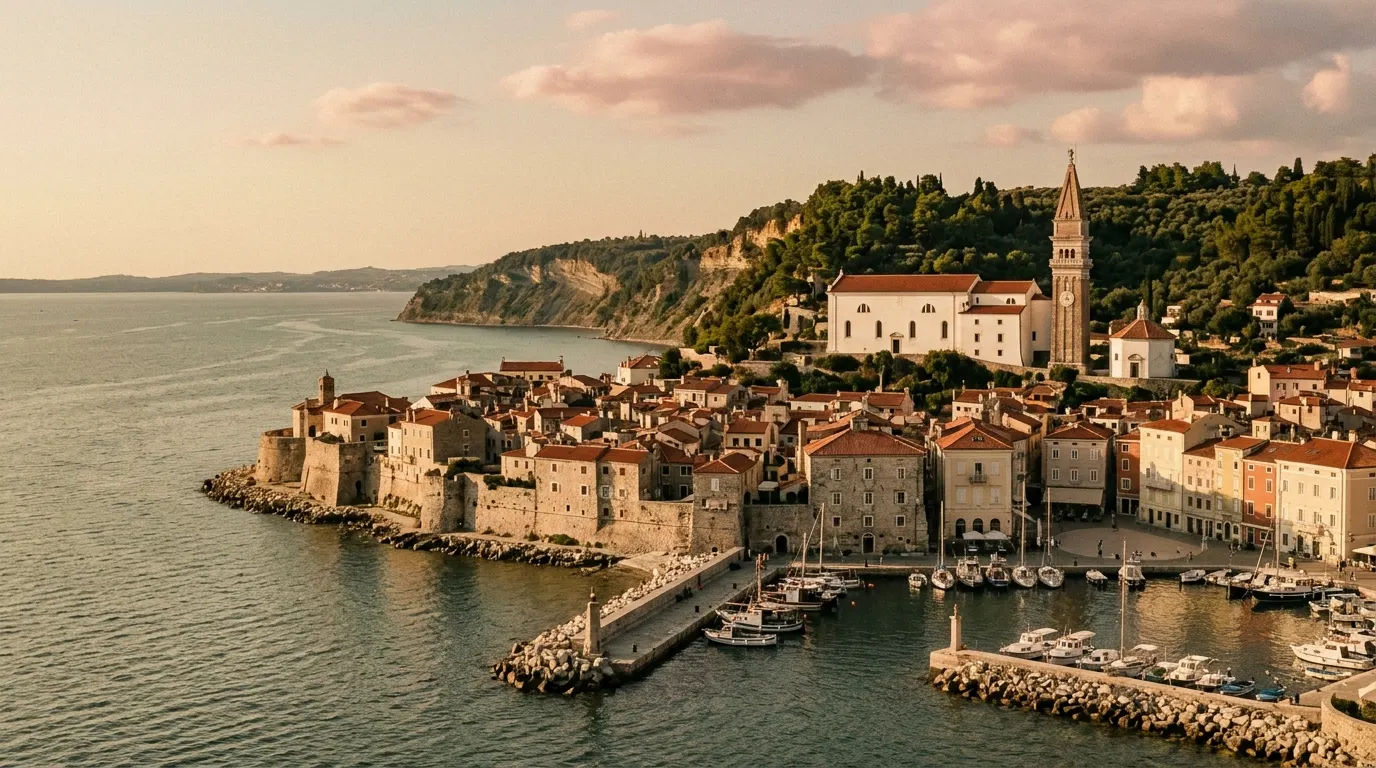
When evaluating piran & slovenian coast vs vienna with kids, the core activities highlight the stark contrast between natural wonders and cultural heritage.
Exploring the Slovenian Coast and Karst Region
Slovenia’s coastal region and its immediate inland neighbors offer experiences that feel straight out of a storybook. You absolutely cannot visit this area without venturing underground. The Postojna Cave Park (Postojnska jama) is a world-famous karst system that solves the usual problem of cave tours with kids: it features a 3.7-kilometer open-air electric train ride. Zipping through massive, illuminated underground halls is thrilling for all ages. Just remember to pack warm jackets, as the cave remains a brisk 10°C (50°F) year-round. Tickets run about €29 ($32) for adults and €17 ($19) for kids.
🎟️ Book family tickets & skip-the-line tours →
For a slightly more rugged underground experience best suited for older kids, the Škocjanske jame – Matavun Village offers a UNESCO-listed subterranean canyon that feels like a set piece from Lord of the Rings.
Above ground, Predjamski grad (Predjama Castle) is a jaw-dropping Renaissance fortress built directly into a cave mouth halfway up a 123-meter cliff. It sparks instant imagination for any child obsessed with knights and dragons. Closer to the water, the Sečoveljske soline – Krajinski park (Sečovlje Salina Nature Park) provides a unique landscape where families can walk among ancient salt pans, learn about traditional harvesting, and spot migratory birds.
Vienna's Royal Playgrounds
Vienna trades natural caves for royal palaces. Schönbrunn Palace is the undisputed crown jewel for families. While the main state rooms might test a toddler's patience, the grounds are a paradise. They house the world’s oldest zoo (Tiergarten Schönbrunn), an intricate hedge maze, and a dedicated Children’s Museum where kids can dress up in imperial costumes and learn about the daily lives of royal children.
🎟️ Find family-friendly tours & activities →
For indoor days, the Zoom Children's Museum in the MuseumsQuartier is arguably one of the best in Europe, offering highly tactile, age-segregated zones that require advance booking. The Haus des Meeres, an aquarium housed in a massive World War II flak tower, offers incredible city views alongside its shark tanks and tropical enclosures.
Getting Active: Coastal Trails vs Urban Parks
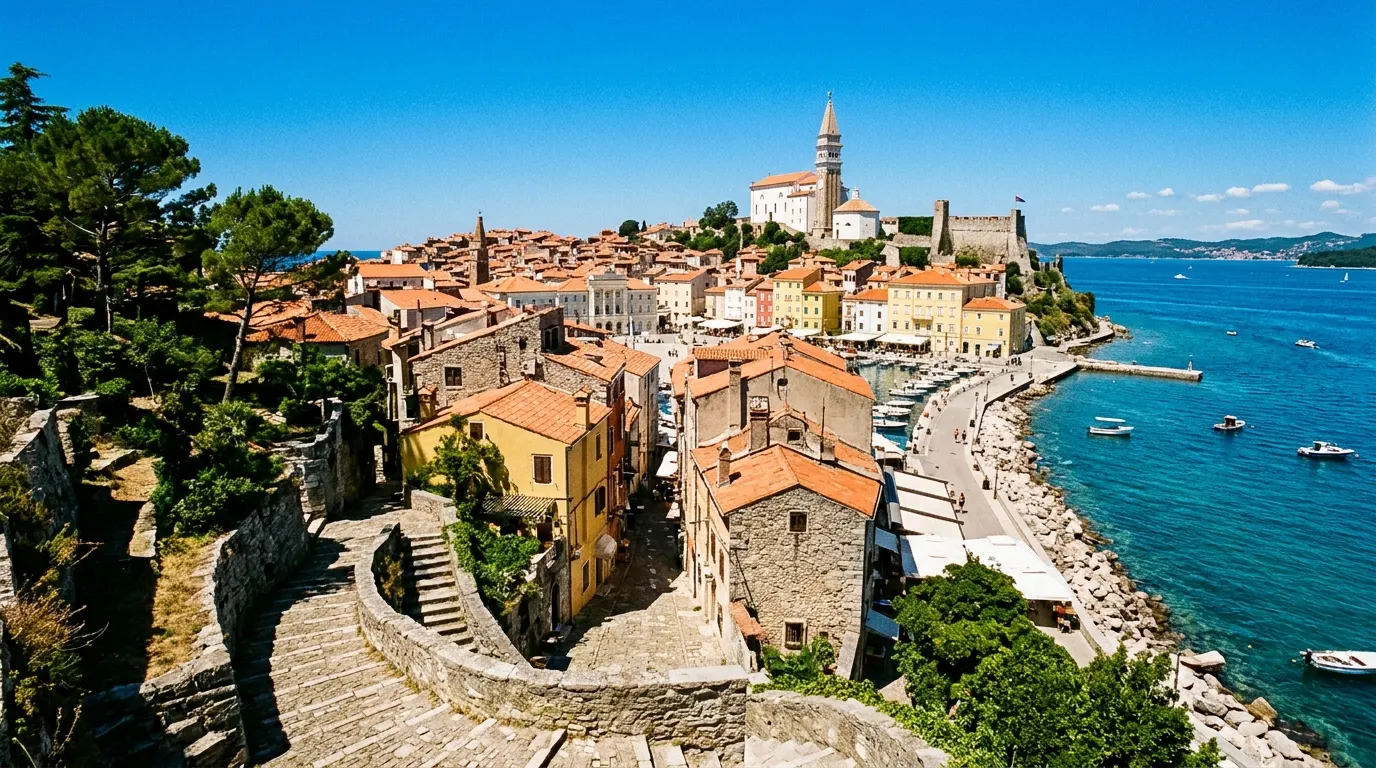
Kids need to burn off energy, and both destinations provide ample, yet distinct, opportunities to get moving.
Cycling and Hiking the Slovenian Coast
The Slovenian coast is a haven for active families. The standout feature is the Parenzana Trail – Izola to Koper Section. This incredibly flat, paved coastal cycling path follows a former narrow-gauge railway line right along the water. It is safe, separated from car traffic, and perfect for a family bike rental. If you have older, more stamina-rich kids, the inland Parenzana – Pot zdravja in prijateljstva (Trail of Health and Friendship) winds through old railway tunnels and over viaducts, offering a brilliant day trip.
For a scenic walk, head to Klif Strunjan, where an 80-meter vertical cliff drops dramatically into the Adriatic. The trails here offer sweeping views and plenty of space to roam. If you want a mix of art and outdoor space, the Forma Viva Portorož (Open Air Sculpture Park) is a sprawling, free gallery set in an olive grove. Kids can run freely among massive stone sculptures while parents enjoy panoramic views of the sea.
Vienna's Expansive Green Spaces
Vienna is famously green. The Prater is not just an amusement park (though the historic Ferris wheel and various rides are a huge hit with kids); it is also a massive public park with miles of flat, shaded paths perfect for walking or renting pedal-karts. Danube Island (Donauinsel) is another fantastic spot for active families, offering 21 kilometers of car-free paths, beaches, and climbing parks right in the middle of the river.
Family Dining: Gelato and Seafood vs Schnitzel and Strudel
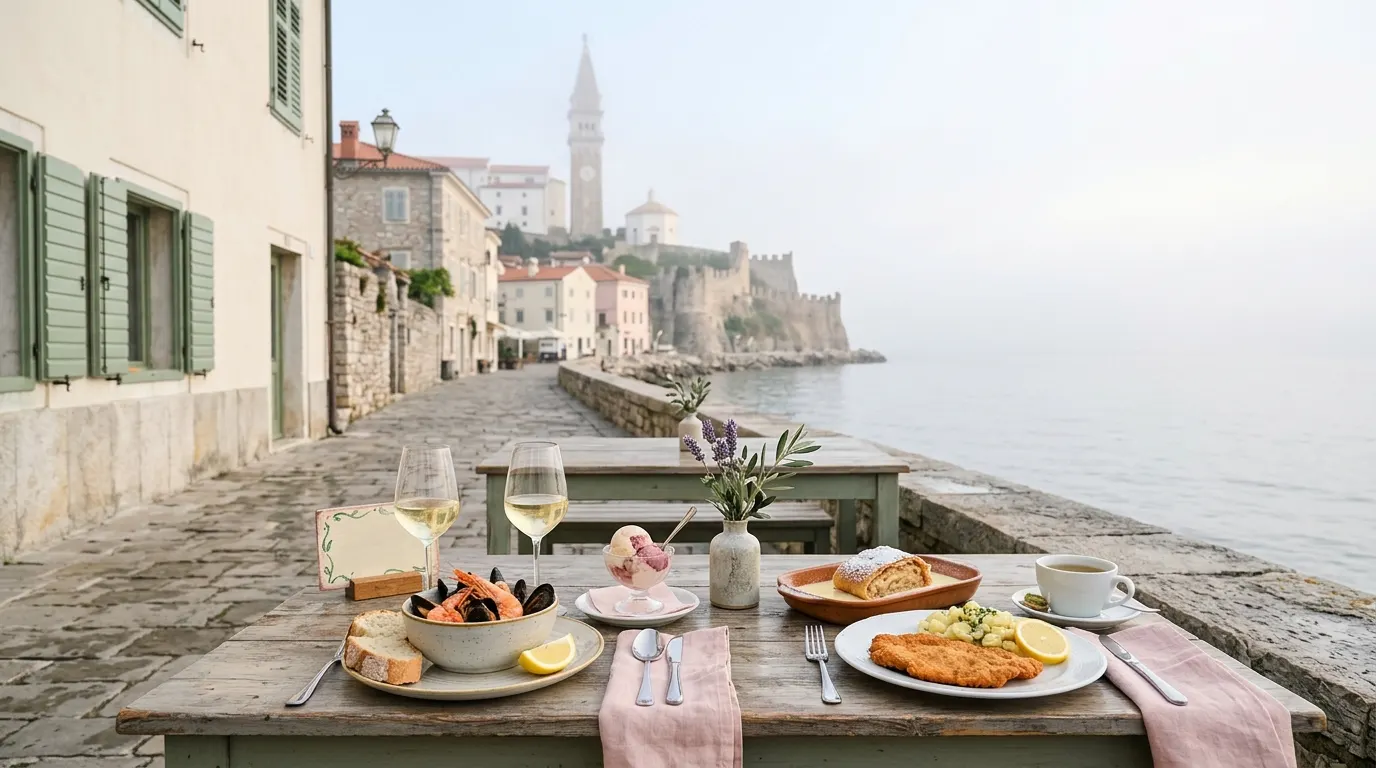
Feeding a family is a major part of the travel budget and daily schedule. The culinary landscapes here are night and day.
Eating on the Adriatic
The Slovenian coast leans heavily on its Italian and Mediterranean influences. Seafood, pasta, and pizza are everywhere, which usually makes feeding kids incredibly easy. In Piran, Restavracija Pavel 2 – Piran sits right on the waterfront, serving fresh fish and dependable pastas in a busy, family-friendly atmosphere. For a universally loved option, Pizzeria Porto Konoba (Piran) bridges the gap between a traditional local tavern and a high-quality pizzeria.
If you are staying in or visiting Portorož, Restavracija Rizibizi – Portorož is a rare find: a high-end, Michelin-recommended spot that genuinely welcomes families. But the absolute highlight for children will be Slaščičarna Cacao – Portorož. Located on the promenade, this high-end pastry shop serves artisanal gelato in elaborate sundaes that will ruin your kids for standard ice cream forever.
Vienna's Cafe Culture with Little Ones
Dining in Vienna is heartier. Kids tend to love traditional Austrian fare—massive, crispy Wiener Schnitzels are essentially giant chicken nuggets (though traditionally made of veal or pork), and a side of buttery potatoes is always a hit. Visiting a traditional Viennese coffee house is a must, but it requires some strategy with kids. The atmosphere is often quiet and refined. Bring quiet activities (coloring books, small toys) while you enjoy your Melange coffee and the kids devour a slice of Sachertorte or Apfelstrudel. For quick, cheap, and fun meals, the city's Wurstelstands (sausage stands) offer excellent hot dogs and Käsekrainer (cheese-filled sausages) on the go.
Age-by-Age Breakdown for Both Destinations
To truly determine the winner of piran & slovenian coast vs vienna with kids, you have to look at the specific ages of your children.
Toddlers (2-3 years)
Slovenian Coast: Piran is wonderful for toddlers because of the lack of cars. They can waddle around the main squares safely. However, the town is hilly, and cobblestones can make stroller navigation bumpy. Koper – Staro mestno jedro is a great alternative—it’s flatter, highly stroller-friendly, and less crowded than Piran.
Vienna: Incredible for toddlers. The sidewalks are wide and smooth, the public transit is fully accessible for strollers, and parks with safe, modern playgrounds are on almost every corner.
Preschoolers (3-5 years)
Slovenian Coast: Preschoolers will be captivated by the Postojna Cave train ride and the wide-open spaces of the Forma Viva sculpture park. The beaches here are mostly pebbles or concrete platforms, so bring water shoes, but the water is calm and clear.
Vienna: This is the prime age for the Zoom Children's Museum (specifically the Ocean area designed for under-4s) and the Schönbrunn Zoo. They will also love the gentle, vintage rides at the Wurstelprater.
School-Age Kids (6-10 years)
Slovenian Coast: A fantastic age for this region. They are old enough to appreciate the medieval architecture of Predjama Castle, understand the salt-harvesting process at the Sečovlje Salina, and rent a bike for a few miles on the Parenzana trail.
Vienna: School-age kids can handle the longer walking days required in Vienna. They will get a lot out of the interactive exhibits at the Technical Museum (Technisches Museum) and the grand scale of the Natural History Museum.
Tweens and Teens (11-14 years)
Slovenian Coast: Teens might find sleepy Piran a bit too quiet, so you need to inject some adventure. The Letališče Portorož – Panoramic Flight is a bucket-list experience that gives them a bird's-eye view of the coastline and provides incredible photos for their feeds. You can also take them to the tiny, fortified Hrastovlje – Cerkev sv. Trojice (Church of the Holy Trinity) to see the slightly macabre, fascinating 'Dance of Death' frescoes.
Vienna: Teens will appreciate Vienna's independence. The public transit is easy to master, allowing them a bit of freedom. The Haus des Meeres, the more intense rollercoasters at the Prater, and the city's vibrant street art along the Donaukanal will keep them engaged.
What to Skip on the Slovenian Coast and in Vienna
Not every highly-rated attraction is suitable for families. Knowing what to avoid is just as important as knowing what to see.
Overhyped or Difficult Spots in Piran
While Piran is beautiful, avoid planning a lunch at the Piran – Peak-season midday restaurant terraces on Tartini Square (various). In July and August, the heat radiating off the stone square is oppressive, service slows down due to crowds, and it is a fast track to family meltdowns.
Do not attempt to climb the Bell Tower of St. George's Parish Church with young children. While the views are spectacular, the rickety, open-slat wooden stairs are steep and can be genuinely terrifying for little legs (and anxious parents).
Also, skip the Podvodni muzej Piran (Underwater Museum Piran). It sounds like a cool aquarium tunnel, but it is actually a collection of statues sunk offshore meant for certified scuba divers.
Finally, for obvious reasons, avoid Casino Portorož and the various Portorož – Nightclubs on Obala (e.g., seasonal clubs), which are loud, strictly 18+, and offer nothing for families.
Vienna Traps to Avoid
In Vienna, skip the line at Café Central if the queue is winding down the street. Waiting 45 minutes on a sidewalk with hungry kids for a slice of cake is never worth it; walk two blocks in any direction to find a less famous, equally delicious traditional cafe. Also, think twice about the Spanish Riding School morning exercises with toddlers. It requires prolonged silence and sitting still in a warm arena, which is rarely a winning combination for the under-five crowd.
Pro Tips from Parents for Both Destinations
- Piran Parking Logistics: Piran is car-free. You must park in the massive Fornače garage just outside of town. A free shuttle bus runs every 15 minutes from the garage to Tartini Square. Fold up your stroller before the bus arrives to make boarding easier.
- Vienna Transit Passes: Children under 6 travel free on Vienna's public transport network at all times. Children up to 15 travel free on Sundays, public holidays, and during Vienna school holidays. For adults, buy a multi-day pass on your phone via the WienMobil app to avoid fumbling with ticket machines.
- Currency and Costs: Both Slovenia and Austria use the Euro. While Vienna's accommodation and dining are generally more expensive, the coastal premium in Piran during July and August can make prices surprisingly comparable. Budget around €60-€80 ($66-$88) for a mid-range family dinner in either destination.
- Timing the Caves: If visiting Postojna or Škocjan in Slovenia during the summer, book your tickets online weeks in advance. The time slots sell out completely, and you do not want to drive an hour inland only to be turned away.
- Sundays in Vienna: Keep in mind that almost all grocery stores, pharmacies, and many retail shops in Vienna are strictly closed on Sundays by law. Buy your toddler snacks and essentials on Saturday.
Conclusion: Making the Final Choice
Ultimately, deciding between piran & slovenian coast vs vienna with kids depends on what kind of reset your family needs. If you are craving fresh sea air, flexible days, outdoor cycling, and the thrill of exploring underground castles and caves, the Slovenian Coast offers a charming, manageable scale that is hard to beat. However, if your family loves engaging museums, pristine parks, incredible architecture, and the ease of world-class public transportation, Vienna provides an enriching, deeply satisfying urban adventure. Both will leave your family with incredible memories—it just comes down to whether you prefer your gelato by the sea or your strudel by the palace.