Choosing between a neon-lit, sensory-rich metropolis and a serene, mountainous heartland is one of the toughest decisions when planning a family trip to Japan. Comparing osaka vs takayama & japanese alps with kids means weighing world-class theme parks and endless street food against traditional thatched-roof villages and crisp mountain air. Both regions offer incredible, yet entirely opposite, experiences for traveling families. Whether you have a toddler who needs wide-open spaces or a teen desperate to buy exclusive Nintendo merchandise, mapping out the right destination will make or break your vacation.
Osaka vs Takayama & Japanese Alps with Kids: The Big Picture
When you look at City Guide: /city/osaka, you are looking at Japan’s unabashed capital of fun. Osaka is loud, colorful, and heavily focused on entertainment and food. It is a city that fully embraces pop culture, massive indoor play centers, and sprawling theme parks. For families, this translates to pure convenience. You have subways that connect you directly to major attractions, endless dining options for picky eaters, and a high concentration of activities that appeal to every age group, rain or shine.
Conversely, the City Guide: /city/takayama-japanese-alps paints a picture of a slower, more deliberate style of travel. The Japanese Alps offer families a chance to step back in time. Here, the focus shifts to outdoor exploration, soaking in hot springs (onsen), and wandering through beautifully preserved Edo-period streets. The logistics are slightly more complex—requiring train transfers, bus rides, or a rental car—and the activities lean heavily on cultural immersion rather than engineered entertainment.
If your family thrives on high-energy stimulation and ticking off bucket-list theme parks, Osaka is your clear winner. If your goal is to decompress, hike manageable mountain trails, and introduce your children to traditional Japanese crafts and rural life, the Japanese Alps will serve you better.
Why Choose Osaka for Your Family Trip?
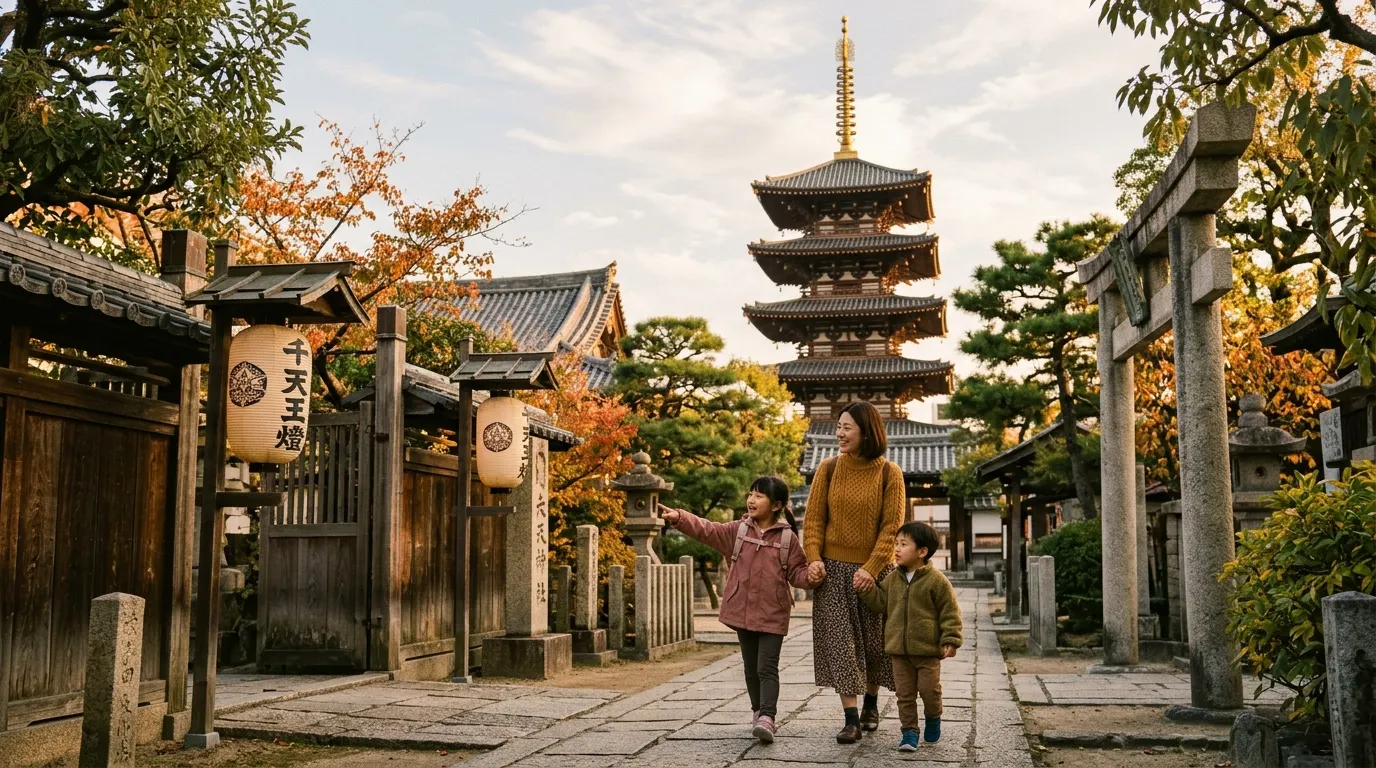
Osaka is a powerhouse of family entertainment. The city is designed to keep kids engaged, making it one of the easiest urban centers in Asia to navigate with children in tow.
High-Energy Theme Parks and Indoor Play
The crown jewel of Osaka’s family offerings is undoubtedly Universal Studios Japan. This is a world-class theme park that feels more like a cultural phenomenon, especially with the addition of Super Nintendo World. Expect to spend a full 10-to-12-hour day here. Admission runs roughly 8,600 JPY ($58 USD) for adults and 5,600 JPY ($38 USD) for kids, but you will absolutely want to budget for Express Passes to avoid multi-hour lines. The park is highly stroller-accessible, though maneuvering through the dense crowds in the Mario area requires patience.
🎟️ Book family tickets & skip-the-line tours →
For a completely different type of theme park, take a short train ride to Kidzania Koshien (Nishinomiya, near Osaka). This indoor, kid-sized city allows children to role-play over 60 real-world professions. It is an incredible half-day activity (plan for 4-5 hours) where kids earn "currency" for working as pilots, bakers, or firefighters.
If you want interactive learning without the theme park price tag, Kids Plaza Osaka is a massive, multi-story indoor wonderland. Blending a high-concept adventure playground with a hands-on science museum, it is perfect for burning off energy on a rainy day. Admission is a budget-friendly 1,400 JPY ($9.50 USD) for adults and 500 JPY ($3.50 USD) for elementary students. You can easily spend 3-4 hours here, and there are plenty of nursing rooms and stroller parking areas.
Sensory Overload and Pop Culture
Older kids and teenagers will likely demand a visit to Nintendo Osaka (Daimaru Umeda). Located on the 13th floor of the Daimaru Umeda department store, this high-energy retail pilgrimage features life-sized character statues and exclusive merchandise. Go first thing in the morning (doors open at 10:00 AM) to secure an entry ticket, as the queue builds rapidly.
For the quintessential Osaka evening, head to the Dotonbori district. This neon-soaked, sensory-overload heart of Osaka is famous for its massive mechanical signs and street food stalls. Grab some takoyaki (octopus balls) and secure the ultimate family photo in front of the Dotonbori Glico Sign.
🎟️ Find family-friendly tours & activities →
Unique Culture, Science, and Green Spaces
When the concrete jungle feels overwhelming, Osaka has fantastic outdoor escapes. The Osaka City Nagai Botanical Garden is a massive, budget-friendly green lung featuring seasonal blooms and a large central pond. It is highly stroller-friendly and perfect for a picnic lunch picked up from a local convenience store.
For a mix of retro history and expansive play areas, visit the Tower of the Sun Interior (Expo Park). The park itself is huge, offering pedal boats and massive playground structures, while the psychedelic, retro-futuristic journey inside the 1970s icon is genuinely mind-bending for older kids.
If your family loves interactive learning, the Osaka Science Museum offers four stories focused on energy, chemistry, and space where kids are encouraged to touch everything. Alternatively, for a dose of traditional culture without the massive crowds of Kyoto, visit Sumiyoshi Taisha Shrine. It is one of Japan's oldest Shinto shrines, famous for its stunning vermilion bridge which provides a beautiful, calm backdrop for family photos.
Why Choose Takayama & the Japanese Alps?
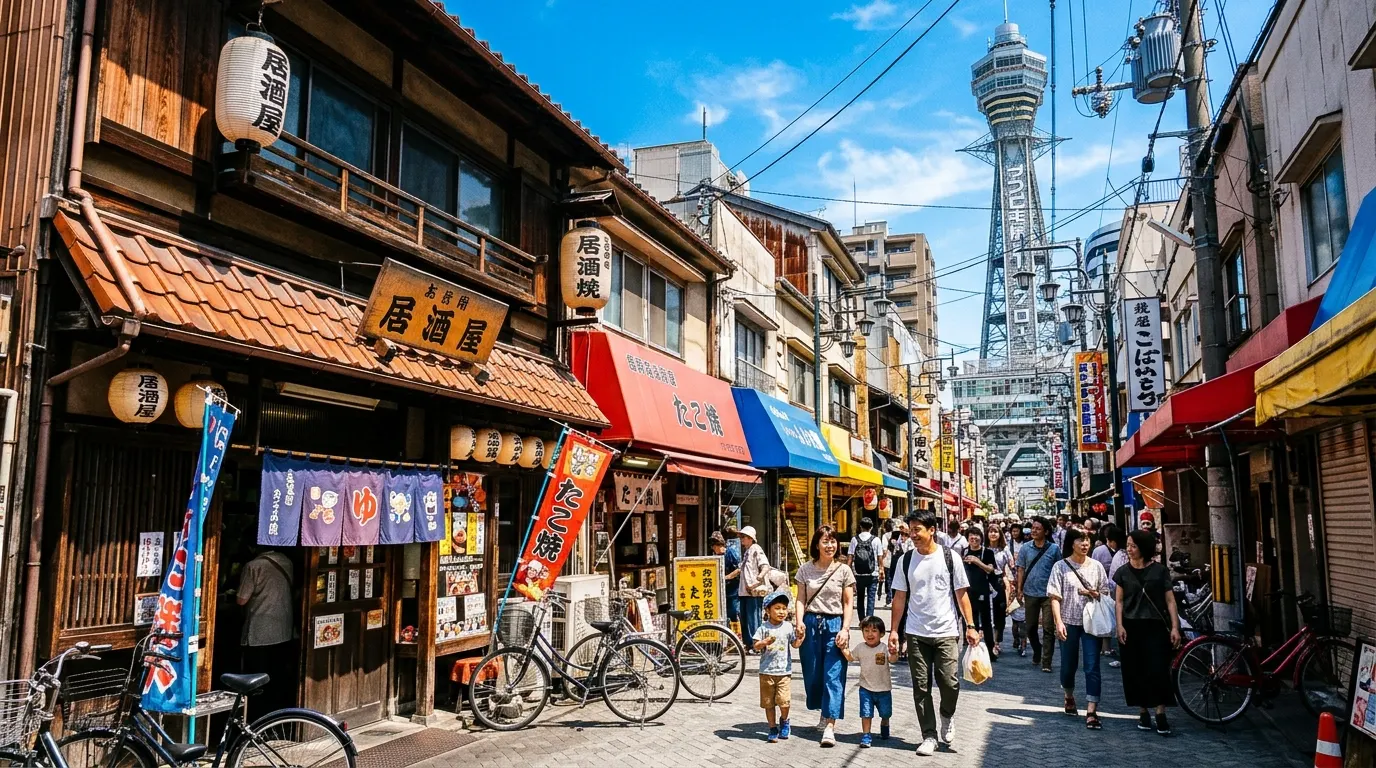
If Osaka is the high-decibel arcade, Takayama and the surrounding Japanese Alps are the tranquil garden. This region requires a shift in travel parenting: you trade the convenience of subways and indoor play centers for the logistical challenge—and immense reward—of mountain buses and rural exploration.
Traditional Japan and Open Spaces
Takayama’s Sanmachi Suji (old town) features beautifully preserved wooden merchant houses. For children, the appeal here is the Miyagawa Morning Market along the river. Kids can sample fresh apple juice, local rice crackers, and watch artisans carve wood. It is a slow-paced, grazing kind of morning.
Just outside the city center is the Hida Folk Village (Hida no Sato), an open-air museum featuring dozens of traditional thatched-roof houses relocated from across the region. Kids can step inside the dark, smoky interiors, see how silkworms were raised, and try their hand at traditional toys like stilts and spinning tops. Expect to spend about 2 hours here. Admission is roughly 700 JPY ($4.75 USD). Note that while some paths are paved, a baby carrier is highly recommended over a stroller due to the steep inclines and uneven steps inside the historic homes.
Nature and Mountain Adventures
The real draw of this region is the access to the Japanese Alps. Taking the bus up to Kamikochi offers some of the most spectacular, family-friendly hiking in the country. The paths along the Azusa River are flat, wide, and easily managed by young children (and even sturdy travel strollers).
For a higher altitude thrill without the hike, the Shinhotaka Ropeway features Japan’s only double-decker cable car, taking families up above the clouds for panoramic views of the Northern Alps. It is a spectacular half-day trip, though you must pack layers, as the temperature drops significantly at the summit observation deck.
Age-by-Age Guide: Osaka vs Takayama & Japanese Alps with Kids
Different stages of childhood require vastly different travel strategies. Here is how these two regions stack up depending on the ages of your children.
Toddlers (Ages 2-3)
Winner: Osaka
Toddlers need frequent naps, reliable food, and spaces where they can safely run without destroying priceless artifacts. Osaka excels here. You have dedicated indoor spaces like ATC (Asia and Pacific Trade Center) — ATCあそびマーレ, a massive air-conditioned wonderland featuring everything from soft play to ride-on trains. If you want outdoor time, Sakai Harvest Hill offers a sprawling agricultural theme park with capybara encounters and flower fields, completely trading city skyscrapers for toddler-friendly farm fun. Takayama is beautiful, but the reliance on buses and the lack of dedicated toddler play areas make it a more exhausting destination for parents of two-year-olds.
Preschoolers (Ages 3-5)
Winner: Osaka (with a nod to the Alps)
Preschoolers will lose their minds with joy at Legoland Discovery Center Osaka, a fully indoor playground with interactive rides and a 4D cinema. Osaka also offers the incredibly weird and wonderful Namba Yasaka Shrine, where the massive 12-meter-tall lion-head stage will fascinate 4-year-olds. However, the Japanese Alps begin to hold appeal at this age, as preschoolers can manage the flat nature walks in Kamikochi and will enjoy hunting for the ubiquitous, faceless "Sarubobo" (monkey baby) dolls sold in every Takayama shop.
School-Age (Ages 6-10)
Winner: Tie
This is the golden age of family travel, and both regions shine. In Osaka, 8-year-olds can fully engage with the role-playing at Kidzania, tackle the science experiments at the Osaka Science Museum, and ride the family coasters at Universal Studios. In Takayama, school-age kids are old enough to appreciate staying in a traditional ryokan, sleeping on futons, and trying a public onsen bath. They have the stamina for light mountain hiking and will love the tactile experience of making their own rice crackers in the old town.
Tweens and Teens (Ages 11-14)
Winner: Osaka
Teens generally crave autonomy, shopping, and food. Osaka is a teenager's paradise. They can hunt for vintage clothes in Amerikamura, buy exclusive gear at Nintendo Osaka (Daimaru Umeda), and eat their weight in street food along Dotonbori. While the Japanese Alps offer great hiking and a peaceful retreat, the lack of evening entertainment and shopping can sometimes lead to complaints of boredom from highly connected teens.
What to Skip in Osaka (Overhyped or Tough with Kids)
Not every famous spot is built for family travel. To save your sanity, here is what you should confidently cross off your list.
- Ichiran Dotonbori (Ramen) / Ichiran Ramen (Dotonbori branch): You will see lines wrapping around the block for this famous ramen chain. Skip it. The core of the Ichiran experience is their "Flavor Concentration Booths"—individual stalls with partitions. This design is meant for solo diners, making it physically impossible to sit together, share food, or help a young child eat their noodles.
- Sennichimae Doguyasuji Shopping Street: Often touted as a "Disneyland for kitchen nerds," this narrow, crowded alley is packed floor-to-ceiling with professional restaurant supplies. With young kids or a stroller, it quickly becomes a high-stress obstacle course of incredibly fragile, sharp, and heavy objects.
- Kani Doraku (Dotonbori crab restaurant): While the giant mechanical crab outside is a mandatory photo op, eating inside is a pricey, slow-paced traditional multi-course meal. Kids who just want a quick bite will quickly lose patience during a two-hour crab banquet.
- Osaka Museum of Oriental Ceramics: This is a world-class, hushed environment dedicated to incredibly fragile, high-value pottery. It is essentially a parent's worst nightmare when traveling with an active toddler.
- Tobita Shinchi: Ensure you double-check your maps if wandering south of Shinsekai. This is Osaka's most famous active red-light district, where women are displayed in open storefronts. It is absolutely not an area you want to accidentally stroll through with your family.
Pro Tips from Parents for Your Family Itinerary
To make the most of your trip, lean on these tried-and-true strategies from our family travel community.
- Group the Bay Area Attractions: Make a full day out of the Osaka port area. Group your visit to the Kaiyukan Aquarium with the Tempozan Marketplace (for the giant Ferris Wheel) and the Legoland Discovery Center Osaka. This area is much more spacious and stroller-friendly than the city center, and the Marketplace has retro food stalls that cater to all tastes.
- Master the Food Hacks: When kids are tired of local street food and you need a sit-down break, look for Saizeriya. This chain offers highly affordable, kid-friendly Italian-style dishes like corn pizza and pasta. For a uniquely Japanese experience, visit a Kura Sushi location. Kids can insert their finished sushi plates into a slot at the table to play a digital game on the screen above—it is the ultimate incentive for them to finish their dinner!
- Avoid the Umeda Underground: Skip the massive underground shopping malls in the Umeda district when traveling with strollers or young children. These windowless tunnels are a confusing, multi-level maze with limited elevator access, making navigation incredibly frustrating. Stick to above-ground routes whenever possible.
- Time Your Dotonbori Visit: Steer clear of Shinsaibashi-suji around 6:00 PM and Dotonbori after 9:00 PM with young children or strollers. The narrow streets become shoulder-to-shoulder with late-night revelers and tourists, making it overwhelming and difficult to keep your group together.
The Verdict: Which is Better?
Ultimately, resolving the osaka vs takayama & japanese alps with kids debate comes down to what kind of vacation your family needs right now. If you want a trip packed with guaranteed entertainment, diverse food, and the thrill of world-class theme parks, Osaka will deliver an unforgettable, high-octane adventure. If your family is craving a slower pace, cultural education, and the serene beauty of mountain landscapes, Takayama and the Alps offer a soulful retreat into traditional Japan. Many families find the perfect balance by doing both: spending four days embracing the neon chaos of Osaka before taking the scenic train up into the mountains to decompress. Whichever you choose, Japan’s remarkable safety, cleanliness, and hospitality make traveling with children an absolute joy.