When you think of the Indian Ocean, the image that usually comes to mind is a parade of honeymooners sipping champagne on the deck of a multi-million dollar overwater villa. For years, this archipelago has been marketed exclusively as a playground for the ultra-wealthy or couples seeking utter isolation. However, navigating the Maldives with kids on a budget is not only possible, but it can actually result in a far more authentic, enriching, and memorable family adventure than simply parking yourselves at an isolated luxury compound.
The secret to pulling this off lies in knowing exactly where to save and where to splurge. The ocean belongs to everyone, meaning the gentle reef sharks, glowing plankton, and safe, sandy lagoons perfect for tiny adventurers are accessible whether you are staying in a fifty-dollar guesthouse or a five-thousand-dollar suite. By strategically mixing local island stays with carefully chosen resort day passes or specific bucket-list excursions, you can curate an extraordinary marine education for your children without draining their future college funds. Use our comprehensive City Guide: /city/maldives to help map out your itinerary, and read on to discover exactly what is worth your hard-earned travel fund.
The Reality of Doing the Maldives with Kids on a Budget
To successfully plan the Maldives with kids on a budget, you first need to understand the country's geography and tourism infrastructure. The Maldives is made up of nearly 1,200 islands. Some are private resort islands (where the entire island is one hotel), and others are "local islands" inhabited by Maldivian citizens.
A decade ago, tourists were only allowed to stay on resort islands. Today, the government allows guesthouses and boutique hotels to operate on local islands. This single policy change completely opened up the country to budget-conscious families. Staying on a local island drops your nightly accommodation costs from four digits to double digits. It also drastically reduces the cost of food and excursions.
However, there are trade-offs. Local islands operate under Islamic law, meaning alcohol is entirely prohibited, and visitors must wear modest clothing when walking through the village (though most local islands have designated, screened-off "bikini beaches" where standard swimwear is perfectly fine). If you can embrace these cultural norms, you unlock an incredibly affordable, warm, and welcoming side of the country where your children can interact with local families, play pickup soccer on the beach, and experience the real culture of the atolls.
Local Islands: Authentic and Affordable Stays
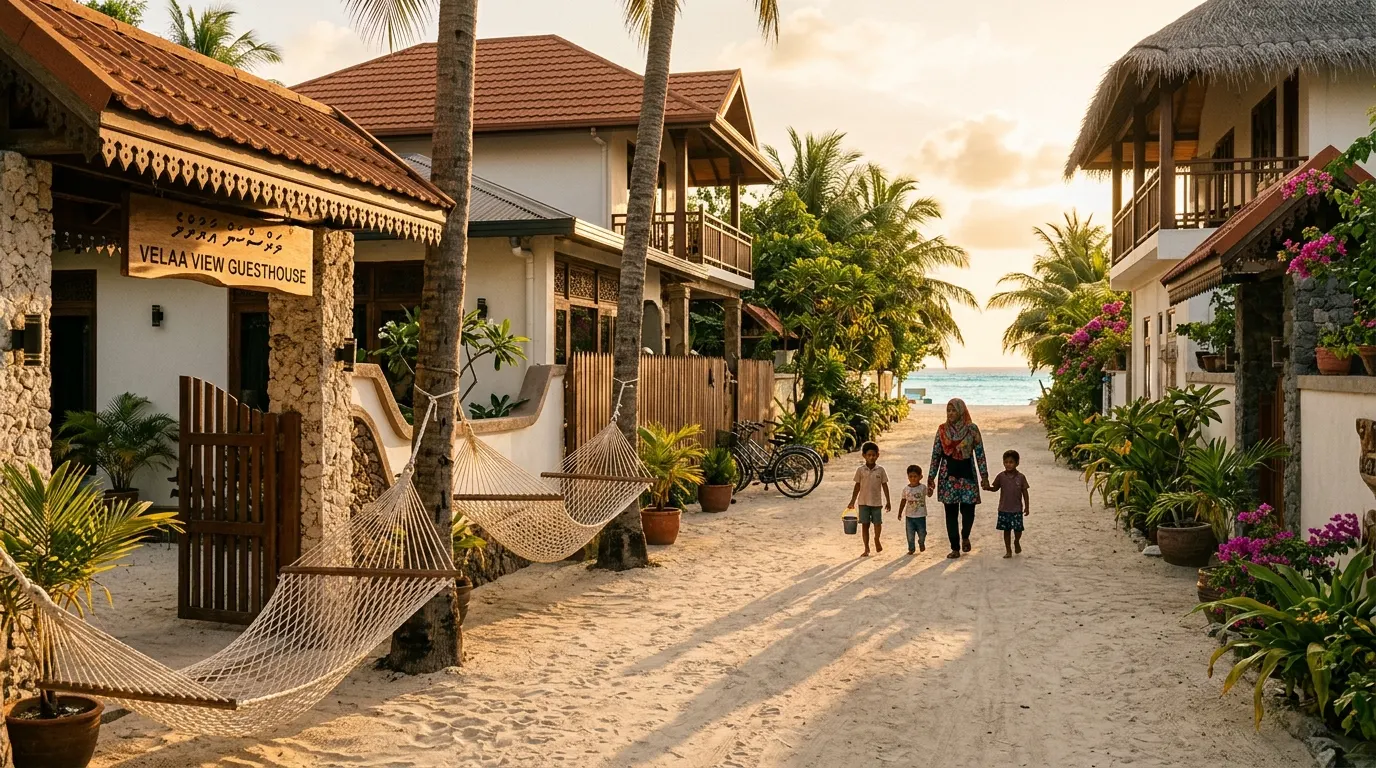
If you want to stretch your travel budget, basing your family on a local island for at least part of your trip is the most effective strategy. You still get the exact same crystal-clear water and powdery white sand, but you pay a fraction of the price.
Fulidhoo Island
Located in the Vaavu Atoll, Fulidhoo Island is a tiny, deeply budget-friendly local island that feels like a well-kept secret. Measuring just 700 meters long, there are no cars here, making it exceptionally safe for children to run and explore. The absolute highlight for families is the main pier. Every evening, wild stingrays and gentle nurse sharks glide right into the shallow waters to feed. Kids can sit on the edge of the wooden dock and watch these magnificent creatures entirely for free. Guesthouses here typically run between $80 and $150 USD (1,230 to 2,300 MVR) per night, often including a hearty breakfast. The sandy paths mean strollers are tough to push, so bring a breathable baby carrier for infants.
Dhigurah Island
If your family loves marine biology, Dhigurah Island in the South Ari Atoll is a spectacular choice. The name translates to "Long Island," and it boasts a stunning 3-kilometer stretch of jungle and beach. It offers a rare budget-friendly, authentic Maldivian experience while putting you right in the middle of one of the world's best whale shark spotting zones. Unlike the artificial environments of some high-end resorts, Dhigurah lets older kids and teens experience conservation and wildlife tracking in its natural state. Local cafes serve excellent, inexpensive meals, though you should expect a slower, more relaxed pace of service.
Where to Splurge: The Best Resort Kids' Clubs
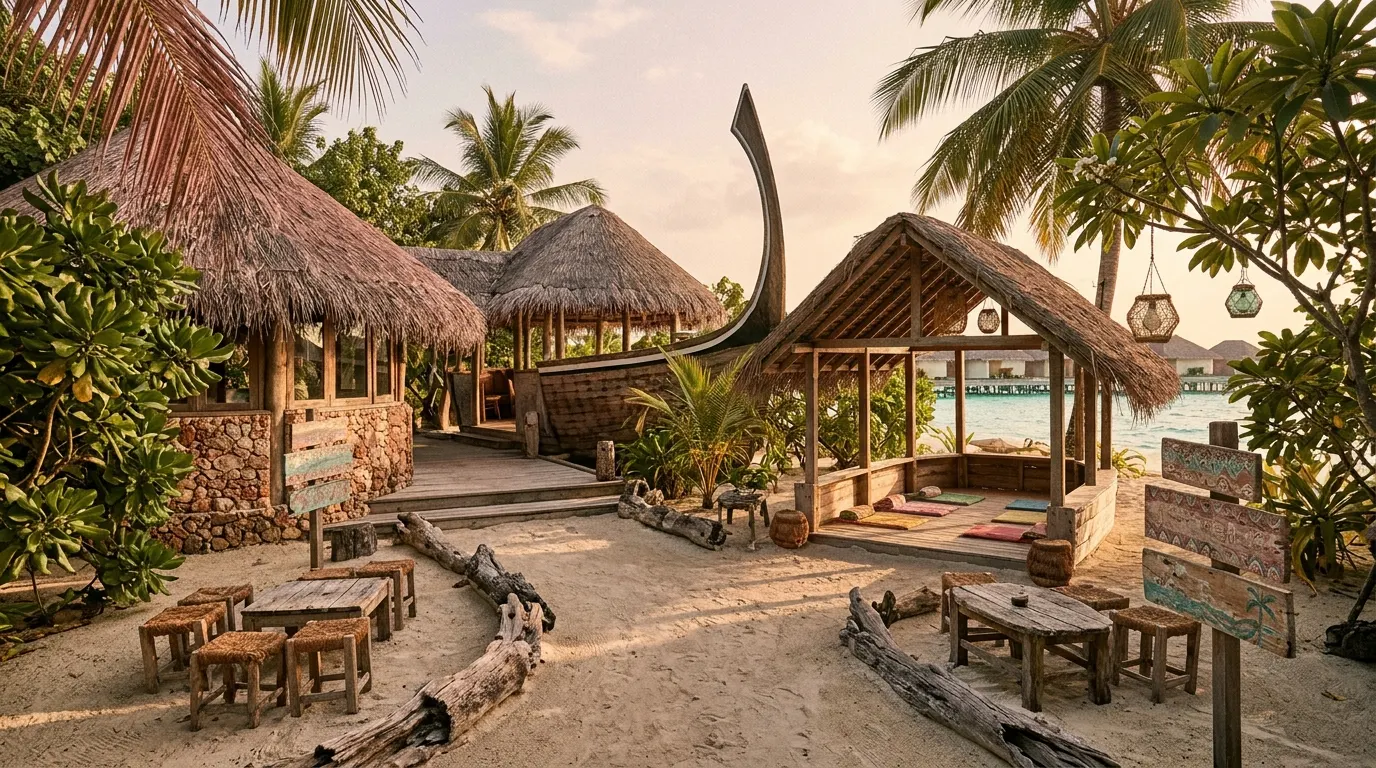
When you save money by staying on a local island, it frees up your budget to splurge on one or two nights at a premium resort, or to purchase day passes (where available). If you are going to pay premium resort prices, you want to ensure the property actually caters to children, rather than just tolerating them.
The Den at Soneva Fushi
Widely considered the gold standard for kids' clubs globally, The Den at Soneva Fushi (also known as the Soneva Fushi Resort Kids' Club (The Den)) is a massive, tech-free wonderland. This is not a dark room with a TV and some broken crayons. It features a pirate ship, two pools, a Lego room, a music room, and a mocktail bar. The philosophy here is about imaginative, screen-free play. If you have the budget for a short stay here, the childcare and facility quality is unmatched.
Bageecha Kids Club at Kuramathi
For a slightly more accessible resort option, the Bageecha Kids Club at Kuramathi is widely regarded as one of the best in the country. It offers a sophisticated mix of botanical garden exploration, marine life education, and classic playground fun. They organize guided snorkeling for older kids and hermit crab races for the younger ones, ensuring parents can actually get a few hours of quiet time on the beach.
KidsOnly at One&Only Reethi Rah
If you are looking for professional-grade facilities, KidsOnly at One&Only Reethi Rah sets a very high bar. It includes unexpected perks like a dedicated pottery studio, cooking classes, and vast sports facilities. It is heavily staffed, meaning children get highly personalized attention.
🎟️ Book family tickets & skip-the-line tours →
Unforgettable Wildlife Experiences Worth Every Penny
The true magic of this country lies beneath the surface of the water. When allocating your budget, prioritize excursions that get your family interacting with the unique marine ecosystem.
Manta Point at Hanifaru Bay
If you visit between June and November, booking a trip to Manta Point at Hanifaru Bay (Baa Atoll UNESCO Biosphere Reserve) is a non-negotiable bucket-list item. This UNESCO Biosphere Reserve is world-renowned because hundreds of manta rays congregate here to feed on plankton. Snorkeling alongside these massive, graceful creatures is a profound experience for older kids and teens. A similar experience can be found by Snorkeling with Manta Rays at Dhonkalo Thila, North Malé Atoll, where mantas hover over a "cleaning station." Excursions typically cost between $100 and $150 USD per person.
Kuda Huraa Turtle Conservation
For a hands-on educational experience, visit the Kuda Huraa Turtle Conservation at Four Seasons Resort Maldives at Kuda Huraa. This marine conservation hub allows kids to get up close with rescued baby hawksbill and green sea turtles. Marine biologists explain the rehabilitation process, giving children a tangible lesson in environmental stewardship.
Bioluminescent Plankton Night Snorkeling
Many families dream of seeing the glowing waters of the Indian Ocean. The best way to do this reliably is by booking Bioluminescent Plankton Night Snorkeling (offered by select resorts). Swimming through pitch-black water that sparkles neon blue with your every movement is a surreal, magical experience that older kids will talk about for years.
🎟️ Find family-friendly tours & activities →
Unique Dining and Excursions to Budget For
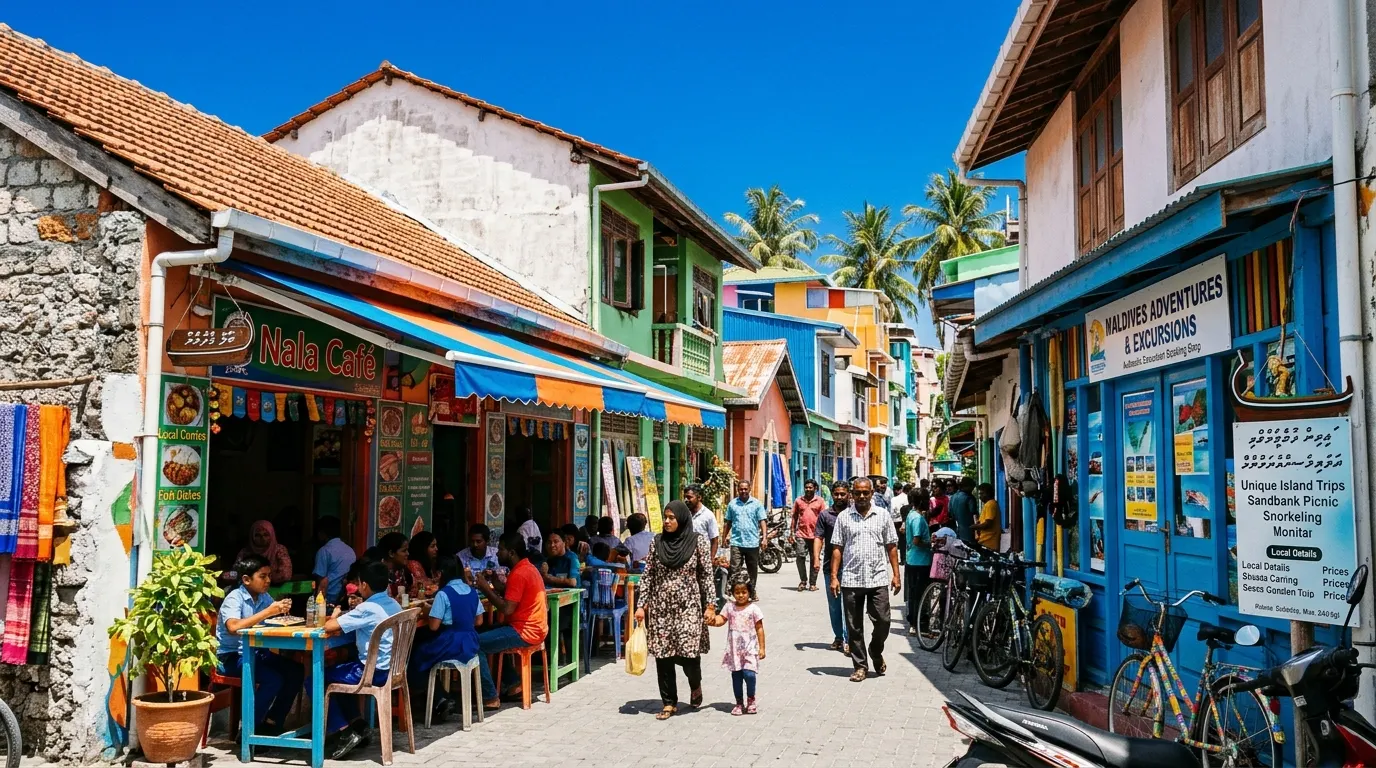
Food and daily activities can quickly inflate your spending. However, there are a few iconic Maldivian experiences that you should absolutely set money aside for.
The Sandbank Picnic
A Sandbank Picnic Excursion (offered by most resorts and guesthouses) is the quintessential island experience. A small boat drops your family off on a tiny, uninhabited strip of brilliant white sand in the middle of the ocean. You are left alone with a picnic basket, an umbrella, and snorkeling gear. It is the ultimate castaway fantasy and usually costs around $50 to $100 USD (750 to 1,500 MVR) for the whole family if booked through a local island guesthouse.
Subsix at Niyama
If you want to experience underwater dining without the strictly adult atmosphere of other venues, look into Subsix at Niyama. Accessible only by a speedboat from Niyama Private Islands Play (an island explicitly designed for active families), this restaurant is submerged six meters below the Indian Ocean. Parrotfish and moray eels swim right past the glass as you eat. While it is certainly a splurge (lunch will easily run $200+ USD per adult), the sheer theatricality of descending into an underwater lair is mind-blowing for children.
Age-by-Age Guide to the Maldives with Kids on a Budget
Traveling to an isolated atoll requires different strategies depending on the age of your children. Here is how to tailor the trip to their developmental stage.
Toddlers (Ages 2-3)
For the youngest travelers, the Maldives is basically the world's largest, safest sandbox. The lagoons are incredibly calm, warm, and shallow, meaning toddlers can splash safely without fighting strong waves.
Budget Tip: Pack absolutely every diaper, wipe, and swim diaper you will need for the entire trip. Local islands have very limited stock in their small convenience stores, and resort boutiques mark up baby supplies by 300% or more. Skip the stroller entirely; pushing wheels through deep sand is exhausting. Rely on a high-quality baby carrier instead.
Preschoolers (Ages 3-5)
Preschoolers have the stamina for short boat rides and sandbank picnics. This is the perfect age to introduce them to a snorkeling mask in the shallow water of the lagoon.
Budget Tip: If you are traveling during the rainy season (May through October) to score cheaper flights and hotel rates, prioritize resorts or islands that have large, air-conditioned indoor kids' clubs or community centers. When a tropical downpour hits, you will need a dry place for them to burn off energy.
School-Age (Ages 6-10)
This age group gets the maximum benefit from marine conservation programs. They are old enough to understand the life cycle of a sea turtle and coordinate their breathing well enough for longer snorkeling sessions along the house reef.
Budget Tip: Equip kids of this age with full-length "sting suits" or high-quality rash guards and water shoes. Maldivian lagoons often have hidden "dead coral" fragments that can cause painful scrapes. Protecting their skin prevents medical issues and saves you from buying overpriced first-aid supplies at a resort clinic.
Tweens & Teens (Ages 11-14)
Teens might initially balk at the idea of an isolated island without shopping malls or fast Wi-Fi, but the ocean quickly wins them over. Book them into beginner scuba diving courses (PADI Bubblemaker or Discover Scuba), surfing lessons, or night snorkeling excursions.
Budget Tip: Skip the luxury resorts entirely for this age group. Teens will have far more fun on a local island like Dhigurah where they can walk to local cafes, interact with Maldivian teenagers, and experience a bit of independence in a highly safe, low-crime environment.
What to Skip: Overhyped and Unsafe Traps
When your budget is tight, avoiding expensive mistakes is just as important as finding good deals. Cross these highly marketed traps off your family itinerary.
- Overwater Bungalow Experience (general): The dream of waking up over the water quickly becomes a safety-induced nightmare for parents of young children. Toddlers can easily slip through deck railings or crawl off the edge into deep water. You will spend your entire vacation on high alert. Furthermore, they lack direct beach access, meaning kids can't just step outside to build sandcastles. Save your money and book a beach villa instead.
- Vaadhoo Island Bioluminescent Beach: The famous "Sea of Stars" is a classic Instagram trap. The bioluminescence washing up on the shore is highly unpredictable, seasonal, and often looks nothing like the heavily edited photos online. Do not pay for an expensive boat transfer just to see this beach; book a night snorkeling tour instead, where the plankton glows when agitated by your movement in the water.
- 5.8 Undersea Restaurant: While visually stunning, this is an ultra-expensive, formal dining experience with a strict 15+ age limit for dinner and a multi-course menu that most children will not appreciate.
- Majeedhee Magu: This is the main commercial artery of the capital city, Malé. It is a high-stress environment for families due to heavy moped traffic, extreme crowding, and very narrow, broken sidewalks. Skip exploring Malé with kids and head straight to your island destination.
Pro Tips from Parents for the Maldives
- Protect Little Ears: If you are taking a seaplane to your resort, know that they are incredibly loud and the cabins can reach high temperatures while boarding on the water. Bring high-quality noise-canceling headphones for infants and children to prevent sensory meltdowns.
- Understand Friday Hours: The Maldives is a strict Muslim country. On Fridays, almost all shops, guesthouses, and local cafes on inhabited islands close completely from 11:00 AM to 2:00 PM for Jumu'ah prayers. Plan your family's lunch and snack schedules accordingly.
- Watch the Spice Level: Traditional Maldivian snacks (known as Hedhikaa), like Gulha (fried fish balls) or Bajiya (samosas), are delicious and cheap, but they almost always contain "githeyo mirus" (local scotch bonnet peppers). Always ask for a non-spicy version or test a tiny bite before handing them to a toddler.
- Speedboats Over Public Ferries: While tempting for the $2 to $5 USD price tag, the government public ferries (dhonis) are incredibly slow, lack air conditioning, and can turn a 45-minute speedboat ride into a sweltering 4-hour endurance test for a cranky child. Pay the $35 to $50 USD per person for the shared speedboat transfer; your sanity is worth the cost.
Navigating the Maldives with kids on a budget requires a shift in mindset. You have to let go of the heavily marketed, ultra-luxurious honeymoon ideal and embrace a more grounded, adventurous style of travel. By choosing local islands, paying for high-impact marine excursions, and prioritizing safety and comfort over status symbols like overwater bungalows, you can give your children an unparalleled education in oceanography and island culture. The sand is just as soft, the water is just as blue, and the memories you make together will be infinitely more vibrant.