You’ve just spent a small fortune on a dream family vacation overseas, only to find yourself pacing a dark hotel room at 3:15 AM while your toddler demands a waffle and your ten-year-old builds a pillow fort out of decorative pillows. Sound familiar? Dealing with jet lag with kids is often the most dreaded part of international travel for parents, and frankly, it is the one hurdle that can make you question why you ever left home. But I promise you, it doesn't have to completely derail your trip, provided you have a solid game plan before you hit the tarmac.
As a parent who has navigated these exact 3 AM waffle requests across multiple time zones, I want to share the battle-tested strategies that actually reset those tiny internal clocks. From surviving the flight to managing the dreaded 4 PM crash, here is exactly what works, what to skip, and how to get your family on local time as painlessly as possible.
The Brutal Reality of Jet Lag with Kids
When managing jet lag with kids, the absolute first step is radically adjusting your expectations. You cannot cheat biology, and neither can your children. As a general physiological rule of thumb, it takes the human body one full day to adjust to every one hour of time zone change. If you are flying from New York to Rome (a six-hour difference), you should expect it to take nearly a week before everyone is operating at 100% capacity.
The hardest part about this transition is that kids, especially those under the age of seven, completely lack the cognitive ability to rationalize their exhaustion. An adult can say, "I feel nauseous and tired because it's 3 AM in my home time zone, but I will push through and drink an espresso." A toddler simply throws themselves onto the cobblestone streets and screams because their body is in absolute turmoil. They need our patience and guidance to get through it.
Furthermore, the direction of travel matters immensely. "West is best, East is a beast." Traveling West (say, from London to New York) means your kids will wake up at 4 AM but will be ready for bed by 6 PM—which is incredibly manageable, and gives you a great excuse for early dinners! Traveling East (New York to Paris) means they will physically not be able to fall asleep until 2 AM local time, but you still have to drag them out of bed the next morning to reset their clocks. Accepting this reality right out of the gate—and knowing that the first 48 hours will be a messy, unpredictable blur—is the only way to retain your sanity.
Pre-Trip Prep: Setting the Stage for Success

If you scour the internet for advice on jet lag, you will inevitably find articles telling you to "shift your child's schedule by 15-minute increments" for two weeks leading up to your trip. I will be blunt: for most modern families, this is entirely unrealistic. Between school drop-offs, soccer practice, and your own work schedule, trying to feed your kids dinner at 3:30 PM is a logistical nightmare. It usually just results in a family that is utterly exhausted before the vacation even begins.
Instead of turning your home life upside down, focus your pre-trip prep on two highly actionable things: hydration and strategic flight booking. Dehydration drastically exacerbates the physical symptoms of jet lag, making headaches and fatigue so much worse. In the 48 hours before your flight, push water intake for the whole family like it's your part-time job. Send them to school with extra water bottles and keep the fluids flowing right up until boarding.
When it comes to booking flights, your choices dictate your first day on the ground. If you are flying East to Europe, the classic "red-eye" is usually your only option. The goal here is simple: get them to sleep by any means necessary. However, if you have the option for a daytime flight (which are becoming increasingly popular from the US East Coast to London), take it! A daytime flight means you arrive in the evening local time. You check into your hotel, have a quick dinner, and go straight to bed. It is infinitely easier on a child's circadian rhythm than arriving at 8 AM after sleeping for exactly 42 minutes on a plane, giving everyone a chance to reset in a real bed rather than a cramped airplane seat.
On the Plane: Surviving the Time Warp
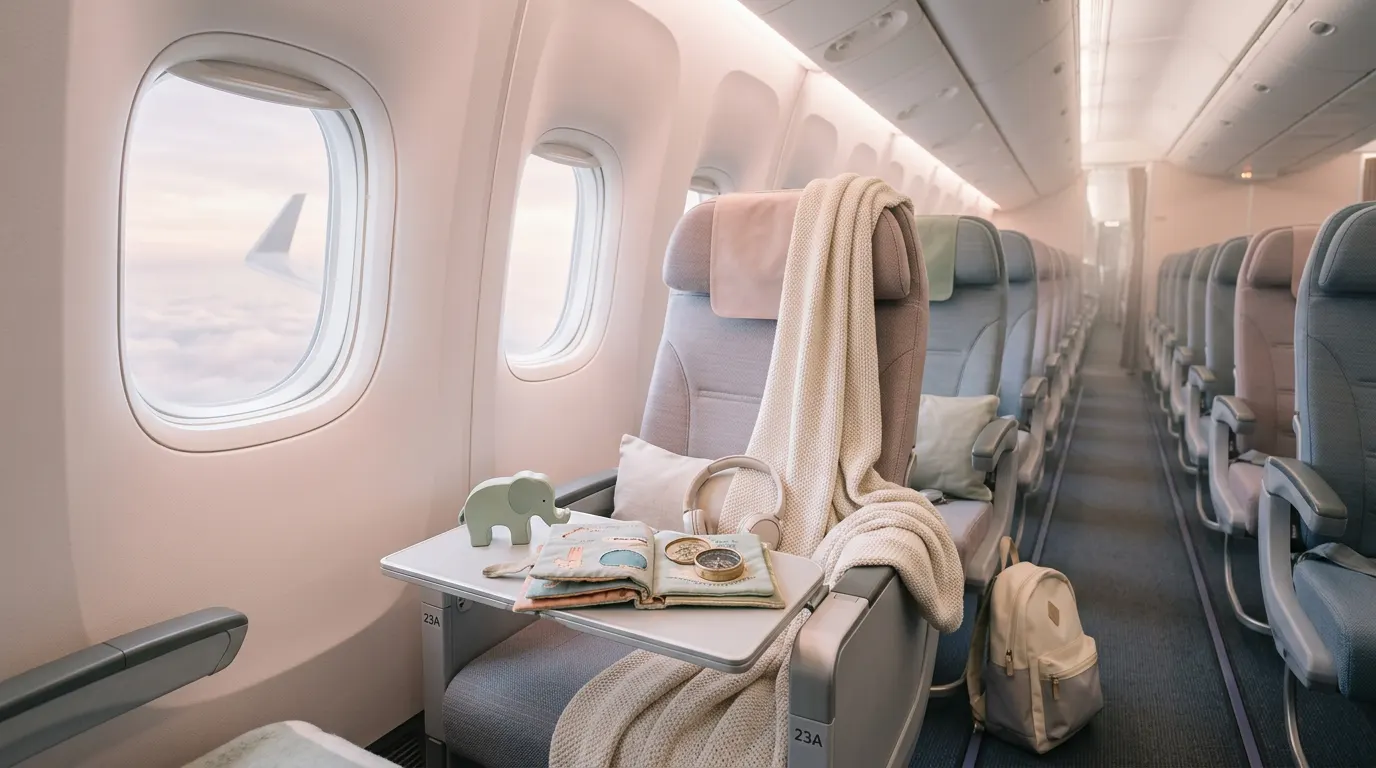
The second you buckle your seatbelts, change the time on your phone and watch to your destination's local time. From this moment on, you are living in the future. If it is 2 AM in London, you need to act like it is 2 AM, even if you just took off from JFK at 9 PM.
This means implementing strict sleep rules on the plane. Do not wait for the airline's meal service if it conflicts with the "local" night time. Airplane food is notoriously salty and heavy, and waking your kids up to eat a mediocre pasta tray at what should be their midnight will absolutely ruin any chance of solid rest. Instead, feed them a massive, filling meal at the airport before you board. Get them into their cozy pajamas right there in the airport lounge or bathroom, and enforce sleep the moment the plane levels out.
To make this happen, you need to control the environment. Bring high-quality eye masks (practice wearing them at home first so they don't rip them off!) and noise-canceling headphones. We highly recommend using a travel footrest or an inflatable airplane bed (always check your specific airline's rules first, as policies vary) to give them a flat surface to stretch out on.
What if they absolutely will not sleep? This is where standard screen time rules fly right out the window. If they are awake during a "sleep" period, keep the iPad brightness turned all the way down, put on a slow-paced, low-stimulation movie, and do not engage in loud play. You are aiming for a state of deep rest, even if actual sleep remains elusive.
The First 48 Hours: Ground Zero for Jet Lag with Kids
You’ve landed, you’ve navigated customs, and you are staring down the barrel of a 12-hour day on zero sleep. Welcome to the danger zone. How you handle these first 48 hours dictates the entire rhythm of the rest of your vacation.
The absolute most critical tool you have right now is natural sunlight. Melatonin, the hormone that regulates our sleep-wake cycle, is suppressed by bright light. The moment you drop your bags at the hotel, get outside. Do not lay down on the bed "just for a second." Do not turn on the hotel TV to decompress. Put on your walking shoes and get everyone into direct sunlight.
Equally important is meal timing. The gastrointestinal tract has its own circadian rhythm, and digestion is a powerful signal to the brain about what time of day it is. Eat local meals at local times, even if nobody is particularly hungry. A light breakfast at 8 AM, lunch at 1 PM, and dinner at 6 PM. Forcing the digestive system onto the new schedule is just as vital as forcing the sleep schedule.
Then comes the "Danger Nap." If you arrive in the morning after a red-eye, your kids will need a nap. But you must be ruthless. Cap this nap at exactly two hours, and do not let them sleep past 3:00 PM local time. Waking a deeply sleeping child from a jet-lag nap is akin to poking a bear, so have a high-value bribe ready: their favorite candy, a promise of gelato, or a brand-new small toy you packed just for this moment. Turn on upbeat music, open the curtains wide, and use a cool, damp washcloth on their face to gently pull them out of the sleep inertia.
Age-by-Age Guide to Conquering Time Zones

General advice is great, but a screaming two-year-old requires a vastly different approach than a grumpy fourteen-year-old. Here is how to tailor your strategy to your child's specific developmental stage, because what works for a toddler will inevitably backfire with a teen.
Toddlers (Ages 2-3)
Toddlers are entirely creatures of habit, making them the hardest age group to shift. Lean heavily into stroller naps for this age. You want them napping on the go while you walk through a bright, sunny plaza. The biggest issue with toddlers is the inevitable 3 AM wake-up where they are wide awake and ready to play. You must keep the hotel room pitch black and boring. Bring quiet, non-electronic toys (like Water Wow books, soft blocks, or Magna-Tiles) and a dim red-light nightlight. Sit with them, keep your voice at a whisper, and treat it exactly like a middle-of-the-night waking at home. Do not turn on the TV under any circumstances.
Preschoolers (Ages 3-5)
This is the golden age of bribery and basic reasoning. Visual cues are your best friend here. Bring a travel-sized "Ok-to-Wake" clock or use an app on your phone that changes color when it's morning. Explain the rules clearly before you leave home: "When the clock is blue, we stay in bed. When it turns yellow, we can get up and have a special vacation breakfast." Preschoolers are highly susceptible to the late-afternoon crash, so plan to be near your hotel or a quiet park around 4 PM to handle the inevitable witching hour meltdowns in a low-stress environment.
School-Age (Ages 6-10)
Kids in this bracket actually have the physical stamina to push through, but they need to be distracted from their own fatigue. Keep them physically active on day one. Playgrounds, wide-open parks, or interactive outdoor scavenger hunts are perfect. Give them ownership over the schedule to keep them engaged and feeling important. Let them be the "navigator" using a paper map, or put them in charge of finding the absolute best ice cream shop for a 3 PM sugar rush.
Tweens and Teens (Ages 11-14)
Your biggest hurdle with teenagers isn't getting them to sleep; it's dragging them out of bed. Teens naturally have a delayed sleep phase, and jet lag exacerbates this to an extreme degree. You must be the bad guy and confiscate all electronic devices at 9 PM local time. If they are awake in the middle of the night scrolling TikTok, they will never adjust. In the morning, open the curtains, pull off the blankets, and offer a highly motivating morning activity—usually involving food, like a famous local pastry shop or a trendy café they've seen on social media.
First-Day Survival: The Best Places to Push Through the Exhaustion
To make this highly practical, let's look at what an ideal "Day One" itinerary actually looks like. We'll use London as our prime example, as it is one of the most common first-time overseas family destinations. When planning your first day in any city, you are looking for outdoor, low-stakes, flexible activities that keep everyone moving but allow for an easy escape if a meltdown occurs. (Check out our full London family guide for more itinerary ideas).
Example 1: The Diana Memorial Playground (London)
This is the ultimate jet-lag savior. Located in Kensington Gardens, it is massive, outdoors, and incredibly engaging without being overwhelming. Your kids can run off their nervous airplane energy climbing the giant wooden pirate ship while you sit on a bench with a flat white and breathe in the fresh air.
- Opening Hours: 10:00 AM to 5:45 PM (varies slightly by season).
- Rough Cost: Free! (£0 / $0 USD).
- Stroller Accessibility: Excellent. Wide, paved paths all around the park.
- Nearest Food: The Broad Walk Café is right next to the playground for easy sandwiches, chips, and desperately needed coffee.
- Best Time of Day: Mid-morning (10:30 AM) to catch the brightest light and wake up their bodies.
- How Long to Spend: 1.5 to 2 hours.
🎟️ Find family-friendly tours & activities →
Example 2: Open-Air Boat Tours (e.g., Thames River Cruise)
If everyone is absolutely exhausted and their little legs simply cannot walk another step, an open-air boat tour is a brilliant compromise. The wind in their faces and the bright sunlight reflecting off the water will keep them awake, but they get to sit down and rest their bodies.
- Opening Hours: Typically 10:00 AM to 6:00 PM, departing every 30-40 minutes.
- Rough Cost: Around £22 ($28 USD) for adults, £14 ($18 USD) for kids.
- Stroller Accessibility: Mostly yes; you can wheel them right onto larger cruise boats, though you may need to fold them on smaller commuter clippers.
- Nearest Food: Disembark near the Southbank Centre, which has a fantastic outdoor food market with dozens of fast, easy options.
- Best Time of Day: 2:00 PM – right when the post-lunch jet lag crash hits its peak.
- How Long to Spend: 1 hour.
🎟️ Book family tickets & skip-the-line tours →
What to Skip on Day One (And Why)
Knowing what not to do is just as important as knowing what to do. Avoid these three common day-one traps at all costs, no matter how iconic the attraction is.
1. The Mega-Museums
Do not take a jet-lagged child to the Louvre, the British Museum, or the Uffizi Gallery on day one. Museums are climate-controlled, relatively quiet, and require immense amounts of walking and focus. The warm, hushed environment is basically a giant lullaby. Your kids will either fall asleep standing up or throw a monumental tantrum because they lack the emotional regulation to handle the sensory input. Save the masterpieces for day three or four when everyone is well-rested.
2. Expensive, Sit-Down Dinners
You might want to celebrate your arrival with a beautiful, three-course local meal, but your kids' bodies think it's 2 AM. Sitting in a quiet, dimly lit restaurant waiting 45 minutes for food to arrive is a complete recipe for disaster. We have seen countless kids literally fall asleep face-first into a plate of expensive pasta. On nights one and two, stick entirely to fast-casual, street food, food halls, or even high-quality room service. Get the food fast, get it in their bellies, and get them to bed.
3. Dark, Immersive Experiences
Skip the indoor theaters, planetariums, aquariums, or double-decker bus tours where you sit in the enclosed lower level. Anything that plunges your family into darkness will immediately trigger melatonin production. Your child's brain will say, "Ah, it's dark! Time to sleep!" and the fight to keep them awake will become ten times harder. Stick to the great outdoors where the sunlight does the heavy lifting for you.
Pro Tips from Parents Who Have Survived
After years of traveling across the globe with kids in tow, our Kidworthy community of parents has developed a few insider hacks that go way beyond the basic advice.
- Pack the "Middle of the Night" Snack Box: When your kids wake up at 3 AM, they aren't just awake—they are ravenous because their bodies think it's breakfast time. Room service usually isn't running, and nothing is open. Pack a dedicated box of high-protein, low-sugar snacks (beef jerky, protein bars, plain crackers, nuts) in your checked luggage specifically for these middle-of-the-night feasts.
- Divide and Conquer: If you are traveling with another adult, do not both suffer at 4 AM. Take shifts. One parent handles the 3 AM to 6 AM shift while the other wears earplugs and sleeps. Then, the early-riser parent gets to take a solid nap later in the day while the rested parent takes the kids to the park. Sharing the burden makes a world of difference.
- Bring Painter’s Tape and Trash Bags: Hotel blackout curtains are notoriously leaky, letting in slivers of bright morning light at 5 AM. Pack a roll of blue painter's tape and a few black heavy-duty trash bags. Tape them over the windows to create a pitch-black cave, allowing your kids to sleep past the sunrise once their clocks start adjusting.
- Embrace the "Bonus" Morning Hours: Stop fighting the early wake-ups and lean into them. If your family is wide awake at 5:30 AM, use it to your advantage. You will have the Trevi Fountain, the Eiffel Tower, or the Brooklyn Bridge completely to yourselves for photos before the crowds arrive. Grab a coffee from a 24-hour bakery and enjoy the quiet magic of a sleeping city.
Final Thoughts on Beating Jet Lag with Kids
At the end of the day, you have to give yourself—and your kids—a massive amount of grace. There will be tears (probably from both of you), there will be bizarre sleep schedules, and there will be moments where you eat a croissant at 3 AM while staring blankly at a hotel wall. It is all part of the adventure of family travel.
Remember that jet lag is temporary, but the memories you are building on this vacation will last a lifetime. Stick to the sunlight, enforce the meal times, cap those naps, and try to keep your sense of humor intact. You will get through the fog, and by day three, dealing with jet lag with kids will be nothing more than a funny story you tell over a perfectly timed, wide-awake dinner. Safe travels, and good luck out there!