Traveling to Japan with children often revolves around the neon-lit sensory overload of Tokyo and the ancient temple runs of Kyoto. When mapping out an itinerary, parents frequently spot the mountainous expanse of Gifu Prefecture on the map and pause. You might be looking at the limited express train schedules, the winding alpine bus routes, and the traditional ryokans, asking yourself: is takayama & japanese alps worth visiting with kids? After navigating these stunning alpine valleys, riding double-decker gondolas, and watching my children devour sweet soy-glazed dango in centuries-old merchant streets, the answer is an overwhelming yes.
This region offers a necessary, grounding contrast to Japan's hyper-modern cities. It provides a slow-paced, deeply authentic slice of rural and alpine Japan that captivates younger travelers just as much as adults. Escaping the dense urban crowds to breathe crisp mountain air, soak in natural hot springs, and explore thatched-roof villages straight out of a fairy tale is often the unexpected highlight of a family vacation. Here is everything you need to know about navigating this breathtaking region with your family in tow, drawn from real on-the-ground experience.
Why Is Takayama & Japanese Alps Worth Visiting with Kids?
When parents ask me, is takayama & japanese alps worth visiting with kids, my response usually starts with the sheer relief of wide-open spaces. City travel in Japan requires constant vigilance—holding hands tight on crowded subway platforms and keeping voices low in confined restaurants. The Japanese Alps offer a completely different rhythm.
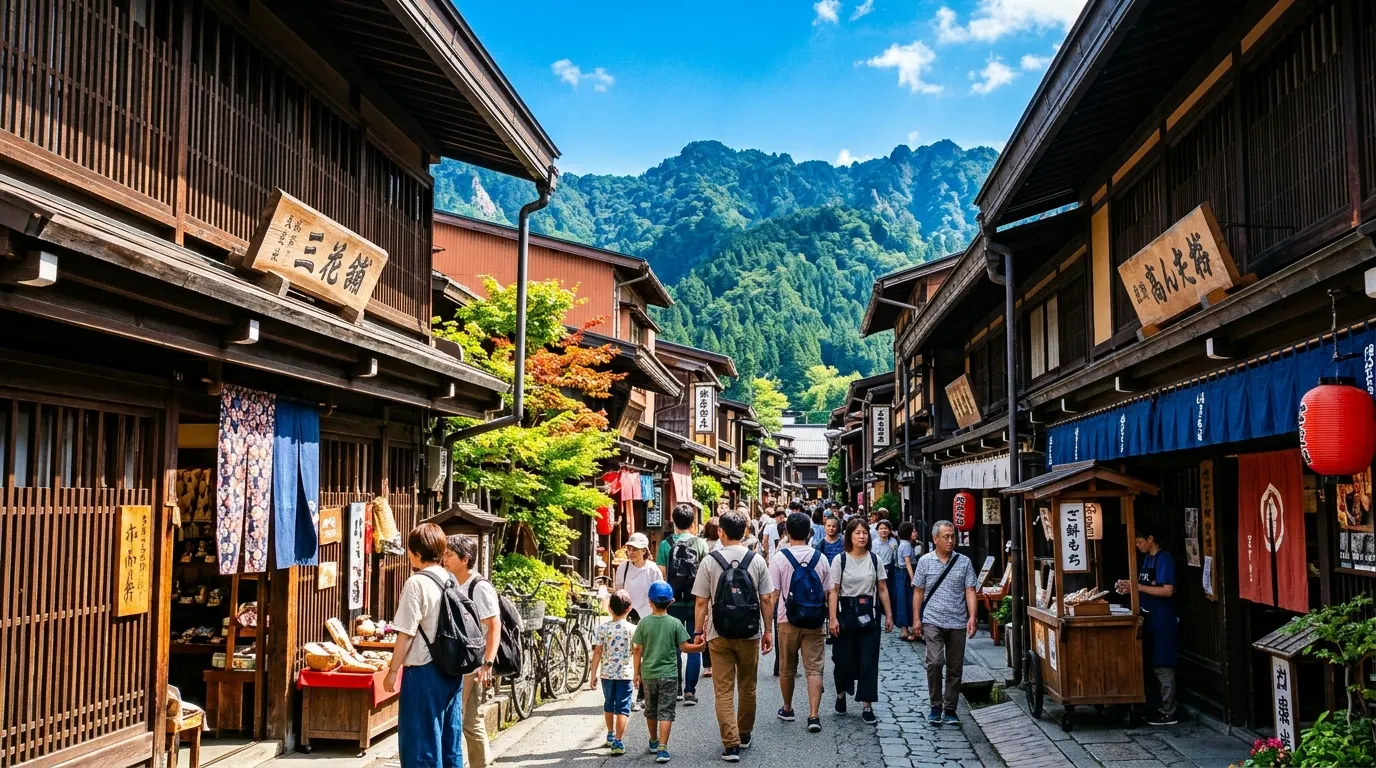
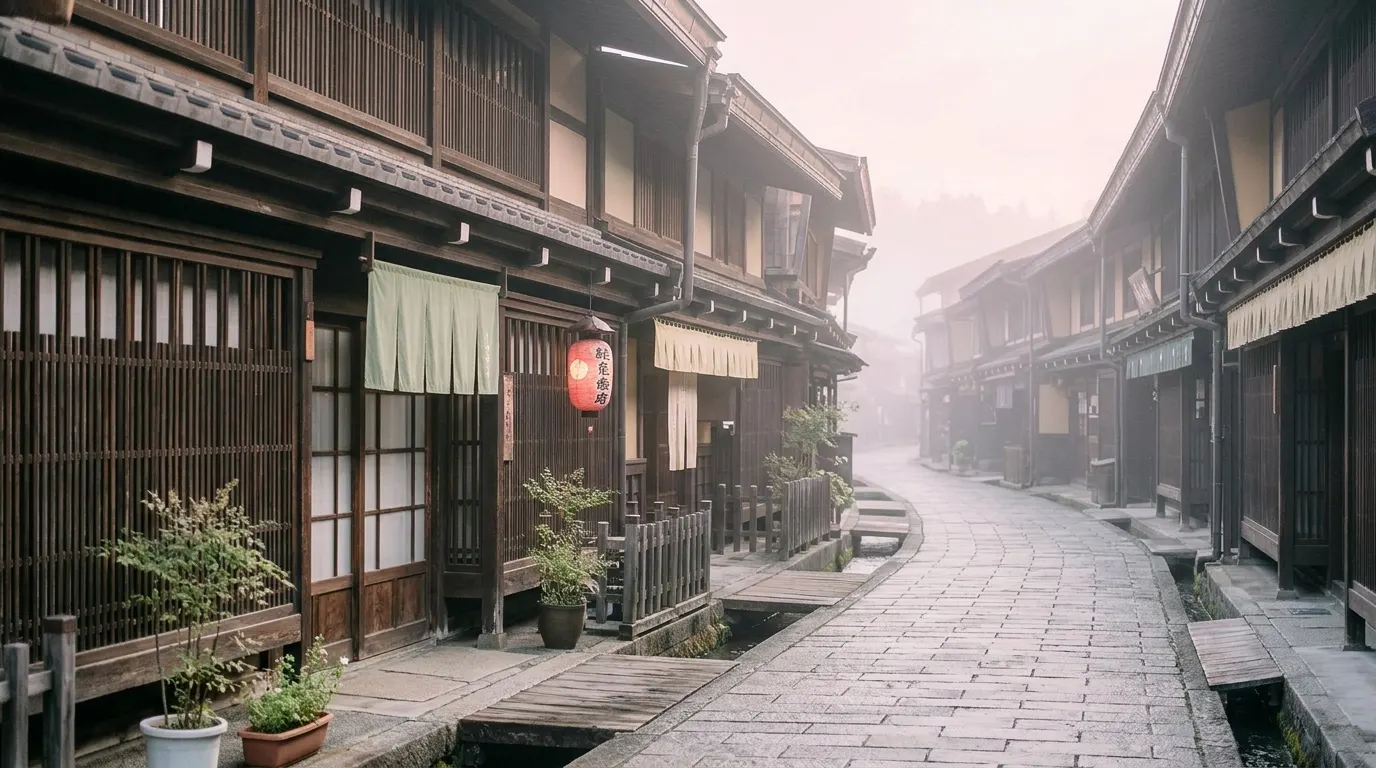
Takayama acts as the perfect basecamp. Often called "Little Kyoto," its beautifully preserved Sanmachi Suji historic district is highly walkable and far less overwhelming than Kyoto’s major tourist corridors. For kids, this town is a tactile wonderland. They can snack their way through the morning markets, crunching on local apples and sampling world-famous Hida beef right off the skewer.
Beyond the city limits, the Japanese Alps provide high-reward, low-effort nature experiences. Thanks to Japan’s incredible infrastructure, you don't need to be an extreme hiking family to reach elevations of 2,000 meters. Breathtaking ropeways, scenic bus routes, and paved walking paths make alpine exploration highly accessible, even with toddlers. Whether you are exploring our comprehensive City Guide: /city/takayama-japanese-alps for itinerary ideas or planning a quick two-night detour from the main tourist trail, the Alps deliver unforgettable cultural and natural immersion.
Top Family-Friendly Experiences in the Japanese Alps
Kamikochi National Park
If there is one natural wonder you must prioritize, it is Kamikochi (Kamikochi National Park). This stunning alpine valley offers some of the most dramatic mountain scenery in the country, yet the main trails are surprisingly flat and family-friendly. The classic walk from Taisho Pond to Kappa Bridge takes about an hour and a half at a preschooler's pace. The paths are wide, well-maintained dirt and gravel; a heavy-duty stroller can handle it, though a baby carrier is much easier.
Kids will love spotting wild macaque monkeys playing in the trees (remind them to keep their distance and never feed them).
Practical details: Access is tightly controlled; private cars are banned, so you must take a bus from Hirayu Onsen or Takayama. Bus tickets run about ¥2,090 ($14 USD) one way from Hirayu. Entry to the park itself is free. Go early in the morning to beat the day-trippers.
🎟️ Book family tickets & skip-the-line tours →
Shin-Hotaka Ropeway
Riding a gondola is always a hit with children, but the Shin-Hotaka Ropeway takes it to another level—literally. This is Japan's only double-decker gondola, whisking your family 2,156 meters up into the clouds. The observation deck at the top offers staggering panoramic views of the Northern Alps. In the warmer months, there are easy walking paths at the summit; in winter, kids can walk through towering snow corridors.
Practical details: Round-trip tickets cost ¥3,300 ($22 USD) for adults and ¥1,650 ($11 USD) for children. Strollers are allowed on the ropeway, but it gets crowded, so folding them is usually required. Plan to spend about two hours here.
🎟️ Find family-friendly tours & activities →
Rail Mountain Bike Gattan Go!!
For active families, the Rail Mountain Bike Gattan Go!! is a brilliant, high-thrill but low-effort adventure. You pedal electric-assisted mountain bikes that have been securely mounted onto the tracks of an abandoned railway line. You ride through dark tunnels and over elevated bridges with incredible views. Because the bikes are electric and locked to the tracks, you don't have to worry about steering or exhaustion. They even have sidecar attachments and child seats, meaning infants and toddlers can ride safely while parents pedal.
Practical details: Prices vary by bike type but generally run around ¥3,200 ($21 USD) per vehicle. Advance booking is absolutely essential as this sells out weeks in advance.
Exploring the Heights and Depths
If you want instant alpine scenery without the hike, take a bus up the Norikura Skyline (Route to Mt. Norikura). As Japan’s highest road, it takes you straight to a surreal volcanic landscape above the clouds. Alternatively, for a rainy day backup, the Hida Great Limestone Cave (Hida Dai-shonyudo) offers a great underground adventure. The illuminated stalactites feel like an alien planet, though be warned: there are many stairs, making it entirely inaccessible for strollers. Entry is ¥900 ($6 USD).
Immersive Cultural Encounters in Takayama and Beyond
Shirakawa-go Gassho-zukuri Village
No trip to the region is complete without visiting Shirakawa-go Gassho-zukuri Village. This UNESCO World Heritage site features iconic thatched-roof farmhouses built to withstand heavy snowfall. Walking through the village feels like stepping into a Studio Ghibli film. Be sure to go inside the Wada House (Wada-ke), a massive 300-year-old farmhouse. Kids are fascinated by climbing the steep, ladder-like wooden stairs up to the attic where silkworms were historically raised.
Practical details: The village is free to wander, but entry to Wada House is ¥400 ($2.50 USD). The main paths are stroller-friendly, but you must park strollers outside when entering the historic homes. The bus from Takayama takes about 50 minutes.
Staying Overnight in a Traditional Minshuku
If your schedule allows, a Shirakawa-go Gassho-zukuri Experience (overnight stay in a gassho house minshuku) is extraordinary. A Shirakawa-go Overnight Stay (Gassho-zukuri Minshuku) means sleeping on fluffy futons on tatami mats and eating local mountain vegetable dishes around a sunken hearth (irori). Once the day-trippers leave at 5:00 PM, the village empties out, and your family has the magical, lantern-lit streets entirely to yourselves.
(Note: If Shirakawa-go is too difficult to fit into your route, the Gero Onsen Gassho Village is a highly accessible open-air museum alternative that is very kid-friendly).
Takayama's Old Town and Festivals
Back in Takayama, everyday wandering is an event in itself. If you happen to visit in April or October, the Takayama Spring Festival (Takayama Matsuri - Sanno Matsuri) is a spectacle of towering, ornate floats that will leave kids wide-eyed, though crowds can be intense.
For meals, Japanese dining can sometimes feel rigid, but Heianraku is a legendary, tiny family-run restaurant in Takayama where the husband-and-wife team treats every guest like family. They are incredibly accommodating to children and offer fantastic vegetarian options, which can be rare in this beef-heavy region.
Soaking it Up: Navigating Onsen Culture with Children
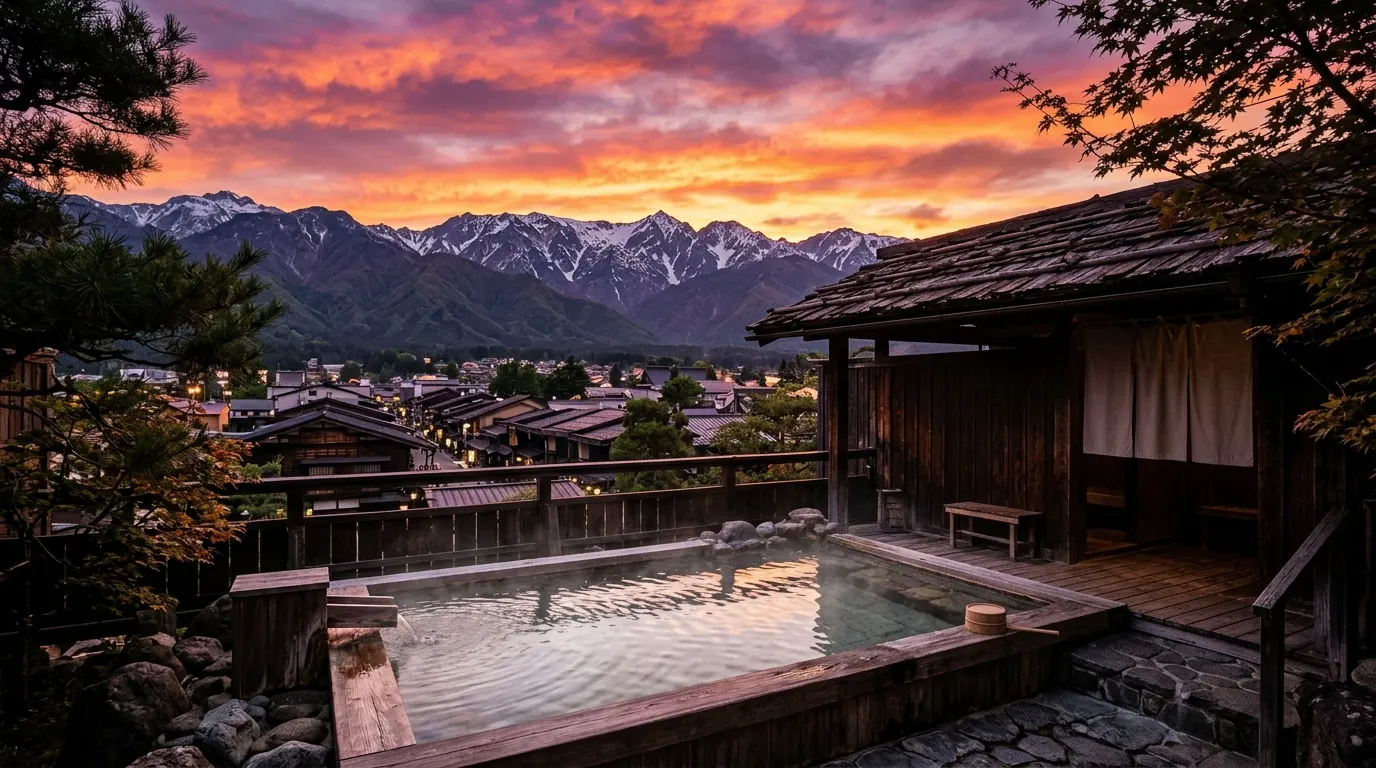
Bathing naked with strangers in a traditional Japanese hot spring (onsen) can be intimidating for foreign families, but the Alps region is the best place to dive in.
For beginners, Hirayu no Mori in the nearby Okuhida region is spectacular. It’s a sprawling, rustic resort featuring over a dozen outdoor mineral baths of varying temperatures. It costs only ¥600 ($4 USD), and because it is so large, you can easily find a quiet corner for your family.
If you prefer privacy, book a stay at Shinhotaka Onsen Yarimikan (Ryokan with Family Bath). This ryokan offers "kashikiri" (private reserve) outdoor baths right along the river. You lock the door behind you, allowing your whole family—regardless of gender—to splash and soak together without worrying about bothering other guests or adhering to strict modesty etiquette.
If you are staying strictly in Takayama city, pick up the Takayama Onsen (Yu Meguri Tegata / Hot Spring Passport). This wooden plaque acts as a budget-friendly pass allowing you to hop between several hotel baths in the city center.
Age-by-Age Guide to the Japanese Alps
Toddlers (Ages 2-3):
The open spaces of Kamikochi and the car-free zones of Shirakawa-go are perfect for letting toddlers safely burn off energy. Skip the complex museum setups and focus on sensory experiences: feeding giant koi fish in the streams around Takayama, tasting sweet rice dumplings, and looking out the window of the scenic Nohi buses. Bring a lightweight baby carrier; strollers are a hassle in historic houses and on uneven mountain paths.
Preschoolers (Ages 3-5):
This age group is easily enchanted by the region. The double-decker Shin-Hotaka Ropeway will feel like a ride on a spaceship to them. They will also love the interactive nature of staying in a ryokan—wearing a tiny yukata (cotton robe) and sleeping on floor futons feels like a giant sleepover.
School-Age Kids (Ages 6-10):
Action is key for this demographic. The Rail Mountain Bike Gattan Go is an absolute must-do for them. They will also appreciate the "ninja house" vibes of exploring the steep, hidden attics of Wada House, and the underground adventure of the Hida Great Limestone Cave. Give them a few hundred yen coins to independently purchase snacks from street vendors in Takayama’s old town.
Tweens & Teens (Ages 11-14):
Older kids will thrive on the cultural independence Takayama offers. Let them navigate the Miyagawa Morning Market to hunt down the best Hida beef skewers or local crafts. They are also old enough to handle proper hikes in Kamikochi or tackle the etiquette of public onsens independently.
What to Skip: Overhyped Traps in Takayama
While we love this region, there are several things you should confidently cross off your family itinerary to save time, money, and sanity.
- Generic Tourist Trap Hida Beef Restaurants: Avoid the Takayama Hida Beef Restaurants on Kokubunji-dori (Generic Tourist Trap Restaurants) and places like Toyama Suisan (Hida Beef Restaurant near Station). Because "Hida Beef" is a premium brand, many restaurants near the station charge exorbitant prices (upwards of ¥3,000 to ¥5,000+ for small sets) for mediocre, mass-produced meals. Stick to the street food skewers in Sanmachi Suji for a cheap thrill, or seek out slightly off-the-main-street yakiniku (BBQ) joints where you can grill the meat yourselves—a much more fun activity for kids.
- Dry Academic Museums: Skip the Takayama City Archives Museum, the Kyu-Shidokan, and the Shirakawa-go Doburoku Matsuri no Yakata (Doburoku Festival Museum). These are incredibly dry, text-heavy exhibits focusing on administrative documents or specific historical niches that will bore children to tears in under five minutes.
- The Festival Accommodation Nightmare: Unless you booked a year in advance, avoid the Takayama Festival (During Actual Festival Days - Accommodation Warning). Trying to find a family room on April 14-15 or October 9-10 is a logistical nightmare, and prices skyrocket to triple their normal rates.
- Impersonal Mega-Resorts: Skip the Suimeikan Ryokan (Gero Onsen). It feels more like a massive, impersonal convention center than the cozy, traditional Japanese inn experience your family is likely looking for.
- Inappropriate Snacks: Be wary of the Hida Takayama Sake Ice Cream (vendor-specific in old town). It sounds like a fun cultural novelty, but it actually contains real alcohol and is not suitable for children. Stick to matcha or sweet potato flavors instead!
Pro Tips from Parents for Visiting Takayama
- Use Takuhaibin (Luggage Forwarding): Taking large suitcases on the alpine buses between Takayama, Shirakawa-go, and Kamikochi is a miserable experience. Use Japan's reliable luggage forwarding service (Yamato Transport/Black Cat) to send your large bags from Tokyo or Kyoto directly to your next major city hotel, and just bring a small backpack for your few days in the Alps.
- Pack Layers, Even in Summer: The altitude makes a massive difference. While Kyoto might be sweltering at 35°C (95°F) in July, the Shin-Hotaka Ropeway summit or Kamikochi can require a fleece jacket in the afternoon.
- Dine Early: Takayama is not Tokyo. Many local restaurants close their doors by 5:00 PM or 6:00 PM, and those that stay open fill up instantly. Plan to eat dinner early, or rely on convenience stores (konbini) to fill the gaps if your kids get hungry later in the evening.
- Prep for Motion Sickness: The buses that navigate the winding mountain roads to Shirakawa-go and Okuhida are smooth, but the constant turns can trigger motion sickness in kids prone to it. Bring medication or wristbands just in case.
Final Verdict: Is Takayama & Japanese Alps Worth Visiting with Kids?
If you are willing to embrace a slightly slower pace and step off the Shinkansen (bullet train) line, the rewards are immense. The region provides a tactile, immersive education in traditional Japanese culture and geography that simply cannot be replicated in a city museum. From the thrill of high-altitude gondolas to the quiet magic of a sleepy thatched-roof village at dusk, these are the memories that stick with children long after the trip ends. So, is takayama & japanese alps worth visiting with kids? It is not just worth it—it might just become your family's favorite part of Japan. Pack your walking shoes, grab a Hida beef skewer, and enjoy the mountain air.