Stepping onto an airplane with young children feels like crossing a threshold into the great unknown. The cabin doors close, the air pressure shifts, and you are suddenly responsible for keeping little humans entertained, fed, and comfortable in a metal tube miles above the earth. While the prospect might seem incredibly daunting, learning how to survive a long flight with kids transforms that anxiety into a manageable, highly structured, and sometimes even enjoyable travel adventure. With the right preparation, tactical packing, and a flexible mindset, you can navigate international waters and cross time zones without losing your sanity.
Preparation is Key to Survive a Long Flight with Kids
The foundation of a successful long-haul journey is laid weeks before you ever arrive at the departure terminal. Seat selection is arguably the most critical decision you will make. When booking, families constantly debate between bulkhead seats and the very back of the plane. Bulkhead seats offer unparalleled legroom and space for a bassinet, making them ideal for infants. However, the armrests in bulkhead rows typically do not raise, which prevents older children from lying across your lap. Furthermore, all bags must be stored in the overhead bins during takeoff and landing, removing your immediate access to snacks and wipes right when you might need them most.
Opting for rows near the back of the airplane provides several distinct advantages for families. You are closer to the lavatories, which is essential for sudden toddler emergencies. You are also closer to the galley, where flight attendants can often supply extra water or a distraction in the form of a plastic cup. The ambient engine noise is louder in the back, serving as a massive white noise machine that helps drown out fussy cries.
Flight timing is another crucial pillar of preparation. For long international hauls, such as heading to our Tokyo guide or crossing the Atlantic, overnight red-eye flights are generally the best strategy for school-aged children and teenagers who can comfortably sleep in a seated position. The cabin lights dim, the environment naturally encourages rest, and they wake up at your destination. Conversely, daytime flights are often better for toddlers who might actively fight sleep in a strange, overstimulating environment. A toddler refusing to sleep on a dark airplane while the rest of the cabin slumbers is highly stressful; a daytime flight allows them to watch movies and play without the pressure of an enforced bedtime.
Navigating the Airport Before You Board
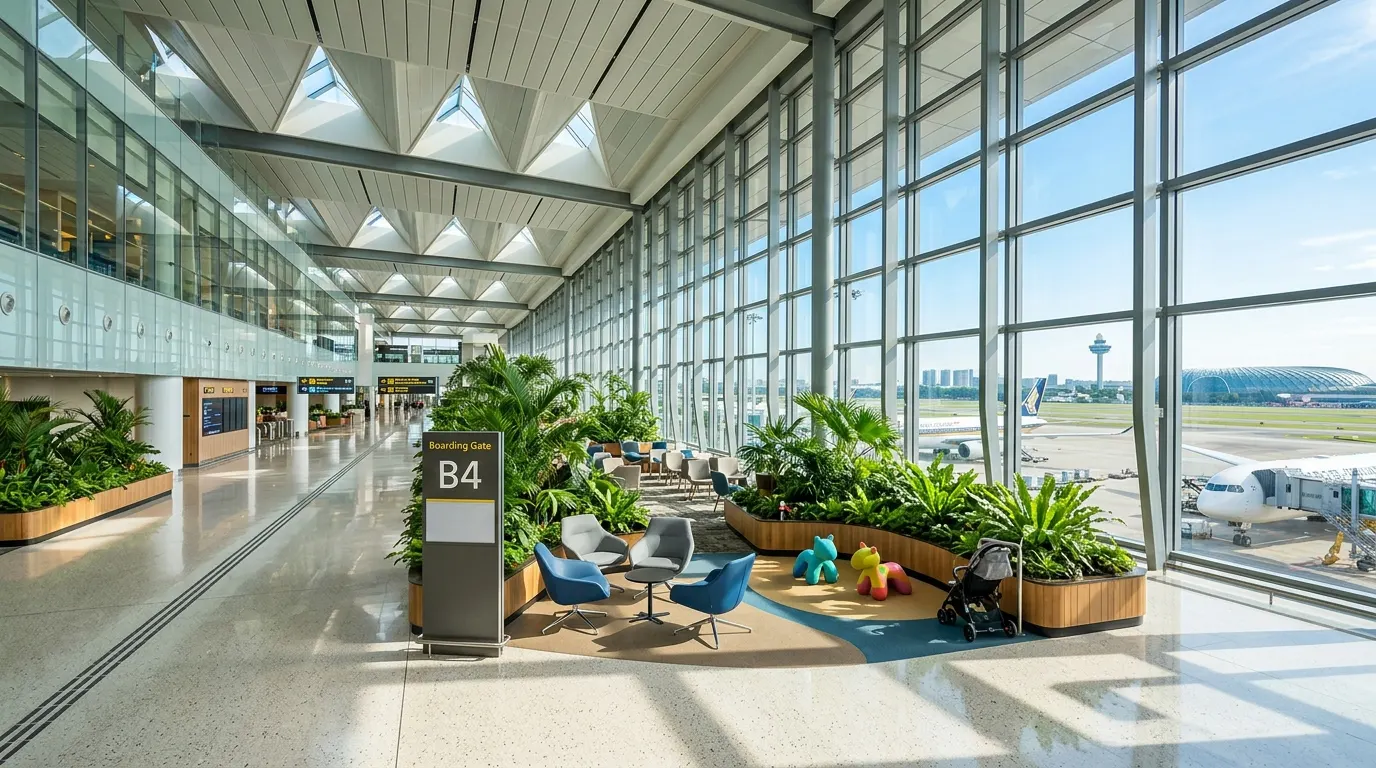
Treat the airport experience as the first leg of your vacation rather than just a waiting room. The best time of day to fly is early morning, as these flights are statistically the least likely to be delayed by cascading weather or operational issues. Knowing exactly how long to spend at the airport prevents rushed panic. For international flights with children, arriving a full three hours before departure is the golden rule. This buffer absorbs unexpected delays at the baggage drop, lengthy security queues, and inevitable bathroom breaks.
Stroller accessibility is generally excellent in modern terminals, but you must know the rules. A lightweight travel stroller that folds compactly is indispensable. You can wheel your child all the way to the boarding door and gate-check it, ensuring it is waiting for you on the jet bridge when you land. If you are flying through major hubs, map out the nearest food options before you arrive. Terminal gate areas are notorious for overpriced, underwhelming kiosks.
Instead of sitting at a crowded gate, airport lounges are a phenomenal investment for traveling families. Operating hours for most international lounges run from roughly 5:00 AM to 10:00 PM. While day passes require an upfront cost—typically around 40 to 60 USD (which translates to roughly 35 to 55 EUR or 6,000 to 9,000 JPY depending on your departure hub)—the value is immense. Lounges offer clean, spacious family restrooms, quieter environments away from the terminal chaos, and complimentary buffets. When you calculate the cost of buying three airport meals and bottled waters at the main concourse, the lounge entry fee quickly pays for itself while providing a much calmer environment to organize your carry-on bags before boarding.
🎟️ Find family-friendly tours & activities →
Packing the Ultimate Carry-On

The golden rule of packing a carry-on for a long-haul flight is to anticipate every biological need and double your supplies. You are packing for comfort, entertainment, and crisis management.
Snacks are the absolute most valuable player of family travel. Do not rely on the airline's catering schedule. The food cart operates on its own timeline, and turbulence can delay meal service for hours. Pack a tackle box or a multi-compartment bento box filled with dry, non-messy snacks: pretzels, dry cereal, cheese sticks, and fruit gummies. Avoid anything crumbly, sticky, or coated in powdered cheese. The novelty of the snack box itself serves as an activity, slowing down their eating pace and keeping hands busy.
Clothing requires strategic planning. Airplane cabins fluctuate wildly between freezing air conditioning and stuffy heat. Dress everyone in comfortable, soft layers without complicated buttons or stiff denim. Pack a complete change of clothes for every child, and crucially, an extra shirt and pair of lightweight pants for yourself. If a spill happens at thirty thousand feet, you do not want to sit in a sticky sweater for the next eight hours.
For technology, ensure every tablet is fully downloaded with movies and shows prior to leaving your house, as airport Wi-Fi is notoriously unreliable for streaming. Volume-limiting, over-ear headphones are essential, as the standard airline earbuds will not fit in a child's ears. Keep all charging cables, a high-capacity portable power bank, and a small pouch of sanitizing wipes easily accessible at the very top of your personal item under the seat in front of you.
Age-by-Age Guide to In-Flight Entertainment
Keeping kids engaged in a confined space requires tailoring your approach to their specific developmental stage. What works for a six-year-old will fail miserably with a two-year-old.
Toddlers (Ages 2-3)
This is widely considered the most challenging age for air travel. Toddlers are highly mobile, fiercely independent, and completely unable to reason with logic. Their primary goal is movement. To keep them seated, you need a steady stream of novel, tactile distractions. Painter's tape is a legendary travel hack; let them stick pieces to the tray table, the window, and themselves. Gel window clings are another mess-free activity that can kill thirty minutes. Avoid toys with small pieces that will drop into the abyss beneath the seats. Bring an empty cup and a handful of ice from the flight attendant—transferring ice back and forth is surprisingly captivating.
Preschoolers (Ages 3-5)
Preschoolers have longer attention spans but still require physical engagement. Water-reveal coloring books are perfect for airplanes because the only "paint" required is a few drops of water in the pen. Reusable sticker pads and triangular crayons (which will not roll off the tray table) are excellent additions. This is the age to introduce small, wrapped surprises. Go to a dollar store before the trip and individually wrap five or six small items—a new toy car, a squishy ball, a tiny notebook. Whenever a meltdown looms, present a new wrapped "gift" to instantly redirect their attention. Screen time rules should be entirely suspended; if watching three animated movies back-to-back keeps them happy, allow it.
School-Age (Ages 6-10)
Children in this bracket are much easier to manage but can succumb to severe boredom on ten-hour flights. Interactive travel journals where they can document their trip, draw the clouds, and write down what they eat are great tools. Chapter books and graphic novels are lightweight and engaging. This is also the prime age for hand-held gaming consoles like a Nintendo Switch. Ensure you have multiplayer games loaded if you have siblings traveling together, and establish clear turn-taking rules before boarding.
Tweens and Teens (Ages 11-14)
Older children are largely self-sufficient on flights, provided they have the right gear. High-quality noise-canceling headphones are non-negotiable for this age group, allowing them to block out cabin noise and sleep. Encourage them to pack their own carry-on backpack so they take ownership of their travel experience. Ensure they have downloaded their own music playlists, audiobooks, and offline games. The main challenge with teens is keeping them hydrated and ensuring they move their legs periodically to prevent stiffness on ultra-long routes.
What to Skip: Overhyped Travel Gear and Strategies
The family travel industry is flooded with products and advice promising a flawless flight, but many of these are entirely skip-worthy and will only weigh you down.
1. Bulky Inflatable Airplane Beds
Marketed heavily on social media, these inflatable cushions fill the footwell of the seat to create a flat bed for toddlers. While the concept is brilliant, the reality is problematic. They often cost upwards of 100 to 150 USD (around 90 to 140 EUR), take up a massive amount of premium space in your carry-on, and require you to manually inflate them in a cramped space. Most importantly, major international airlines strictly ban them from being deployed due to safety regulations regarding emergency evacuations. Skip the expense and the disappointment. A standard travel neck pillow or simply lifting the armrest and letting your child sleep across your lap is a much more reliable strategy.
2. Pre-Boarding with Highly Active Toddlers
Gate agents will almost always announce early boarding for families needing extra time. If you have an infant in a carrier or a massive amount of gear, this is helpful. However, if you are traveling with an energetic toddler, skip early boarding entirely. Getting on the plane first means you are forcing your child to sit still in a confined space for an extra 45 minutes while the rest of the plane boards. Instead, send one parent ahead during pre-boarding to stow the overhead luggage and set up the seats. The other parent should keep the toddler in the terminal, walking the concourse and burning off the last bit of energy until the final boarding call.
3. "Goodie Bags" for Surrounding Passengers
A viral trend involves parents preparing elaborate bags of candy, earplugs, and apology notes to hand out to neighboring passengers in case their baby cries. Skip this entirely. It is a waste of money, a waste of valuable packing space, and it sets a precedent that you need to apologize for your child's mere existence. Airplanes are public transportation. Babies cry, and kids get restless. Focus your energy and your budget on keeping your own children comfortable, rather than managing the expectations of strangers.
Managing Sleep, Meals, and Time Zones on Board
The environment at 35,000 feet is incredibly dehydrating. Cabin air lacks humidity, which can lead to headaches and crankiness in children. Bring an empty, spill-proof water bottle for every family member through security, and fill them up at a hydration station before boarding. Encourage your kids to sip water constantly. Skip the sugary sodas and juices offered by the flight attendants, as the sugar spikes and subsequent crashes are magnified in a confined space.
When it comes to airplane meals, do not assume your child will eat what is served. The nearest food options once you are airborne are limited strictly to the galley cart, and a heavily salted chicken curry or mystery pasta is unlikely to appeal to a picky eater. Pack substantial, protein-heavy items from home: bagel sandwiches, pasta salad in a thermos, or hearty muffins. The cost of buying a sad, pre-packaged sandwich at the airport is easily 15 USD, but bringing a reliable, filling meal from your own kitchen is absolutely priceless.
To manage time zones, immediately change your watch and your phone to the local time of your destination the moment you sit down. If you are flying to our Rome family guide and it is currently nighttime there, encourage sleep right away. Dim their screens, close the window shade, and offer a cozy blanket. If it is daytime at your destination, keep the kids awake with activities and snacks for as long as possible.
🎟️ Book family tickets & skip-the-line tours →
Pro Tips from Parents for a Smoother Journey
- Pack a "Landing Bag": Create a small, easily accessible pouch at the very top of your bag containing face wipes, a travel toothbrush, mints, and a clean t-shirt. Freshening up thirty minutes before landing dramatically improves everyone's mood for the immigration line.
- The Ziploc Trash Bag: Flight attendants only pass through the cabin to collect trash every few hours. Bring an empty gallon-sized Ziploc bag to collect your family's used snack wrappers, sticky wipes, and apple cores, keeping your seating area tidy.
- Carabiner Clips: Attach a heavy-duty carabiner clip to the seatback pocket in front of you. You can hang your child's water bottle or a small bag of toys from it, keeping items off the filthy floor and freeing up the tray table.
- Embrace the "Yes" Day: A long-haul flight is not the time to enforce strict parenting rules. If they want a third cup of apple juice, say yes. If they want to watch a movie they have already seen twice, say yes. Survival is the priority; routine can resume when you land.
- Divide and Conquer: If traveling with another adult, take shifts. One parent is "on duty" actively managing the kids for two hours, while the other puts on headphones and rests. Swapping out prevents both parents from burning out simultaneously.
How You Will Survive a Long Flight with Kids
Knowing how to survive a long flight with kids isn't about achieving a flawless, tear-free journey where everyone sleeps perfectly for eight hours. It is about equipping yourself with the right tools, practical snacks, and a deep well of patience to handle the inevitable bumps along the way. Children are incredibly resilient travelers when they feel secure and entertained. Expect a few moments of frustration, but also look forward to the quiet moments of reading together, the excitement of looking out the window at the clouds, and the immense pride you will feel when the landing gear touches down. You are building core memories and showing your kids the world, and that massive payoff makes every hour in the air completely worth it.