Traveling with children requires an entirely different playbook than solo backpacking or couples getaways. When you plan a family trip without losing your mind, the goal fundamentally shifts from seeing absolutely everything to creating joyful, manageable moments that everyone actually remembers fondly. Transitioning from chaotic packing lists and mid-trip meltdowns to smooth, enjoyable vacations takes preparation, strategic scheduling, and a willingness to embrace flexibility. The difference between a vacation you need a vacation from and a genuinely restorative family adventure lies entirely in the architecture of your itinerary.
The Secret to How to Plan a Family Trip Without Losing Your Mind
The most common mistake parents make when organizing travel is attempting to overlay a child's needs onto an adult's itinerary. To succeed, you must reverse engineer the process. Start with the absolute limits of your youngest traveler and build outward.
Establish Your Anchor Activities
The cornerstone of stress-free family travel is the "One Big Thing" rule. Instead of listing five attractions to conquer in a single day, select one primary anchor activity. This is your non-negotiable event—the castle visit, the boat tour, or the major museum. Schedule this anchor for the time of day when your children are at their absolute best, which for most families is first thing in the morning. Everything else that happens that day is simply a bonus. If you manage to see a second attraction, fantastic. If you end up spending three hours throwing rocks into a local fountain instead, the day is still a resounding success because you accomplished your primary goal.
Build in Mandatory Margins
Travel logistics take exponentially longer with children. Walking from a subway station to a museum might take an adult ten minutes; with a preschooler who stops to inspect every pigeon, it takes thirty. When building your schedule, double your anticipated transit times. Furthermore, explicitly schedule "margin time" into your days. This is unstructured time where no one is required to be anywhere, wear anything specific, or learn anything educational. Margin time allows the nervous system to reset, preventing the overstimulation that inevitably leads to public tantrums.
Putting It Into Practice: A Blueprint for Success

To understand how to implement these strategies, it helps to look at a concrete example. When reviewing a resource like our London family guide, you cannot just look at the attractions; you must look at the logistics surrounding them. Here is how you evaluate and schedule an anchor activity using practical, real-world constraints.
The Morning Anchor: The Tower of London
When selecting an anchor, gather every piece of logistical data available. For the Tower of London, opening hours are typically 9:00 AM to 5:30 PM (varying slightly by season). Rough costs are £34.80 GBP (about $44 USD) for adults and £17.40 GBP (about $22 USD) for children.
Stroller Accessibility: The grounds are heavily cobbled, and strollers must be left in designated buggy parks before entering the actual White Tower or the Jewel House. Knowing this in advance means bringing a baby carrier for your infant rather than struggling with a heavy double stroller on medieval stones.
Best Time to Visit: Arrive exactly at 9:00 AM to beat the massive crowds to the Crown Jewels.
How Long to Spend: Cap your visit at 2 to 3 hours. By the time you hit the three-hour mark, attention spans will wane.
Nearest Food Options: Avoid the overpriced on-site cafes. Instead, plan a five-minute walk to St Katharine Docks, where you will find family-friendly options like Wagamama, offering noodles and high chairs in a relaxed environment.
🎟️ Book family tickets & skip-the-line tours →
The Afternoon Pivot: Natural History Museum
If you attempt a second major activity, make sure it offers a completely different environment. The Natural History Museum provides wide-open spaces and interactive exhibits. Opening hours are 10:00 AM to 5:50 PM, and general admission is free (though special exhibits cost extra).
Stroller Accessibility: Excellent. Ramps and elevators are plentiful, making this a great place for a toddler to nap in the stroller while older kids explore.
Best Time to Visit: Late afternoon (after 3:00 PM) when the massive school groups have departed.
How Long to Spend: 1.5 to 2 hours. Do not try to see everything; focus solely on the dinosaur wing and the earthquake simulator.
Nearest Food Options: The nearby South Kensington area is packed with quick-service cafes like Muriel's Kitchen or simple bakeries where you can grab a sausage roll and sit on a bench.
🎟️ Find family-friendly tours & activities →
Age-Specific Strategies for Family Travel

A destination that thrills a ten-year-old might completely overwhelm a two-year-old. Tailoring your approach to specific developmental stages is crucial for maintaining peace.
Toddlers (Ages 2-3): The Routine Rulers
Toddlers thrive on predictability, which travel inherently disrupts. Your primary goal is to maintain the pillars of their routine: sleep and food. Stick to their home time zone schedule as much as possible for short trips. Map out local playgrounds before you arrive—you will spend more time there than at any cultural monument. Utilize the "nap trap" strategy: plan long scenic drives, train rides, or quiet museum walks specifically during their peak afternoon sleep windows, ensuring they rest while you still get to sightsee.
Preschoolers (Ages 3-5): The Tactile Explorers
Kids in this age bracket have boundless energy but highly limited stamina for walking. They need to touch, climb, and interact. When planning, look for open-air museums, botanical gardens, and interactive science centers. Break up the day with frequent, low-stakes snacks. Preschoolers do not care about the historical significance of a cathedral, but they will happily search for gargoyles if you turn it into a game. Always travel with a lightweight, easily foldable travel stroller, even if they rarely use one at home; a full day of travel walking is vastly different from a walk around your neighborhood.
School-Age Kids (Ages 6-10): The Autonomy Seekers
This is the golden age of family travel. School-age children are capable of walking long distances, trying new foods, and actually remembering the trip. The key to keeping them engaged is granting them ownership. Give them a small daily budget in the local currency to spend on souvenirs or treats. Involve them in the planning process by letting them choose one activity per day from a pre-approved list. Equip them with an inexpensive digital camera or a sketchbook to document the journey from their own perspective.
Tweens and Teens (Ages 11-14): The Independence Cravers
Traveling with older kids requires a delicate balance of family time and autonomy. The most critical adjustment you must make is to their sleep schedule. Do not force a teenager to wake up at 7:00 AM for a walking tour unless absolutely necessary. Allow them to sleep in, and shift your itinerary to late mornings and evenings. Give them meaningful responsibilities, such as navigating the family from the hotel to a restaurant using public transit. Consult our Paris family guide or similar resources to find neighborhood food tours or street art walks that appeal to their desire for authentic, mature experiences rather than "kiddie" attractions.
What to Skip When Traveling with Kids
Knowing what to omit from your itinerary is just as important as knowing what to include. Certain travel tropes are guaranteed to induce misery when children are involved.
The Multi-City Hopscotch Itinerary
Attempting to visit Rome, Florence, and Venice in seven days is a recipe for disaster. Every time you change locations, you lose a minimum of a half-day to packing, transiting, checking into a new hotel, and re-orienting yourselves. Children need time to settle into a space to feel secure. Instead of a multi-city blitz, embrace "slow travel." Pick one city or region, rent an apartment with a kitchen and a washing machine, and take day trips. Staying grounded in one location drastically reduces logistical fatigue.
The "Must-Do" Mega Museums
Unless you have an aspiring art historian in the family, dragging children through massive, labyrinthine institutions like the Louvre or the Vatican Museums is generally a mistake. The crowds, the strict rules against touching, and the sheer scale of these buildings quickly lead to sensory overload. If you must go, do not attempt to see the entire collection. Pick a single wing, spend 45 minutes looking at three specific masterpieces, and leave while everyone is still in a good mood. Better yet, swap the mega-museums for smaller, niche museums that can be comfortably digested in an hour.
Fine Dining Establishments Without a Backup Plan
A three-hour, multi-course dinner at an upscale restaurant is torture for a child. The expectation to sit perfectly still and speak in hushed tones while waiting forty minutes between courses will exhaust even the most well-behaved kids. Skip the formal dining rooms. Instead, lean heavily into food halls, vibrant outdoor markets, and casual neighborhood trattorias. Food halls are particularly brilliant for families because they offer immediate service, a loud enough atmosphere to mask child noise, and diverse options to satisfy picky eaters and adventurous adult palates simultaneously.
Managing Logistics: Practical Details That Save the Day
The magic of a great family vacation is entirely supported by invisible logistical scaffolding. Managing the daily mechanics of food, transport, and comfort requires proactive planning.
Strategic Food Sourcing
Never rely on finding a restaurant exactly when your children announce they are hungry. By the time they verbalize hunger, you have a twenty-minute window before a blood-sugar crash. Research grocery stores near your accommodation before you arrive. Make your first stop a local market to stock up on familiar snacks, fresh fruit, and breakfast items. Eating breakfast in your room saves immense amounts of time and money, allowing you to start your day smoothly without negotiating menus with a groggy toddler.
Evaluating Terrain and Transport
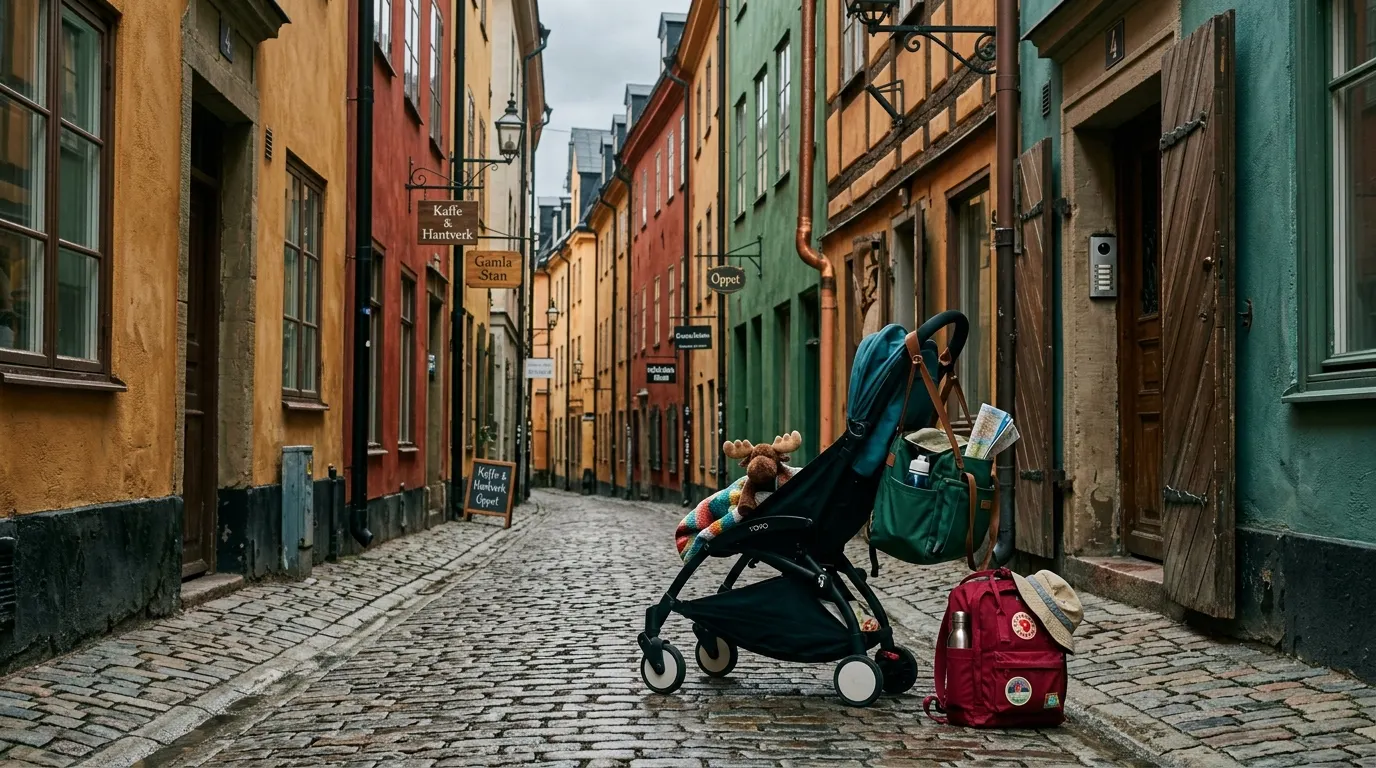
Always research the physical environment of your destination. Look up whether the local subway system has elevators (many historic European metros do not). If you are visiting a hilly destination or a city known for cobblestones, reconsider the type of stroller you bring. Sometimes, utilizing local buses or ferries is far more accessible and enjoyable for children than navigating deep, stair-heavy underground train networks.
Final Steps to Plan a Family Trip Without Losing Your Mind
As your departure date approaches, the focus shifts from itinerary building to the physical act of packing and preparing your mindset.
The Packing Cube Strategy
Overpacking creates physical and mental clutter. Use packing cubes, assigning a specific color to each family member. For younger children, pack their clothes in complete daily outfits (shirt, pants, socks, underwear) rolled together into a single bundle. This eliminates the morning struggle of matching clothes and digging through suitcases. Always pack a dedicated "spill kit" in your day bag—wet wipes, a small plastic bag for soiled clothes, and a lightweight change of clothes for the youngest travelers.
The "Magic Bag" of Distractions
For flights, long train rides, or inevitable waiting periods at restaurants, curate a small bag of high-yield, low-mess distractions. Do not reveal these items before the trip. Include things like window clings for airplane windows, water-reveal coloring books, magnetic tiles, and a few brand-new, inexpensive toys. Introduce them slowly, one at a time, only when standard entertainment (like looking out the window or talking) has been exhausted.
Pro Tips from Parents
- The "10 AM Gelato" Rule: Throw standard nutritional timelines out the window. If everyone is getting cranky mid-morning, stop for ice cream or a local sweet treat. A small sugar boost and ten minutes of sitting down can salvage an entire morning.
- Grocery Stores as Attractions: Visiting a foreign supermarket is a fascinating cultural experience. Let your kids pick out bizarrely flavored potato chips or unique local candies. It is cheap entertainment and provides great snacks for the hotel room.
- Divide and Conquer: If you are traveling with another adult, explicitly schedule solo time. One parent takes the kids to the park for two hours while the other visits a quiet art gallery or simply sleeps. Alternate the next day.
- Pre-Pin Your Digital Maps: Before you leave home, open your map app and drop pins for your hotel, your anchor activities, nearby playgrounds, and highly-rated casual restaurants. When you are lost and a child is melting down, you do not want to be scrolling through reviews; you want to look at your map and immediately walk toward the nearest pre-vetted food pin.
- Separate Sleeping Spaces: Whenever the budget allows, prioritize accommodations with a separate sleeping area for the kids, even if it is just a one-bedroom apartment with a pull-out couch in the living room. Sitting in the dark at 7:30 PM whispering so you do not wake the baby is not a vacation.
Conclusion
Taking your children out into the world is one of the most rewarding investments you can make in their development and your family's shared history. It will not always be perfect—there will be delayed trains, spilled drinks, and moments of exhaustion. However, when you approach the process with realistic expectations, prioritize connection over checking boxes, and build margin into your days, the inevitable hiccups become minor bumps rather than trip-ruining catastrophes. You absolutely can plan a family trip without losing your mind; it simply requires a shift in perspective, a solid logistical foundation, and the readiness to find joy in the unexpected detours.