Every parent knows the feeling of backing out of the driveway, checking the rearview mirror, and wondering how to keep kids entertained on long road trips before the first chorus of complaints begins. A multi-hour drive with children strapped into the backseat requires far more than just a full tank of gas and a hastily packed bag of snacks. It requires a carefully orchestrated timeline of activities, engaging distractions, and well-timed breaks to ensure everyone arrives at the destination with their sanity intact. Whether you are driving cross-country for a major family vacation or simply heading a few hours out of town for a weekend getaway, having a robust, road-tested toolkit of boredom-busting strategies is absolutely essential for a smooth ride.
Why You Need a Strategy to Keep Kids Entertained on Long Road Trips
Winging a family road trip rarely yields a peaceful drive. Children, by their very nature, are active and crave constant stimulation, making the physical confinement of a car seat particularly challenging. When you establish a structured plan to keep kids entertained on long road trips, you transition from playing defense against tantrums to actively managing the mood in the vehicle.
The secret to a successful drive lies in pacing. If you hand over every exciting toy, fresh snack, and digital device within the first thirty minutes of the journey, you will find yourself entirely out of ammunition when you hit hour four. A strategic approach involves holding back the best items, rotating through different types of sensory experiences, and matching the activity to the energy level of the car. Active play, such as drawing or interacting with tactile toys, works beautifully at the start of the trip. As the hours wear on and fatigue sets in, shifting toward passive entertainment, like audiobooks or a movie, aligns perfectly with their naturally dipping energy levels. By treating the road trip as a series of distinct, manageable time blocks rather than one endless marathon, you maintain control over the environment and keep the peace.
Age-by-Age Guide: Activities for Every Stage

What works for a toddler will inevitably bore a tween, and what engages a school-aged child presents a choking hazard for a baby. Tailoring your entertainment arsenal to the specific developmental stages of your children guarantees maximum engagement.
Toddlers (Ages 2-3)
Toddlers are notoriously difficult to entertain in the car because they lack the fine motor skills for complex activities and the attention span for long movies. The goal here is safe, tactile exploration. Reusable window clings are a fantastic option; toddlers love peeling them off and slapping them against the glass. Painter’s tape is another inexpensive miracle. Tear off a few strips and let your toddler stick them to their car seat, their legs, or an empty water bottle. Soft, interactive books with zippers, buttons, and crinkly pages also provide excellent sensory engagement without the risk of hard plastic flying through the cabin if they decide to throw a toy.
Preschoolers (Ages 3-5)
Preschoolers are developing their independence and love activities they can complete without constant parental intervention. Water-reveal activity pads are arguably the greatest travel invention for this age group. The pens are filled with water, meaning there is zero risk of ink stains on your upholstery, and the pages dry and reset within minutes for endless replay value. Magnetic drawing boards and large, chunky reusable sticker pads featuring their favorite animals or vehicles will also absorb their attention for surprisingly long stretches. This is also the perfect age to introduce simple, visually engaging search-and-find books.
School-Age Kids (Ages 6-10)
Children in elementary school can handle more complex, cognitive entertainment. Magnetic travel board games, such as checkers or tic-tac-toe, are excellent if you have two children sitting adjacent to one another. Blank sketchbooks paired with a fresh box of colored pencils (avoid crayons, which can melt in a hot car) encourage immense creativity. You can also print out a customized road trip binder filled with license plate bingo, word searches, and mazes. Handing them an inexpensive digital camera to document the journey from their window gives them a sense of purpose and yields hilarious, kid-perspective photos of your travels.
Tweens and Teens (Ages 11-14)
Older kids crave autonomy and respect for their personal space. The best way to keep tweens and teens engaged is to give them a job. Appoint them as the official trip DJ, allowing them to curate a playlist for a specific leg of the journey, or task them with navigating the route using a physical atlas rather than relying solely on a GPS. Encourage them to pack their own dedicated travel bag with graphic novels, sketchpads, and a loaded e-reader. While they will inevitably want screen time, balancing it with a travel journal or a highly engaging fantasy novel keeps them grounded in the family experience.
The Magic of Audio: Immersive Listening for the Whole Family

When the car starts to feel cramped and tempers begin to flare, shifting the environment through sound can completely reset the mood. Audio entertainment is a powerful tool because it engages the imagination without requiring physical exertion or eye strain, making it perfect for kids prone to motion sickness.
For younger children, interactive science and storytelling podcasts are incredibly engaging. Shows that ask questions, feature funny character voices, and encourage kids to shout out answers transform passive listening into a family activity. For school-aged kids and tweens, chapter-based audiobooks are unmatched. Choosing a gripping adventure or fantasy series that appeals to multiple age groups allows the entire car to share a collective narrative experience.
If your children have vastly different tastes, investing in comfortable, volume-limiting headphones is crucial. A simple headphone splitter allows two kids to listen to the same tablet or device quietly in the back, while parents can enjoy their own music or a peaceful conversation in the front seats.
Screen Time Strategy to Keep Kids Entertained on Long Road Trips
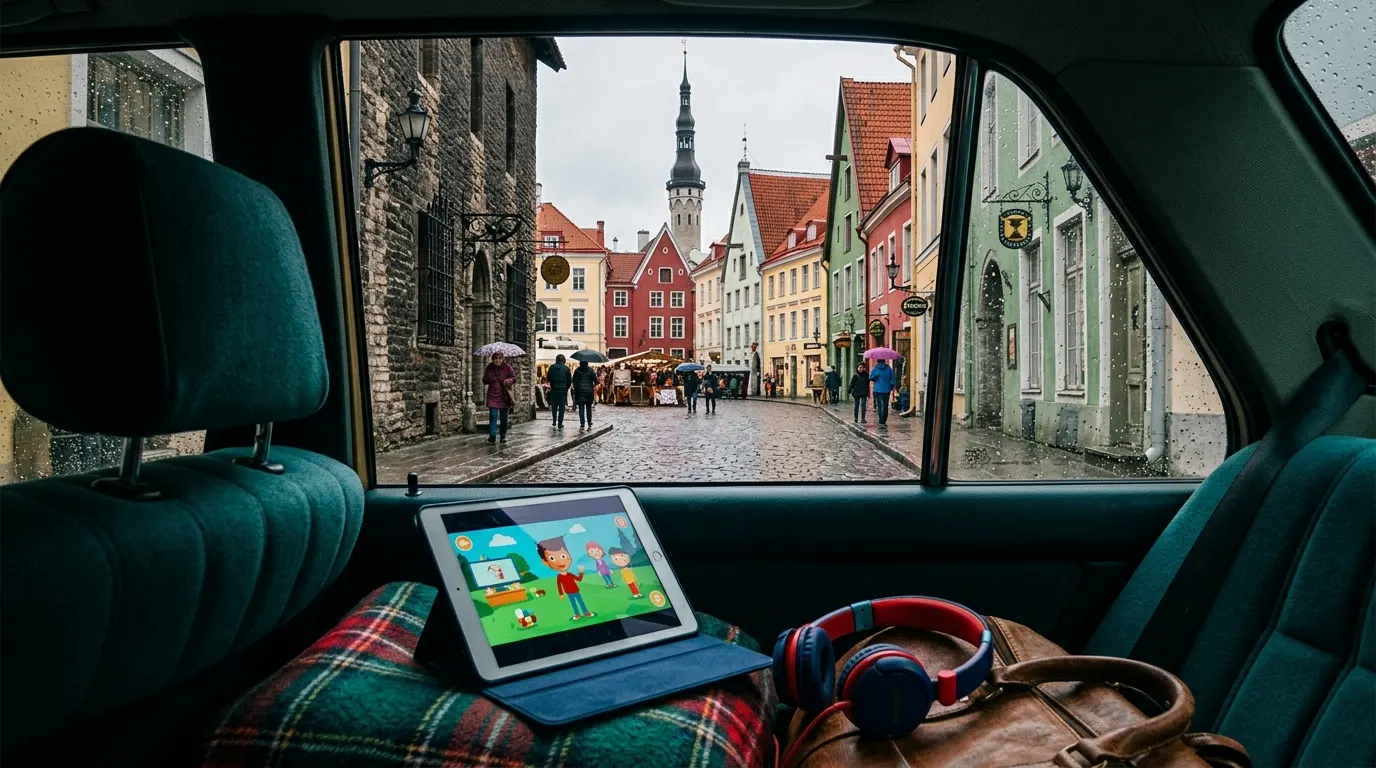
While many parents strive for a screen-free vacation, rigid adherence to that rule during a ten-hour drive is often a recipe for unnecessary stress. Utilizing a smart screen time strategy to keep kids entertained on long road trips is about intentionality, not surrender.
The most important rule is to view the tablet as a tool to be deployed at specific times, rather than a default state of being. Establish clear boundaries before the car even goes into drive. Communicate that screens will only be available after lunch, or during the final two hours of the journey when patience is wearing exceptionally thin.
Preparation is vital. Relying on cellular data to stream a movie while driving through rural areas will result in buffering screens and immediate meltdowns. Download a generous selection of movies, television episodes, and offline educational games the night before your departure. Ensure you have sturdy, headrest-mounted tablet holders to promote good posture and prevent the device from becoming a heavy projectile in the event of a sudden stop. By controlling the content and the timing, screen time becomes a highly effective, stress-relieving reward rather than an all-day crutch.
Master the Art of the Pit Stop: Turning Breaks into Adventures
A road trip should not be a miserable endurance test to see how long you can drive without stopping. Strategically planned pit stops are essential for burning off pent-up physical energy and breaking the journey into digestible segments. Instead of pulling over at a barren rest stop with a single vending machine, look for engaging attractions along your route. If you are referencing our Chicago family guide or our Denver family guide, you will notice that the surrounding suburbs and mid-route towns often harbor fantastic, family-friendly institutions.
Consider mapping your drive around a regional science center, a children's museum, or a large aquarium. These venues are specifically designed to encourage physical movement and hands-on exploration, which is exactly what a child needs after three hours in a five-point harness.
Practical Details for Regional Science Centers & Aquariums:
- Opening Hours: Generally open from 9:00 AM to 5:00 PM, though many are closed on Mondays or Tuesdays during the off-season.
- Rough Costs: Typically $20–$35 USD per adult, and $15–$25 USD per child. (If traveling internationally, expect roughly 25-45 in local currency like CAD or EUR).
- Stroller Accessibility: Excellent. These venues are universally ADA compliant, featuring wide ramps, large elevators, and smooth flooring perfect for travel strollers.
- Nearest Food Options: Most feature an on-site cafeteria offering standard kid-friendly fare. Alternatively, they are usually located near downtown districts where quick-service sandwich shops are within a five-minute walk.
- Best Time of Day: Arrive right at opening to stretch your legs before the midday crowds, or mid-afternoon for a final burst of activity before the last leg of the drive.
- How Long to Spend: Plan for a solid 2 to 3 hours to ensure the kids are thoroughly exhausted before getting back in the car.
🎟️ Book family tickets & skip-the-line tours →
If you prefer outdoor activity to get some fresh air, look for historical walking tours, botanical gardens, or open-air history museums. These stops allow children to run, speak at normal volumes, and explore freely.
Practical Details for Outdoor History Museums & Gardens:
- Opening Hours: Typically 10:00 AM to 4:00 PM. Always check seasonal variations.
- Rough Costs: Very affordable, often ranging from $10–$20 USD per person.
- Stroller Accessibility: Moderate. Expect some uneven dirt paths, crushed gravel, or historical cobblestones. A stroller with robust wheels is highly recommended.
- Nearest Food Options: Food options on-site are often limited. Packing a picnic lunch to eat on the adjacent grounds is usually the best, most cost-effective strategy.
- Best Time of Day: Early morning before the midday sun peaks, as shade can be scarce in open-air environments.
- How Long to Spend: 1.5 to 2 hours of brisk walking is usually sufficient.
🎟️ Find family-friendly tours & activities →
What to Skip: Road Trip Entertainment Traps
Not all travel activities are created equal. In fact, some seemingly great ideas will actively make your road trip worse. Save your sanity by leaving these specific items out of the car entirely.
1. Messy Crafts and Modeling Compounds
It might seem like a brilliant idea to hand your preschooler a brand-new container of Play-Doh, slime, or kinetic sand. Do not do this. Within ten minutes, these compounds will crumble, drop into the crevices of the car seat, and get permanently ground into your vehicle's upholstery. Similarly, skip markers (even washable ones) and stick exclusively to colored pencils or water-reveal pads to prevent an accidental mural on your car doors.
2. The Open-Access Snack Cooler
Placing a massive bin of snacks within arm's reach of your children is a tactical error. Kids will eat purely out of boredom, blowing through a three-day supply of snacks in the first two hours. This inevitably leads to massive sugar crashes, upset stomachs, and a desperate need for a bathroom break in the middle of nowhere. Instead, ration the snacks. Keep the main supply up front with the driver and passenger, and distribute small, specific portions at scheduled intervals.
3. Complex Board Games with Tiny Pieces
While travel games are great, any game that relies on dozens of tiny, non-magnetic pieces (like standard Lego sets, intricate puzzles, or classic board games with loose tokens) is a disaster waiting to happen. The moment a crucial piece drops out of bounds and slides under the driver's seat while you are cruising at 70 miles per hour, an absolute meltdown will ensue, and you will be entirely unable to safely retrieve it. Stick to fully magnetic games or self-contained toys.
Pro Tips from Parents for Smooth Driving
Over years of logging thousands of miles with children in the backseat, seasoned parents have developed highly specific hacks to mitigate the chaos of a long drive. Implement these insider tips to elevate your road trip experience.
The Hourly Surprise Bag
Visit a local dollar store before your trip and purchase a variety of inexpensive, novel items: a new matchbox car, a quirky pack of stickers, a fresh pad of paper, or a unique snack. Wrap each item individually. For every hour of peaceful driving, allow your child to open one surprise. The novelty of a "new" item, however cheap, commands their attention far longer than a toy they already own, and the anticipation of the next wrapped gift encourages good behavior.
The Shoe Organizer Command Center
Drape an inexpensive, over-the-door clear shoe organizer over the back of the front seats. Fill the transparent pockets with wet wipes, individual snacks, water bottles, small toys, and headphones. This keeps all the essential items visible and within arm's reach of the children, preventing them from constantly asking you to dig through a bottomless backpack on the floorboards.
The "Trash Cereal" Container Hack
Repurpose a clean, plastic cereal storage container (the kind with a pop-top lid) into a dedicated car trash can. Line it with a plastic grocery bag and snap the lid shut. It fits perfectly on the floor, prevents sticky wrappers from piling up in the cup holders, and crucially, the sealed lid keeps odors contained and prevents spills if it tips over on a sharp turn.
Drive During Sleep Windows
If you have a particularly long stretch of driving ahead, align your departure time with your children's natural sleep schedules. Leaving at 4:00 AM might sound painful for the parents, but knocking out the first three or four hours of a trip while the kids are fast asleep in the dark is invaluable. By the time they wake up, you are already halfway to your destination.
The Designated "Grabber" Tool
Purchase a long, mechanical grabber tool (the kind used to reach high shelves) and keep it in the front passenger seat. When a child inevitably drops their favorite stuffed animal or their water bottle rolls out of reach, the passenger can easily retrieve the item from the floorboard without having to unbuckle and contort themselves over the center console.
Hitting the open road with your family is a wonderful way to build shared memories and explore new destinations together. While the enclosed space of a vehicle can certainly amplify the challenges of parenting, a little bit of proactive planning goes an incredibly long way. By pacing your activities, embracing strategic pit stops, and keeping a few surprises up your sleeve, you will absolutely be able to keep kids entertained on long road trips and arrive at your destination ready for vacation.