Traveling with kids requires a solid, dependable home base, but navigating the endless sea of accommodation options can easily overwhelm even the most seasoned traveler. The immediate instinct is to check that little smiling block icon on booking engines, assuming a property catering specifically to children will guarantee a stress-free vacation. However, relying entirely on that marketing term often leads to crowded pools, subpar dining options, and a chaotic environment that leaves everyone exhausted. Learning how to choose the right hotel for families (skip the "family-friendly" label) completely transforms the travel experience. By shifting your focus from brightly colored kids' clubs to strategic locations, intelligent room layouts, and practical amenities, you can secure accommodations that offer genuine comfort and a peaceful environment for both children and parents.
Decoding the Marketing: How to Choose the Right Hotel for Families (Skip the "Family-Friendly" Label)
When a hotel brands itself as explicitly catering to kids, it is often relying on a few surface-level amenities to justify premium pricing. You will frequently find a mascot walking through the lobby, a noisy splash pad, and a children’s menu consisting exclusively of chicken nuggets and buttered pasta. While these features might offer a brief moment of entertainment, they do not fundamentally improve the logistics of traveling with children.
Search algorithms are notoriously rigid. When you filter your accommodation search by selecting the "family" tag, you inadvertently hide hundreds of exceptional boutique properties, modern business hotels, and luxury apartments that are actually vastly superior for your needs. Business hotels, for instance, are notoriously quiet on the weekends, feature incredibly spacious standard rooms, and offer rapid room service. Boutique properties often provide highly personalized service, with staff who will happily store milk in the main kitchen or rush up extra towels without the bureaucratic delays of a massive resort.
Instead of looking for properties that scream about their child-centric features, look for properties that offer high-quality, seamless hospitality. A well-run, standard hotel will almost always provide a better foundation for your trip than a chaotic, themed resort. If you are exploring options in major European capitals, checking out our London guide or Paris guide can provide excellent examples of neighborhood-centric hotels that serve families beautifully without the gimmicks.
Location Logistics: Proximity and Practicality Over On-Site Entertainment

The physical location of your hotel will dictate the daily rhythm of your trip far more than any amenity inside the building. A sprawling resort with a massive arcade is useless if you have to spend an hour navigating public transit just to reach the museums or parks you actually want to visit. Prioritize neighborhood logistics above all else.
When evaluating a hotel's location, investigate the immediate surrounding block. You want to identify the nearest food options before you book. Having a local bakery, a casual cafe, or a well-stocked grocery store within a five-minute walk is crucial for those early morning wakings or sudden evening hunger meltdowns. Similarly, carefully check stroller accessibility. European historic hotels, for example, might advertise an elevator, but a quick look at Google Street View might reveal five steep marble steps leading up to the lobby doors.
Consider the rough costs of transportation when weighing hotel prices. A hotel located slightly outside the city center might save you €50 (approximately $55 USD) per night, but if you are spending that exact amount on taxi fares because your children are too tired to walk to the nearest metro station, the savings are completely negated. The best time of day to arrive at your hotel is typically right at the standard 3:00 PM check-in; this allows you to drop your bags, spend 30 to 45 minutes unpacking and organizing the room, and still have daylight to find a nearby park to burn off travel energy.
🎟️ Book family tickets & skip-the-line tours →
Room Configuration: The Sleep Strategy and Layout Test
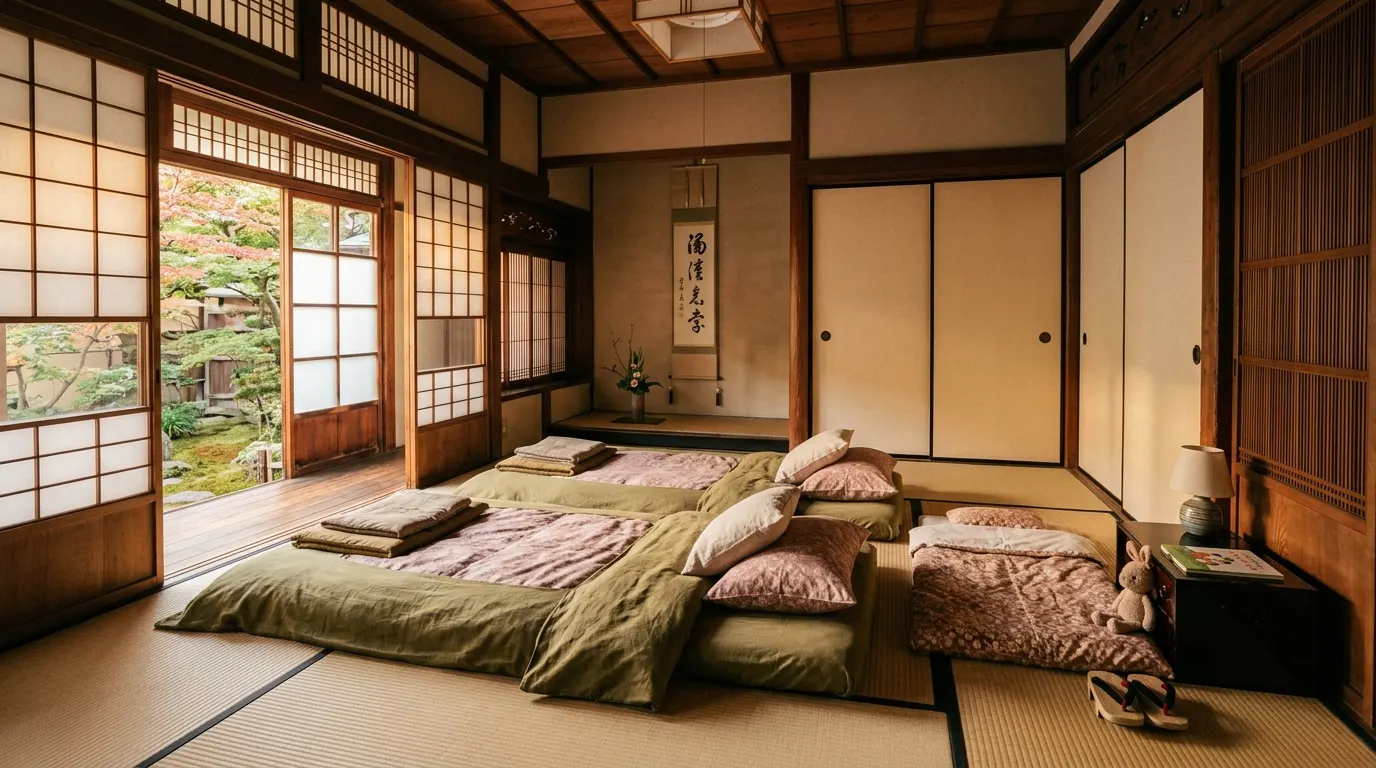
The single most critical factor in a successful family trip is how well everyone sleeps. Standard hotel rooms are designed for two adults who go to sleep at the same time. When traveling with children, a single room means that once the kids are in bed at 7:30 PM, the adults are forced to sit in the dark, whispering and reading on their phones under the covers.
To avoid this, prioritize the layout over the thread count. Look for properties that offer guaranteed connecting rooms. Many hotels will note that connecting rooms are "subject to availability upon arrival," which is a gamble you do not want to take. Email the property directly before booking to ask if they can hard-block connecting rooms for your reservation.
If connecting rooms stretch the budget, look for rooms with a physical separation, such as a junior suite with a sliding door, or a standard room with a large, furnished balcony. A balcony serves as an invaluable secondary living space where parents can enjoy a glass of wine and talk at a normal volume while the kids sleep inside. Additionally, pay attention to the bathroom configuration. While large walk-in showers are aesthetically pleasing, a bathtub is often non-negotiable for bathing toddlers safely and efficiently.
Amenities You Actually Need (Versus What Looks Good on Paper)
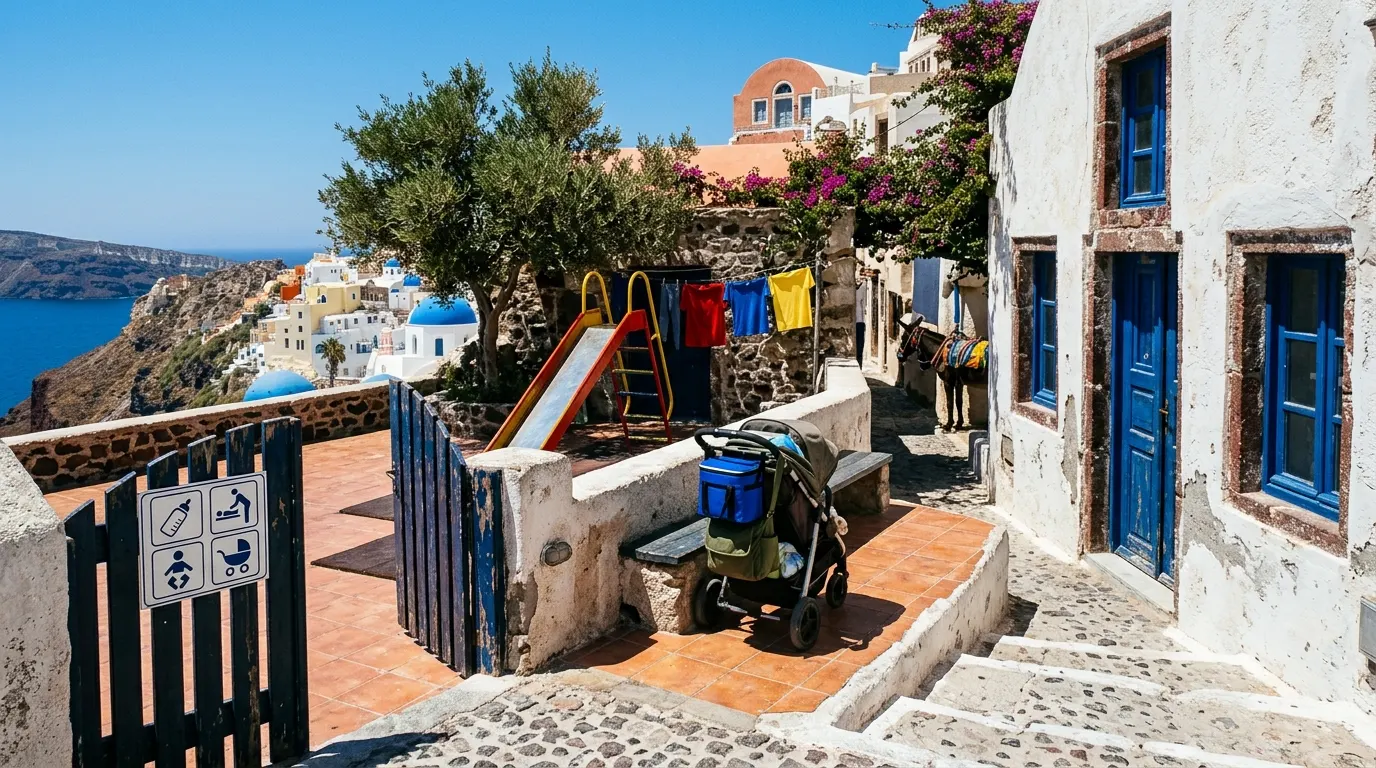
Hotel websites are designed to sell a lifestyle, highlighting features that look beautiful in photographs but offer little practical value. When evaluating amenities, you need to read the fine print and think about the daily mechanics of caring for your kids.
Breakfast is a prime example. An extensive, complimentary breakfast buffet sounds ideal, but you must check the opening hours. Many boutique hotels do not begin serving breakfast until 8:00 AM or even 8:30 AM. If your children consistently wake up at 6:00 AM, that two-hour gap will feel like an eternity, forcing you to venture out to find food anyway. Look for breakfast services that begin at 6:30 AM or 7:00 AM.
The in-room refrigerator is another frequent point of frustration. Many modern hotels use weighted minibar fridges that charge your account the moment you move a bottle of water. You need an empty, functioning mini-fridge to store milk, fresh fruit, and leftover meals. Always email the hotel to ask if they can empty the minibar prior to your arrival, or if they can provide an empty medical fridge.
Finally, investigate the laundry situation. Relying on hotel dry cleaning services will rapidly deplete your budget, with simple items often costing €10 to €15 ($11 to $16 USD) per piece to wash. Finding a hotel with guest-use coin laundry on-site, or confirming there is a highly-rated local laundromat within a short walking distance, will save you significant money and allow you to pack much lighter.
🎟️ Find family-friendly tours & activities →
Age-by-Age Guide: What to Prioritize for Every Stage
Children have vastly different needs depending on their developmental stage. A hotel that works perfectly for a six-month-old will likely frustrate a thirteen-year-old. Here is how to evaluate properties based on the exact ages of your children.
Toddlers (Ages 2-3)
For the toddler stage, safety and noise reduction are your primary concerns. Prioritize hotels with excellent soundproofing—often found in modern business hotels or recently renovated luxury properties—so you do not spend the entire trip stressing about your child’s tantrums bothering the neighbors. Ground-floor rooms or properties with fast, reliable elevators are crucial, as waiting ten minutes for a crowded elevator with a stroller and a melting-down two-year-old is agonizing. Look for zero-entry swimming pools, as standard pools with ladders are very difficult to navigate with a squirming toddler.
Preschoolers (Ages 3-5)
Preschoolers have endless energy but short legs. For this age group, prioritize hotels situated immediately adjacent to public green spaces. Being able to walk out the front door and reach a playground within three minutes is invaluable. This is also the age where the hotel breakfast buffet becomes highly beneficial; preschoolers are notoriously picky eaters, and the ability to offer them a wide visual array of fruit, cereals, and pastries ensures they start the day with a full stomach.
School-Age Kids (Ages 6-10)
School-age children are highly observant and start to genuinely care about the hotel experience itself. The swimming pool becomes a major focal point. When evaluating a pool for this age group, check the depth and the rules; many upscale city hotels have beautiful rooftop pools that strictly prohibit splashing, jumping, or even children during certain hours. You want a standard, robust pool where kids can actually play. Additionally, ensure the room has adequate space to unpack; living out of suitcases with eight-year-olds quickly results in a room covered in discarded clothing. Check our Tokyo guide for examples of highly efficient room layouts that maximize floor space.
Tweens and Teens (Ages 11-14)
Privacy and autonomy are the driving factors for older kids. Tweens and teens absolutely need their own sleeping space; forcing a fourteen-year-old to share a pull-out couch with a younger sibling is a recipe for constant bickering. High-speed, reliable Wi-Fi is non-negotiable. Expect to pay around €15 to €20 ($16 to $22 USD) daily for premium Wi-Fi if it is not included in the room rate, as the standard free tier is rarely strong enough for streaming or gaming. Crucially, choose a hotel in a safe, highly walkable neighborhood where you feel comfortable letting your teens walk down the street alone to grab a slice of pizza or visit a convenience store.
What to Skip: Hotel Features That Aren't Worth the Money
Part of knowing how to select the right accommodation is knowing exactly what to avoid. Many heavily marketed features actually detract from your experience or inflate your budget unnecessarily.
Overpriced "Kid Suites"
Many family-oriented hotels offer specialized "kid suites" decorated with cartoon characters, featuring a set of bunk beds crammed into an alcove. These rooms frequently command a massive premium—sometimes double the price of a standard room. The novelty of sleeping in a pirate-themed bed wears off in exactly ten minutes, but the cramped square footage and the inflated daily rate remain for the entire trip. You are almost always better off booking two standard connecting rooms or a standard one-bedroom suite for the same price, gaining double the bathrooms and significantly more space.
Massive Mega-Resorts with Endless Walking
Sprawling resort complexes often look incredible from an aerial view, boasting multiple pools, ten restaurants, and a private beach. However, the reality of these properties is the internal commute. If it takes twenty minutes of walking down endless carpeted hallways just to get from your room to the lobby to grab a morning coffee, the scale of the resort becomes a massive burden. When traveling with young kids, you want a tight, easily navigable footprint where you can quickly dart back to the room for forgotten sunscreen or an impromptu nap.
Mandatory Expensive Hotel Breakfasts
While a buffet is great for preschoolers, committing to a costly hotel breakfast every single day can destroy a travel budget. If a hotel charges €30 ($33 USD) per person for breakfast, a family of four is spending over $130 before they even leave the building. Unless the breakfast is included in the base rate, skip the hotel dining room. Instead, use that money at a local bakery or cafe just down the street, where you can get superior pastries and coffee for a fraction of the cost, while also experiencing the local neighborhood culture.
Pro Tips from Parents for Booking the Perfect Stay
- Utilize Google Earth and Street View: Never trust the tightly cropped photos on a hotel website. Drop the little yellow figure on Google Maps right in front of the hotel entrance. Look for steep hills, lack of sidewalks, heavy traffic, or construction zones that the hotel marketing team strategically omitted.
- Request Specific Room Locations: When booking, add a note requesting a room at the end of the hallway, far away from the elevator banks and the ice machines. The foot traffic and mechanical noises near the elevators will easily wake light sleepers.
- Hunt for Weekend Business Hotel Deals: In major financial districts, luxury business hotels completely empty out on Friday afternoons. You can often book massive, highly appointed rooms with incredible bathrooms for steep discounts on weekends, as they try to fill inventory.
- Ask About the Bathtub Situation Early: If a tub is essential for your kids, do not assume a "full bathroom" includes one. Many modern renovations replace tubs with large showers. Call the front desk directly to confirm your specific room type has a tub.
- Ship Supplies to the Hotel: If you are traveling domestically, order heavy items like diapers, wipes, and specific toddler snacks through a delivery service and have them shipped directly to the hotel front desk, timed to arrive the day before you check in.
Final Thoughts on How to Choose the Right Hotel for Families (Skip the "Family-Friendly" Label)
The foundation of a memorable, low-stress family vacation begins the moment you secure your lodging. It is incredibly empowering to realize that you do not have to compromise your own comfort or aesthetic preferences just because you are traveling with children. By prioritizing practical logistics, intelligent room layouts, and strategic locations over brightly colored mascots and noisy arcades, you set your family up for success.
Remember to look past the marketing buzzwords. A quiet room, a nearby bakery, and a staff that treats your children with genuine warmth will always outshine a branded kids' club. When you master how to choose the right hotel for families (skip the "family-friendly" label), you unlock a completely new way to travel—one where both the kids and the parents get to genuinely enjoy their time away from home.