Choosing the perfect Asian destination for your family vacation often comes down to a battle of contrasting travel styles. Do you want the impeccably clean, highly structured, train-hopping efficiency of Japan, or the laid-back, deeply cultural, jungle-draped warmth of Northern Thailand? Comparing hiroshima vs chiang mai with kids highlights exactly this dilemma. Both cities offer incredibly rich experiences for families, but they cater to entirely different paces, budgets, and sensory environments.
Hiroshima is a coastal city of resilience, offering gentle deer, stunning island shrines, and a public transit system that makes navigating with a stroller a breeze. Chiang Mai, nestled in the mountainous north of Thailand, is a hub of ethical elephant encounters, bustling night markets, and golden temples that welcome children with open arms.
Deciding between the two means looking closely at your family’s travel style, your children’s ages, and what kind of memories you want to create. Here is a comprehensive breakdown to help you choose the right adventure for your family.
The Vibe: Hiroshima vs Chiang Mai with Kids
When you step off the Shinkansen (bullet train) into Hiroshima, you are immediately greeted by a sense of calm order. Despite being a bustling city of over a million people, Hiroshima feels remarkably accessible. Wide boulevards, electric streetcars dinging their way down the avenues, and coastal breezes off the Seto Inland Sea define the atmosphere. The city is deeply tied to its poignant history, but it is also overwhelmingly forward-looking, vibrant, and surprisingly playful. It is a destination where you can schedule your day down to the minute, knowing the ferries and trains will run exactly on time.
Chiang Mai, on the other hand, embraces a more fluid, relaxed rhythm. The air is thick with tropical humidity, the scent of sizzling street food, and the distant chant of monks. Inside the moat-ringed Old City, centuries-old temples sit next to trendy cafes. Traffic can be chaotic, and sidewalks are often uneven or nonexistent, making it less of a stroller-friendly paradise and more of a baby-carrier destination. However, what Chiang Mai lacks in infrastructure, it more than makes up for in genuine, effusive warmth toward children. Thai culture reveres kids, and you will frequently find restaurant owners offering to hold your toddler while you eat your noodles.
Top Family Experiences: What to Do
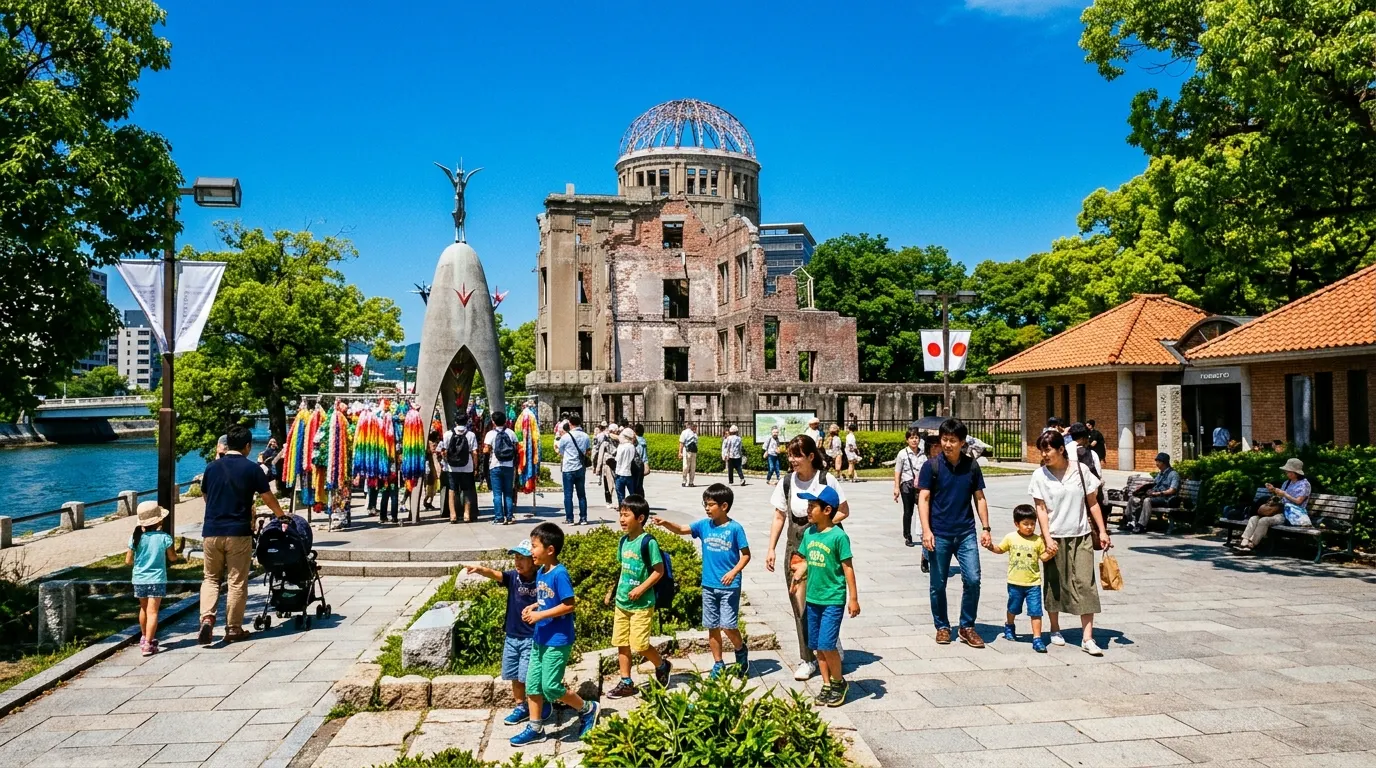
Highlights in Hiroshima
Hiroshima excels at mixing culture with highly engaging, kid-friendly excursions. A short train and ferry ride takes you to Miyajima, famous for the Great Torii Gate (Itsukushima Shrine Otorii). This iconic "floating" gate transforms with the tides. Visit at low tide, and your kids can walk right up to the massive wooden pillars on the ocean floor. To escape the main tourist crush, wander down Machiya Street (Miyajima), a quiet, atmospheric backstreet that is much easier to navigate with a stroller.
If your kids love animals, Rabbit Island (Ōkunoshima / 大久野島) is an absolute must-do. Located in the scenic Seto Inland Sea, this small island is overrun by hundreds of friendly wild rabbits that will hop right up to your family for snacks. You can even stay overnight at Kyukamura Ohkunoshima (休暇村大久野島), the only hotel on the island, which serves as a brilliant base for early morning bunny encounters before the day-trippers arrive.
🎟️ Book family tickets & skip-the-line tours →
For a burst of local energy, secure tickets to a Hiroshima Carp Baseball Game at MAZDA Zoom-Zoom Stadium. Japanese baseball is a high-energy, family-friendly spectacle featuring synchronized cheering, brass bands, and balloon releases. Don't forget to grab some gear at the Hiroshima City Toyo Carp Goods Shop beforehand.
If you need a quiet afternoon, Shukkeien Garden is a stunning "shrunken scenery" garden right in the city center where kids can feed massive koi fish. Alternatively, the Shinshoji Zen Museum and Gardens offers a sprawling, modern take on a Zen complex that feels more like an immersive art park.
Highlights in Chiang Mai
Chiang Mai is the undisputed capital of ethical elephant encounters. Booking a day at a rescue sanctuary (like Elephant Nature Park) allows your kids to observe, feed, and walk alongside these gentle giants in a humane environment. It is a transformative experience that teaches wildlife conservation in the most hands-on way possible.
Another incredible family day out is the Bua Tong "Sticky" Waterfalls. Because of the high calcium content in the water, the rocks are naturally grippy, allowing even young children to climb directly up the cascading waterfalls like superheroes. It is completely free, entirely natural, and a massive hit with kids of all ages.
🎟️ Find family-friendly tours & activities →
Food and Dining: Okonomiyaki vs. Khao Soi
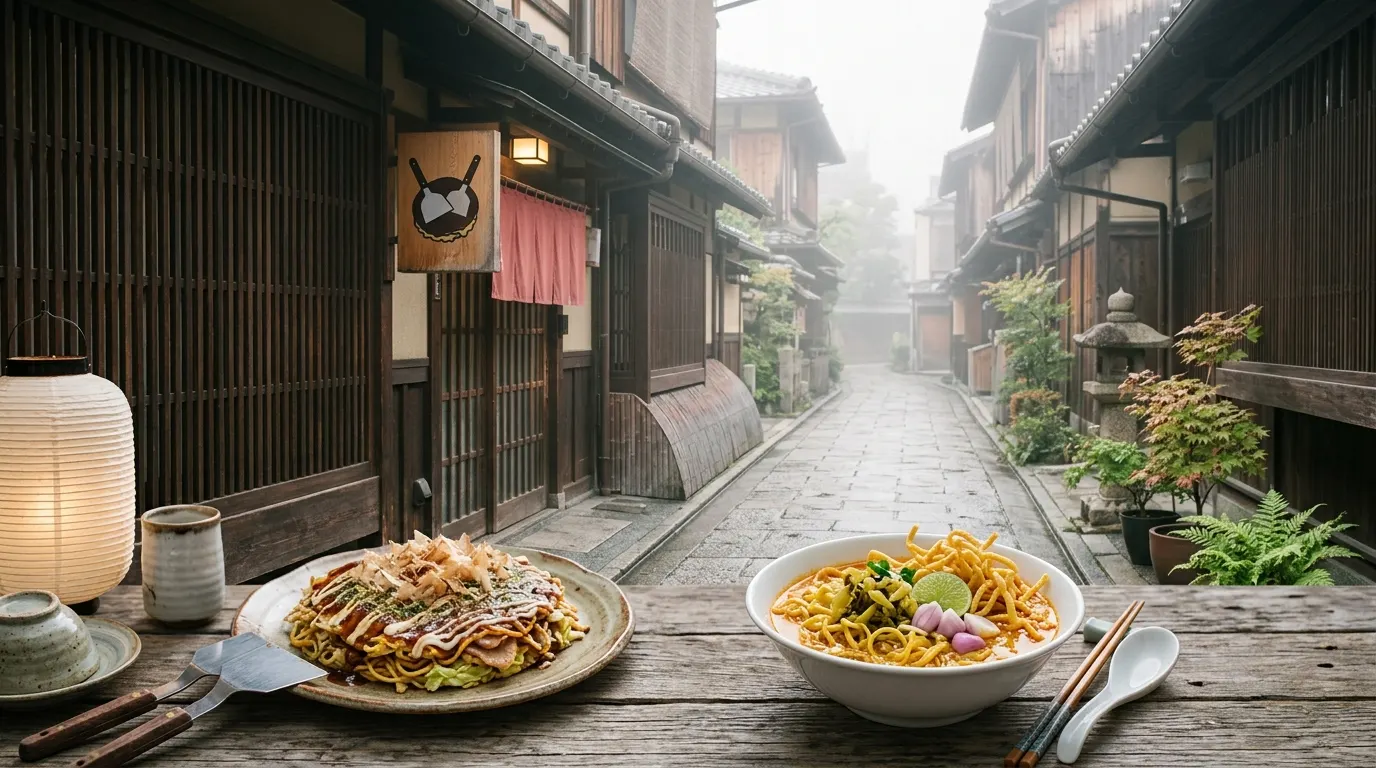
Dining out with kids in Hiroshima is all about okonomiyaki. This savory, layered cabbage pancake is cooked on a massive iron griddle, often right in front of you. It is a mesmerizing "food theater" that keeps kids entertained while they wait for their meal. Head to Hassei (八誠), a legendary spot where the chefs are incredibly welcoming to families. For dessert or quirky snack souvenirs, take the kids to Don Quijote Hiroshima Hatchobori (ドン・キホーテ広島八丁堀店). This multi-story sensory explosion is packed with bizarre Kit Kat flavors, DIY candy kits, and toys.
In Chiang Mai, dining is a more fluid, outdoor affair. Night markets are the lifeblood of the city's food scene. You can graze on skewers of grilled pork (moo ping), fresh fruit smoothies, and sweet mango sticky rice for just a few dollars. The signature dish of the region is Khao Soi, a mild, coconut-curry noodle soup topped with crispy noodles. It is flavorful but generally not too spicy, making it very accessible for younger palates. Northern Thai food is incredibly affordable; a hearty family dinner at a night market might cost you 500 THB (about $15 USD), whereas a sit-down meal in Hiroshima will run closer to 4,000 JPY ($25-$30 USD).
Getting Around: Trams and Ferries vs. Tuk-Tuks and Songthaews
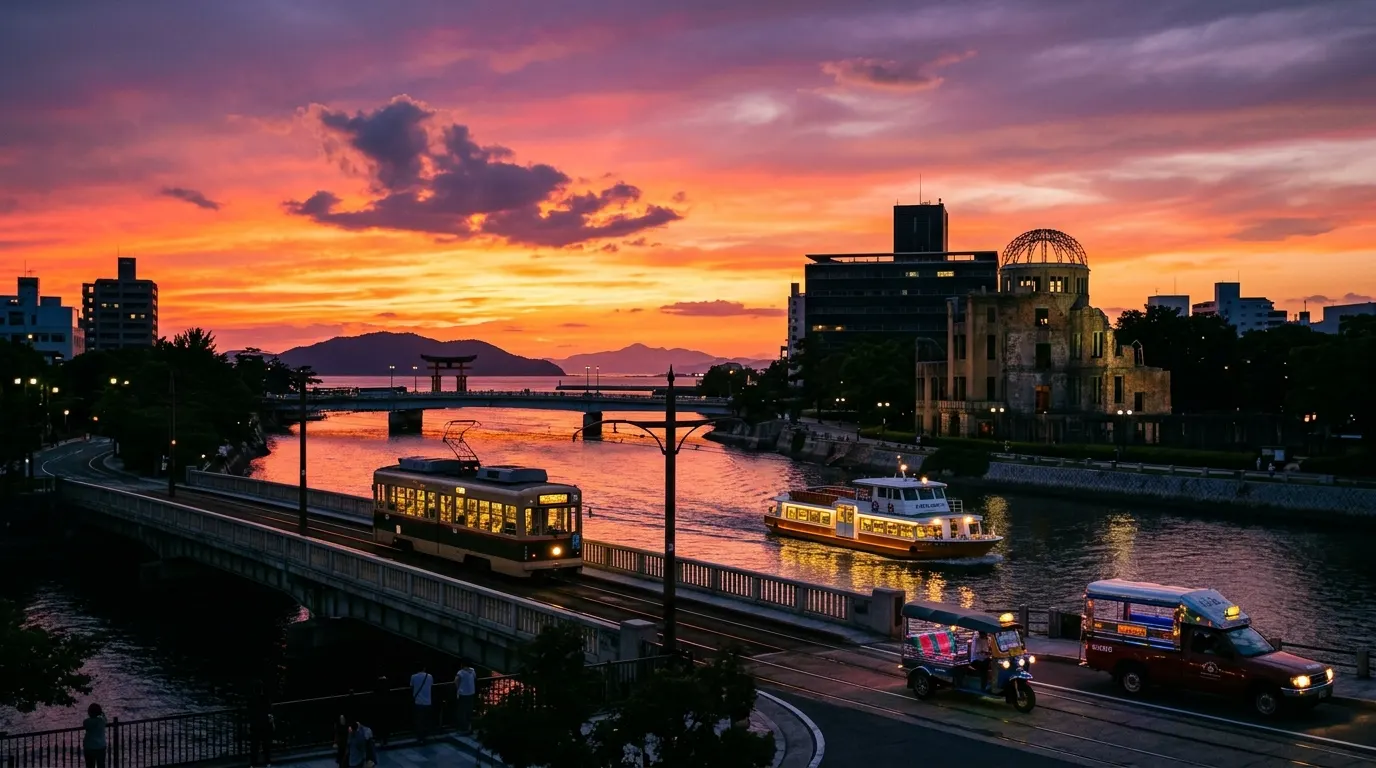
Hiroshima’s public transit is a dream for parents. The city is famous for its retro streetcars (Hiroden), which are easy to board and navigate. For a stress-free perspective of the city, try the Hiroshima River Cruises (Aqua Net Hiroshima / ひろしまリバークルーズ). It is an incredibly relaxing way to navigate the "City of Water," offering scenic loops that give tired little legs a break. Sidewalks are wide, curb cuts are standard, and pushing a stroller around the city center or the Peace Memorial Park is effortless.
Chiang Mai requires a bit more flexibility. The primary modes of transport are songthaews (red pickup trucks with bench seating in the back) and tuk-tuks. Kids absolutely love the open-air thrill of riding in a tuk-tuk, but you will need to hold onto toddlers tightly, and folding up a stroller to cram into the back can get tiresome. Fortunately, the Grab app (Southeast Asia’s version of Uber) is cheap and ubiquitous, allowing you to easily call an air-conditioned car whenever the heat gets to be too much.
Age-by-Age Guide for Both Cities
Toddlers (Ages 2-3)
Hiroshima: This city wins for the toddler stage purely due to infrastructure. Smooth sidewalks, impeccably clean public restrooms with baby seats, and easy-to-navigate parks make the logistics of toddler travel much easier.
Chiang Mai: Thais adore babies and toddlers, so you will feel incredibly welcome everywhere you go. However, the heat, mosquitoes, and lack of stroller-friendly sidewalks mean you will rely heavily on a structured baby carrier and frequent air-conditioned breaks.
Preschoolers (Ages 4-5)
Hiroshima: Animal encounters are the highlight here. Feeding the tame (but sometimes cheeky) deer on Miyajima or getting swarmed by bunnies on Rabbit Island feels like stepping into a storybook.
Chiang Mai: The sheer wonder of seeing an elephant up close is unparalleled for this age group. The night markets are also highly visual and engaging, with plenty of small trinkets and sweet treats to keep them moving.
School-Age (Ages 6-10)
Hiroshima: This is a great age to introduce the cultural aspects of Japan. They have the attention span for the Hiroshima Carp Baseball Game and will love exploring the sprawling grounds of the Genbaku Dome (Atomic Bomb Dome). The skeletal ruin of the dome is a powerful visual anchor for the city's history without being overly graphic.
Chiang Mai: This age group thrives in Chiang Mai. They are old enough to confidently climb the Sticky Waterfalls, participate in a family Thai cooking class, and handle the slightly later bedtimes required to enjoy the Sunday Walking Street market.
Tweens & Teens (Ages 11-14)
Hiroshima: Teens will appreciate the independence Japan offers. You can safely let them wander the aisles of Don Quijote or explore the Hiroshima City Museum of Manga Art, a quiet haven for anime and manga enthusiasts. For active teens, a day trip to Sandankyo Gorge (三段峡) offers breathtaking river hikes and dramatic waterfalls.
Chiang Mai: Teens love the bohemian, adventurous vibe of Chiang Mai. Zip-lining through the jungle canopy, learning to barter for vintage clothes at the night markets, and understanding the deeper ethics of animal tourism at the elephant sanctuaries provide incredible engagement for older kids.
What to Skip in Hiroshima vs Chiang Mai with Kids
Even in the most family-friendly destinations, not every famous attraction is suited for children. Knowing what to bypass can save your family from meltdowns, exhaustion, or unnecessary stress.
Overhyped or Difficult Spots in Hiroshima
- Hiroshima Peace Memorial Museum (Main Building): While deeply important, the main building of this museum contains extremely graphic and emotionally heavy exhibits, including melted personal belongings and photos of severe injuries. It is highly distressing for young children. Stick to the beautiful Peace Memorial Park outside, the Genbaku Dome, or, if you visit on August 6th, the visually stunning Tōrō Nagashi (Lantern Floating).
- Miyajima at Peak Hours (10am-2pm weekends/holidays): The narrow Omotesando shopping street and Itsukushima Shrine become unbearably congested during these hours. Strollers get gridlocked, and kids get overwhelmed. Go early in the morning or stay late afternoon.
- Mt. Misen Daisho-in Trail (大聖院コース): While the views from the top of Mt. Misen are spectacular, this specific trail is a grueling 90-120 minute uphill climb on steep, uneven stone steps. It will quickly exhaust even energetic kids. Take the ropeway instead.
- Cat Cafe Puchi Marry (Hiroshima Hondori): Strict age restrictions and high entry fees make this a risky bet for families. Most of the cats sleep through the day anyway, leading to disappointed kids.
Overhyped or Difficult Spots in Chiang Mai
- Tiger Kingdoms: Any facility offering photos with tigers requires the animals to be heavily sedated or disciplined into submission. It is not an ethical wildlife experience and sends the wrong message to kids about animal welfare.
- Elephant Riding Camps: Similarly, skip any camp that offers elephant rides or shows where elephants paint pictures. Ethical sanctuaries only allow observation, feeding, and occasionally bathing.
- Doi Suthep at Midday: The famous golden temple on the mountain is beautiful, but the 300+ steps to reach it in the blazing midday sun will result in miserable, overheated children. Go at sunrise or sunset.
Pro Tips from Parents for Both Destinations
- Pack Slip-On Shoes: In both Japan and Thailand, you will be taking your shoes off constantly—entering temples, traditional restaurants, and hotel rooms. Lace-up boots will become the bane of your existence. Pack comfortable, supportive slip-on shoes for the whole family.
- Master the Convenience Stores: In Hiroshima, 7-Eleven, FamilyMart, and Lawson are your best friends for cheap, high-quality breakfasts (onigiri rice balls, fresh pastries). In Chiang Mai, the local 7-Elevens are air-conditioned lifesavers where you can buy cheap bottled water, toasties, and excellent mosquito repellent.
- Buy Rabbit Food Early: If you are heading to Rabbit Island in Hiroshima, buy your cabbage and rabbit pellets at the ferry terminal on the mainland or at a local supermarket beforehand. They do not sell food on the island itself!
- Pace the Heat: Chiang Mai's heat can be oppressive, especially between March and May. Plan your temple visits or jungle treks for the early morning, spend the afternoon in a hotel pool or an air-conditioned mall, and head back out for the night markets after the sun goes down.
- Utilize Luggage Forwarding: In Japan, use the Yamato Transport (Takkyubin) service to ship your large suitcases from your previous city directly to your Hiroshima hotel. Navigating the Shinkansen with kids is a joy when you only have a small daypack to manage.
The Final Verdict: Hiroshima vs Chiang Mai with Kids
If you are looking for a highly organized, stroller-friendly vacation filled with poignant history, efficient transport, and safe, structured animal encounters, Hiroshima is the clear winner. It is a city that feels manageable, clean, and deeply respectful of families.
If your family thrives on adventure, doesn't mind a little grit, and is looking for immersive cultural experiences, jungle landscapes, and incredible value for money, Chiang Mai will capture your hearts. The warmth of the Thai people and the thrill of the bustling night markets create an unforgettable atmosphere.
Ultimately, deciding between hiroshima vs chiang mai with kids depends on the season of parenting you are currently in. Toddler parents might lean toward the ease of Japan, while parents of older, adventurous kids might jump at the wilder charm of Northern Thailand. Whichever you choose, both cities offer a masterclass in expanding your children's worldview, one bowl of noodles or gentle animal encounter at a time.