Choosing between two iconic European destinations is a wonderful problem to have, but it requires looking closely at how your family travels. When deciding on florence & tuscany vs munich with kids, you are essentially comparing two entirely different styles of vacation. One offers rolling vineyards, Renaissance masterpieces, and the joyful chaos of Italian piazzas. The other delivers exceptional public transit, sprawling green parks, interactive science museums, and a highly structured, family-friendly infrastructure. Both are incredible, but they cater to very different parenting needs and child temperaments.
Whether you lean toward the gelato-fueled art history of Italy or the pretzel-snacking playground culture of Bavaria, you need practical details to make the right call. We are diving deep into the logistics, the standout attractions, the stroller accessibility, and the honest truth about what works—and what completely fails—when navigating these regions with children in tow.
Florence & Tuscany vs Munich with Kids: The Vibe Check
Before booking flights, you have to decide what kind of daily rhythm you want for your family vacation.
The Magic of Florence & Tuscany
Tuscany is about sensory immersion. It is visually stunning, historically rich, and deeply passionate about food. A trip here means navigating narrow medieval streets, chasing pigeons in sweeping squares, and eating your weight in carbohydrates. The City Guide: Florence & Tuscany highlights a region that treats children like royalty; Italians genuinely love kids, and waitstaff will often go out of their way to make a grumpy toddler smile. However, it is an older, more rugged environment. Sidewalks are narrow or non-existent, summer heat can be intense, and the sheer volume of world-class art can easily lead to museum fatigue if you overdo it.
The Appeal of Munich
Munich, as outlined in our City Guide: Munich, is the king of logistical ease. Wide sidewalks, smooth pavement, modern public transportation, and an abundance of green spaces make it incredibly low-stress for parents. The city’s famous beer gardens are essentially massive outdoor family parks, often equipped with huge playgrounds where kids can run wild while parents enjoy a liter of Helles and a massive pretzel. Munich feels safe, clean, and highly organized, though it might lack the spontaneous, romantic chaos that makes a Tuscan evening so memorable.
Top Things to Do in Florence & Tuscany for Families
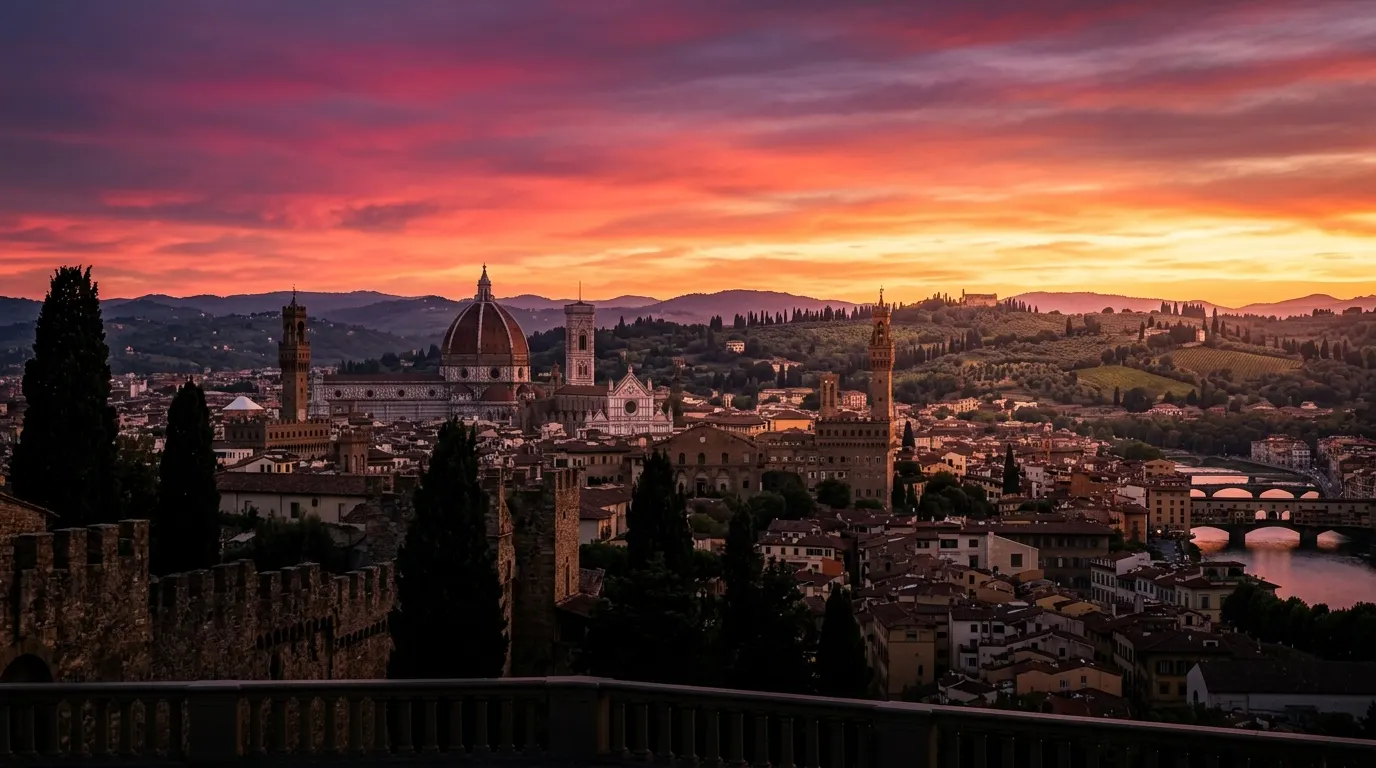
If you choose the Italian route, you have to balance the heavy-hitting museums with open-air exploration. You cannot expect young kids to stare at Renaissance paintings all day.
Cultural Wonders and Gelato Hunts
When visiting Florence, you have to see Michelangelo’s David. The Galleria dell'Accademia di Firenze is the ultimate "one-hit wonder" museum for families. Unlike the sprawling Uffizi, the Accademia is relatively compact. Kids are genuinely awestruck by the sheer scale of the 17-foot marble statue. Book your tickets well in advance (adults are around €16 / $17 USD; kids under 18 are free but still need a €4 reservation fee). Plan to spend just 60 to 90 minutes here, making it the perfect bite-sized cultural excursion.
🎟️ Book family tickets & skip-the-line tours →
For a more active cultural hit, tackle the Cupola del Brunelleschi (Cattedrale di Santa Maria del Fiore). This legendary 463-step climb through the narrow inner shell of the world's largest masonry dome offers incredible views. It is physically demanding and slightly claustrophobic, making it a thrilling adventure for energetic older kids and teens, but absolutely skip this if you are babywearing or have toddlers.
Castles, Gardens, and Outdoor Adventures
Getting out of the city center is where Tuscany truly shines for families. Head south to the Giardino dei Tarocchi (Tarot Garden). This is a surrealist wonderland of 22 massive, mosaic-covered sculptures that kids can actually climb inside and explore. It feels like stepping into a vibrant, mirror-covered dreamscape and is a massive hit with kids of all ages (entry is around €14 / $15 USD for adults, €9 for kids).
Another incredible open-air stop is the Abbazia di San Galgano. This breathtaking, roofless 13th-century Gothic cathedral has the sky as its ceiling and grass as its floor. Nearby, you can hike up to the Hermitage of Montesiepi to see the real-life "sword in the stone," a medieval relic that will fascinate school-aged kids.
🎟️ Find family-friendly tours & activities →
If you are basing yourselves near Lucca, the Villa Reale di Marlia is a sprawling 16-hectare estate that trades stuffy museum vibes for world-class gardens, hidden grottos, and plenty of space for kids to run without bumping into priceless artifacts.
Exploring the Best Piazzas
You don't always need to pay an entry fee to experience Tuscan magic. The Piazza del Campo, Siena is a massive, shell-shaped medieval square that acts as Siena's living room. It is slanted, fully pedestrianized, and perfect for kids to safely run off energy while parents grab a coffee at the perimeter. While in Siena, pop into the Siena Cathedral (Duomo di Siena). This visually stunning Gothic masterpiece keeps kids engaged with its bold black-and-white striped columns, looking more like something out of a fantasy novel than a traditional church.
What Munich Brings to the Table for Families
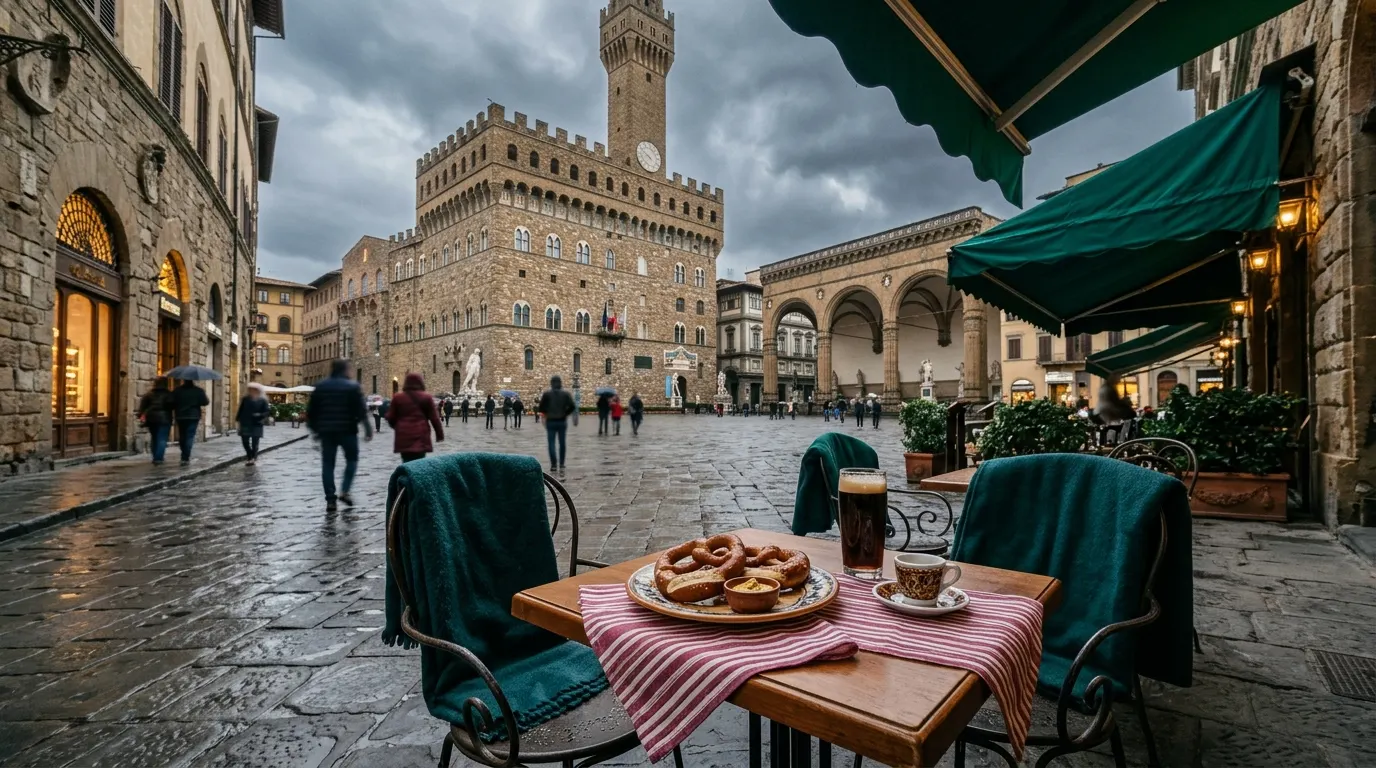
While this guide heavily details Tuscany, we have to look at what Munich offers to make a fair comparison. Munich is arguably one of the most effortless European cities to navigate with children.
The Deutsches Museum is a massive draw. As one of the world's largest science and technology museums, it features a dedicated "Kids Kingdom" with water tables, giant building blocks, and interactive physics exhibits. Unlike the delicate art museums of Florence, Munich’s attractions encourage kids to touch, pull, and climb.
The Englischer Garten is another major selling point. Larger than New York's Central Park, it offers endless shaded paths for strollers, paddle-boating on the lake, and the unique spectacle of watching river surfers ride the standing wave at the Eisbachwelle. When hunger strikes, you simply pull into the Chinesischer Turm beer garden, grab a massive pretzel, and let the kids play on the adjacent playground while a brass band plays. It is low-stress parenting at its finest.
Florence & Tuscany vs Munich with Kids: Age-by-Age Breakdown
Your children's ages will heavily dictate which destination feels like a vacation and which feels like a chore.
Toddlers (Ages 2-3)
Winner: Munich. Munich is incredibly stroller-friendly. The U-Bahn (subway) has elevators, sidewalks are wide and smooth, and playgrounds are everywhere. Florence, by contrast, is tough on toddlers. The historic center is paved with 'pietra forte' slabs and uneven cobblestones that swallow small stroller wheels. If you bring a stroller to Florence, it needs rugged, all-terrain wheels. However, if you are staying in the Tuscan countryside at an agriturismo (farm stay) like the Fattoria di Maiano, toddlers will love the open spaces, botanical gardens, and farm animals just 15 minutes from Florence’s center.
Preschoolers (Ages 3-5)
Tie. Preschoolers will thrive in both locations. In Munich, they will love the interactive museums and massive parks. In Tuscany, they will be motivated by daily gelato hunts and the sheer novelty of their surroundings. If you happen to visit in February, the Carnevale di Viareggio on the Tuscan coast is Italy's most spectacular carnival, featuring massive, satirical papier-mâché floats up to 20 meters tall that will absolutely blow a preschooler's mind.
School-Age Kids (Ages 6-10)
Winner: Florence & Tuscany. At this age, the history of Italy starts to resonate. They are old enough to climb the 463 steps of the Duomo or hike to the Piazzale Michelangelo for the ultimate postcard view of Florence. They will love the Museo Leonardiano - Palazzina Uzielli, Vinci, which focuses on Da Vinci’s scientific mind with wooden models of his flying machines and tanks. For a unique adventure, take them to the Cave di Marmo di Carrara (Fantiscritti) in the Apuan Alps. Taking a 4x4 jeep tour into the heart of the mountain to see where Michelangelo sourced his marble is an unforgettable, Indiana Jones-style experience.
Tweens & Teens (Ages 11-14)
Tie. Teens who love cars, technology, and independence will appreciate Munich's BMW Welt and the safety of the public transit system. Teens who lean toward art, fashion, and history will prefer Florence. You can take them across the Ponte Santa Trinita to the "other side" of the Arno River (the Oltrarno) to watch marble paper being made or woodcarvers at work. For sports fans, catching a high-octane Italian Serie A soccer match at the historic 1930s concrete Stadio Artemio Franchi is a bucket-list experience.
What to Skip in Florence & Tuscany (The "Overhyped" List)
Not everything in Tuscany is family-friendly. Avoid these tourist traps and logistical nightmares to save your sanity.
- Enoteca Pinchiorri: This is a three-Michelin-star temple of formal gastronomy. Dinner starts late (7:30 PM at the earliest) and lasts for over three hours. The environment is hushed and highly formal. It is a spectacular culinary experience for adults, but absolute torture for a child.
- Gucci Garden (Gucci Museo): Located in Piazza della Signoria, this is essentially a high-end brand experience masquerading as a museum. The €8 entry fee buys you access to a glorified retail space. Unless you have a teenager who is deeply, specifically obsessed with high fashion, skip it.
- Buca Mario & Il Latini: Both of these historic restaurants are legendary for their Florentine steak, but they are logistical headaches for families. Buca Mario is a cramped 16th-century basement with steep stairs (impossible for strollers). Il Latini features chaotic communal seating and a famously aggressive "Steak Fascist" door policy. Skip them and find a neighborhood trattoria in the Oltrarno instead.
- Grom Gelato (Via del Campanile): While Grom uses high-quality ingredients, this specific location right next to the Duomo is a massive tourist magnet. You will wait in a long, unshaded line while dodging tour groups. Walk five minutes away from the major monuments to find equally good, artisan gelato without the crowd.
- The "Uffizi + Accademia in One Day" Itinerary: These world-class museums are massive and require hours of standing. Attempting both in a 24-hour period is a recipe for a massive family meltdown. Pick one, and spend the other half of the day running around the Boboli Gardens.
Logistics: Strollers, Food, and Getting Around
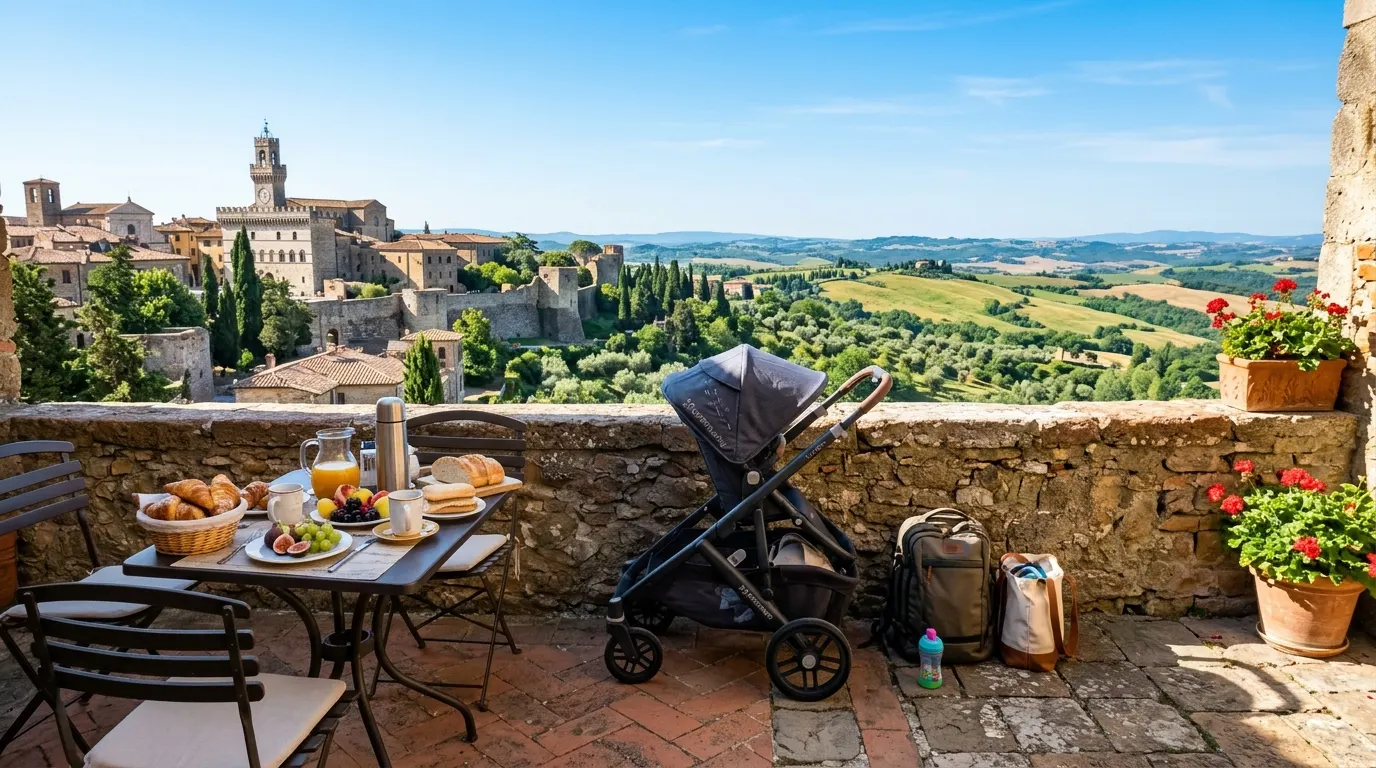
Navigating the Streets
Munich wins the infrastructure battle handily. Strollers glide effortlessly over wide Munich pavements, and the U-Bahn is a breeze. Florence requires a different approach. The historic center is highly walkable, but the sidewalks are incredibly narrow—often forcing you to push strollers on the street alongside passing Vespas.
If you are staying on the outskirts of Florence or arriving from the airport, the T1 and T2 tram lines are modern, stroller-accessible, and highly efficient. Do not try to drive into Florence. The city center is strictly monitored by cameras that trigger automatic fines for entering the unauthorized ZTL (Zona a Traffico Limitato) vehicles zones. Even if your GPS tells you to turn down a street, trust the red circle signs over the digital map.
Dining Out with Little Ones
German dining is generally earlier and faster, making it easy for young kids. In Tuscany, most Florentine restaurants do not open for dinner until 7:30 PM, which is well past the witching hour for little ones. Instead of forcing a late sit-down dinner, adopt the local tradition of aperitivo. Head to a bar or café around 6:00 PM; when you buy a drink (a spritz for you, juice for the kids), you gain access to a buffet of finger foods, pastas, and breads. It acts as a perfect, cheap, early dinner for kids.
Also, watch out for tourist trap restaurants in Florence. If you see a sign for a 'Menu Turistico' or pictures of pasta on a board outside, the food is likely mass-produced and microwaved. Walk a few streets over to find places with menus exclusively in Italian.
Pro Tips from Parents for the Region
- Utilize the Water Kiosks: Florence has high-tech public water kiosks (fontanelli) scattered around the city that provide free chilled still water and very cheap (5-10 cents) sparkling water. Bring your own reusable bottles and fill up throughout the day to save a small fortune on bottled water.
- Find Quiet Sanctuaries: When the crowds around the Duomo become overwhelming, slip into the Biblioteca delle Oblate. It is a former convent turned public library right in the heart of the city. It offers a rare, peaceful sanctuary with a great café on the top floor boasting incredible views of the Duomo—perfect for a quiet snack break.
- Embrace Etruscan History: If you are visiting the Tuscan coast, skip the crowded beaches for an afternoon and explore the Parco Archeologico di Baratti e Populonia. It is a massive open-air archaeological site where kids can safely run wild exploring ancient Etruscan "cities of the dead" nestled in a beautiful pine forest.
- Pack for the Pavement: If you are bringing a stroller to Italy, leave the lightweight travel umbrella stroller at home. The suspension will be ruined by day two. Bring a sturdy jogger or a high-quality travel stroller with superb suspension to handle the cobblestones.
- Book Everything in Advance: Whether it is the Accademia in Florence or the Deutsches Museum in Munich, post-2020 travel requires pre-booking. You cannot just walk up to major monuments anymore without facing two-hour lines.
The Verdict: Which Should You Choose?
Both of these regions offer spectacular, core-memory-building vacations. If you have very young toddlers, require a predictable schedule, and want a low-stress vacation filled with massive parks, smooth transit, and relaxed beer gardens, Munich is the easier choice. It requires far less logistical mental energy.
However, if your kids are slightly older (school-age and up), or if you are willing to embrace a bit of chaos for the sake of unparalleled beauty, Tuscany is unmatched. Climbing medieval towers, eating world-class pizza, and exploring ruined abbeys in the countryside offers a deeply romantic, culturally enriching experience. Ultimately, when weighing florence & tuscany vs munich with kids, you have to decide between the effortless efficiency of Bavaria and the passionate, beautiful intensity of Italy. Whichever you choose, pack good walking shoes, an appetite, and a sense of adventure.