There is a specific kind of exhaustion that comes from dragging a sweating, overstimulated child through a sweltering tourist plaza in the middle of July. We have all been there, gripping a melting ice cream cone like a lifeline while silently questioning our life choices. That is exactly why so many parents are entirely rethinking their travel calendars. Looking ahead to the upcoming school year, planning for the best fall family travel destinations 2026 offers a brilliant alternative: crisp weather, significantly shorter lines, and a chance to experience the world’s greatest cities without the crushing summer crowds.
Traveling in autumn requires navigating school schedules, but the payoff is immense. Flights and accommodations drop from their peak summer pricing, and the local culture of your destination actually comes alive once the massive tourist waves recede. Whether you have a week during a fall break or are pulling the kids out for an extended educational adventure, autumn is the absolute sweet spot for family exploration.
Top Fall Family Travel Destinations 2026: The Global Shortlist
Before we dive deep into our favorite featured city for autumn, it is worth highlighting a few other incredible spots around the globe that shine brightest between September and November.
If you are looking at Europe, the Iberian Peninsula is spectacular in the fall. The blazing heat of summer fades, making the steep hills of our Lisbon city guide manageable for little legs, while the coastal breezes in our Porto city guide are perfect for afternoon river cruises. Further east, checking out our Prague city guide reveals a fairy-tale city that looks completely magical dusted in autumn leaves, with hearty comfort food that kids adore. And of course, exploring our Florence & Tuscany city guide in October means participating in the olive harvest and enjoying mild days perfect for countryside running.
Venturing beyond Europe, autumn is the absolute best time to dive into our Kyoto city guide, where the maple leaves turn brilliant shades of red and the temples feel deeply serene. For a shorter flight from the US, our Mexico City city guide highlights the incredible Dia de los Muertos celebrations in late October and early November, offering an unforgettable cultural immersion for older kids. Staying stateside? Our Nashville city guide proves that fall in Tennessee means perfect patio weather, fewer bachelorette parties, and fantastic outdoor music festivals suitable for the whole family.
Deep Dive: Why Rome is the Ultimate Fall Destination
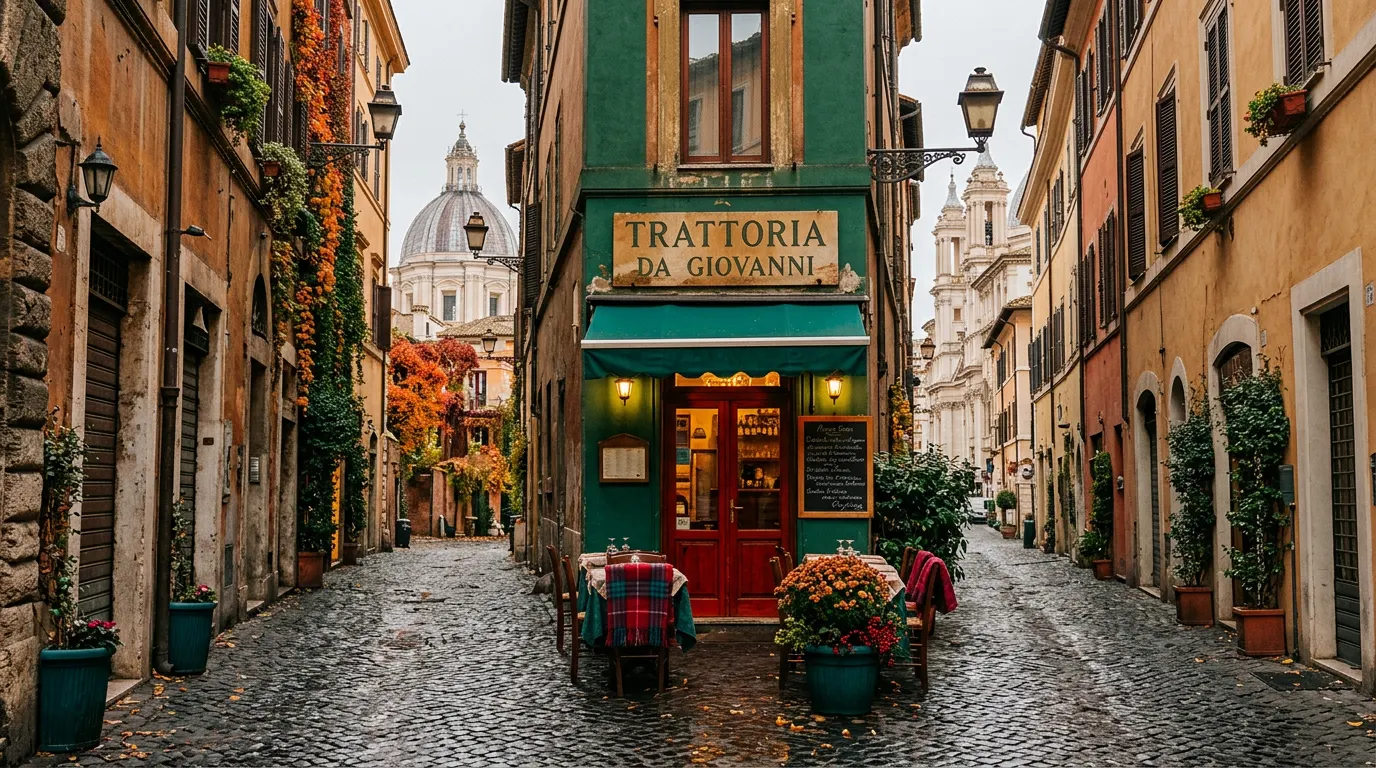
To truly illustrate how autumn transforms a travel experience, we need to look closely at our Rome city guide. Colosseum quests, irresistible gelato, and ancient legends: Rome makes history thrilling for every family. But in July, it is a humid, crowded obstacle course. By October 2026, the Roman light turns golden, the cobblestones cool down, and the city reclaims its relaxed, joyful rhythm.
Here is how to build the perfect fall itinerary in the Eternal City, complete with practical details to save your sanity.
Ancient Wonders Without the Summer Meltdowns
Tackling ancient history with kids requires strategy. The Colosseum (also listed as Colosseo) is the world's most famous amphitheater and a high-impact historical site that brings gladiator battles to life. It is a high-stakes visit that requires military-grade planning. In the fall, you bypass the brutal summer sun baking the arena floor.
- Practical Details: Open daily around 8:30 AM to 4:30 PM in late fall. Tickets are roughly €16 ($17.50 USD) for adults, and free for kids under 18, though you must still reserve their free timed-entry ticket online well in advance. Strollers are allowed on the main paths, but the ancient stone is bumpy; baby carriers are easier if you have an infant. Plan for about 90 minutes to 2 hours here.
🎟️ Find family-friendly tours & activities →
Just a short walk through the historic center brings you to the Pantheon. This nearly 2,000-year-old architectural masterpiece remains the world's largest unreinforced concrete dome. The massive oculus open to the sky fascinates kids, especially if you catch a light autumn rain shower falling directly onto the marble floor. Entry is now €5 ($5.50 USD) for adults and free for kids, requiring about 30 minutes.
For families with older kids who love a bit of mystery, Basilica di San Clemente al Laterano is unmissable. This 'history layer cake' allows families to literally descend through time, moving from a glittering 12th-century basilica down to a 4th-century church, and finally reaching a 1st-century Roman street complete with the rushing sound of an underground river. Open 9:00 AM to 12:30 PM and 3:00 PM to 5:30 PM. Tickets are €10 ($11 USD) for adults, free for under 16s with parents. It is entirely inaccessible for strollers, so park it upstairs.
Also nearby is the Basilica di Santa Maria Maggiore, a massive, gold-drenched 5th-century basilica that houses what is claimed to be pieces of Jesus's manger. The sheer scale and glittering mosaics are awe-inspiring even for easily distracted toddlers.
Hands-On History and Culture
Instead of just looking at artifacts, let your kids get their hands dirty. A Pasta-making class at Walks of Italy (Kids Cook Rome) is a hands-on, high-energy cooking class designed specifically for families where kids get to roll dough, create shapes, and eat their own masterpieces. It usually runs about 3 hours, costs around €85 ($93 USD) per person, and provides the perfect rainy-day fall activity.
🎟️ Book family tickets & skip-the-line tours →
For a totally different kind of immersion, take a short trip outside the city center to Roma World. This is an immersive, open-air 'living history' park where kids can step back into Ancient Rome through gladiator shows, archery, and interacting with farm animals. Fall weather makes this outdoor park vastly more enjoyable. Tickets are about €15 ($16.50 USD), and you can easily spend a half-day here.
Parks and Open Spaces for Letting Off Steam
Rome's green spaces are glorious in the autumn. Appia Antica Regional Park (Service Center) is a massive archaeological park where kids can cycle down a 2,000-year-old Roman highway past ancient tombs and ruins. Renting bikes at the service center costs about €15 ($16.50 USD) for the day.
Similarly, Parco degli Acquedotti is a massive, open-air archaeological park where kids can run, bike, and play soccer directly under the towering arches of ancient Roman aqueducts. It is completely free, open from dawn to dusk, and perfect for a late afternoon picnic with supplies grabbed from a local market.
If you are staying further north, Villa Ada is Rome’s second-largest park. It is a sprawling, semi-wild former royal estate that offers a more adventurous environment for kids to build forts and explore wooded trails.
Tucked inside the gardens of Villa Torlonia is the Casina delle Civette (House of the Owls). This is a whimsical, fairytale-like Art Nouveau villa famous for its intricate stained glass windows featuring owls and nature motifs. Kids feel like they have walked into a storybook. Entry is €6 ($6.50 USD), closed on Mondays.
Interactive Museums and Play Spaces
When little legs are tired of ancient ruins, Rome has excellent child-focused reprieves. Explora il Museo dei Bambini di Roma is a vibrant, hands-on discovery museum where kids can role-play in a mini-supermarket, experiment with water tables, and drive a real train engine. You must book a timed 1-hour-and-45-minute shift in advance. Tickets are €9 ($10 USD) for ages 3+, €6 ($6.50 USD) for toddlers.
For older kids, Technotown - Hub della Scienza Creativa is tucked inside the beautiful Villa Torlonia. This isn't your typical look-but-don't-touch museum; it focuses on creative science workshops, robotics, and 3D printing.
If you need pure, unadulterated fun, Luneur Park is Italy's oldest amusement park, recently reimagined as a colorful, safe haven specifically for children up to age 12. Alternatively, catch a show at Teatro San Carlino, a charming, traditional puppet theater tucked away in the Villa Borghese gardens, featuring classic Italian character Pulcinella.
Age-By-Age Guide: Navigating Fall Travel with Kids
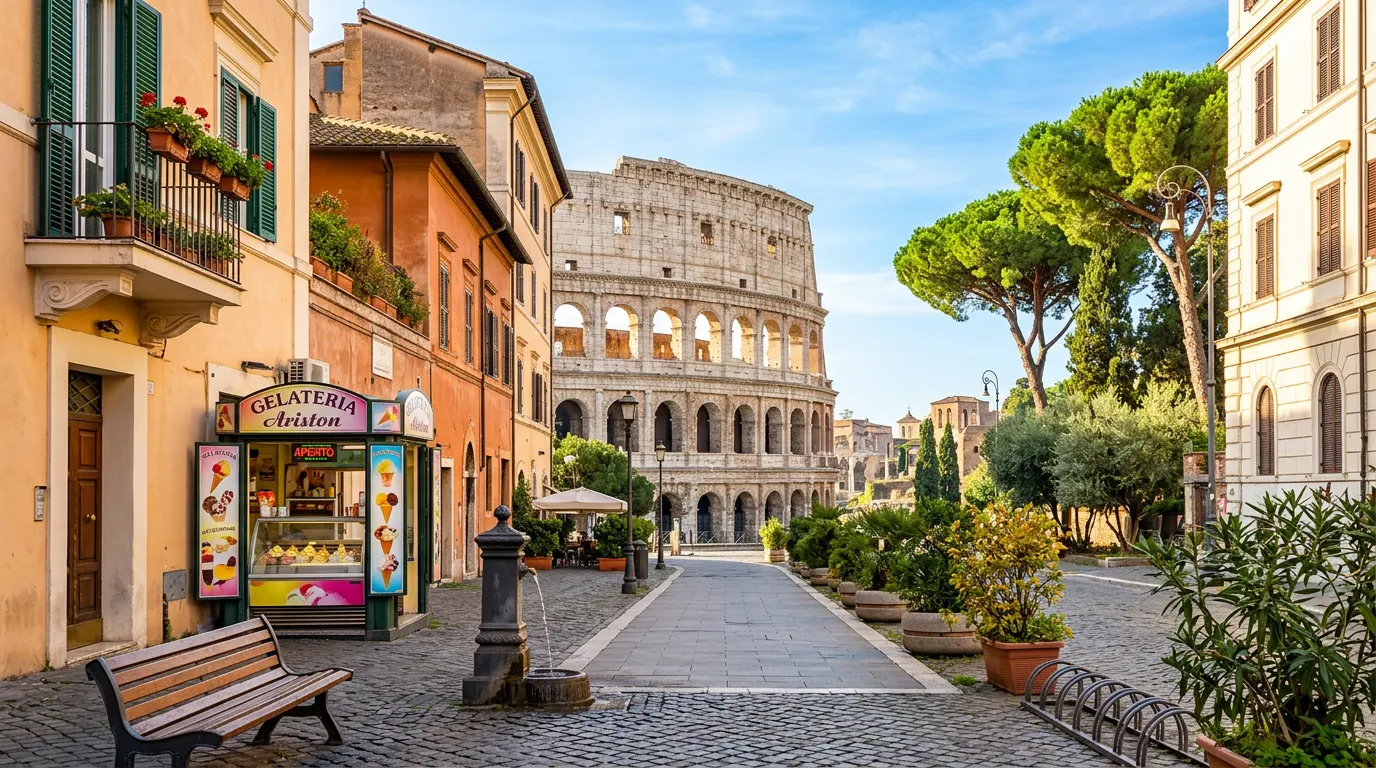
Choosing the best fall family travel destinations 2026 means tailoring your itinerary to the developmental stage of your children. Here is how to handle the autumn rhythm based on age.
Toddlers (Ages 2-3)
Fall travel with toddlers is all about managing mobility. The cooler weather means they won't overheat in a carrier, which is vital because cities like Rome are tough on strollers. Focus on open-air spaces like Parco degli Acquedotti where they can safely toddle without crowds. Plan your major sightseeing for 9:00 AM, knowing that by noon you will be seeking a quiet corner for a nap. Fall sunsets happen earlier, meaning you can enjoy "golden hour" lighting before their 7:30 PM bedtime.
Preschoolers (Ages 3-5)
This age group thrives on imagination, making castles, knights, and gladiators prime focal points. The Explora Children's Museum is an absolute must for this bracket. Keep structured tours to an absolute maximum of 90 minutes. At this age, a trip to the Pantheon isn't an architectural study; it is a quest to find the giant hole in the roof. Pack layers, as crisp autumn mornings quickly turn into warm afternoons, and preschoolers are notoriously picky about their temperature comfort.
School-Age (Ages 6-10)
School-aged kids are the sweet spot for fall cultural travel. They have the stamina to walk a few miles a day and the context to understand basic history. The pasta-making class is perfect for this age—they have the dexterity to actually shape the tortellini. San Clemente's underground tunnels will feel like an Indiana Jones adventure. Engage them by putting them in charge of navigating via a physical map or finding the local water fountains.
Tweens & Teens (Ages 11-14)
Teens need autonomy and a break from the traditional "follow the tour guide" format. Renting bikes on the Appia Antica gives them physical freedom and a sense of adventure. Fall is ideal because they aren't dragging through the heat complaining about the humidity. Let them dictate the food choices for the day, or give them a budget to navigate the local markets. The spooky, layered history of Rome's crypts and underground ruins usually holds their attention far better than traditional art galleries.
What to Skip: Overhyped Traps to Avoid (Rome Edition)
Not everything in the guidebooks is worth your family's precious time and energy. Here are a few things to confidently cross off your list.
- Galleria Borghese: The combination of a mandatory 2-hour exit rule, the need to book months in advance, and an aggressive "do not touch" environment makes this world-class art museum incredibly stressful with young children. Save it for an adults-only trip.
- Spanish Steps (Sitting): While iconic, the Spanish Steps are no longer a place to rest. Since 2019, it is strictly illegal to sit on the steps, and heavily armed police will blow whistles and fine you. Walking past with kids is fine, but it is not the lingering spot it used to be.
- National Roman Museum - Palazzo Massimo: While it houses some of the world's most stunning Roman frescoes and mosaics, this is a traditional, quiet, glass-case museum that will bore most children to tears within fifteen minutes.
- Antico Caffè Greco: As Rome’s oldest café, it is more of a 'living museum' than a snack stop, with prices to match. Expect to pay €10 for a basic coffee if you sit down. Kids won't appreciate the history, and you won't appreciate the bill.
- Ara Pacis Museum: While architecturally stunning, this museum is essentially a single ancient altar inside a modern glass box. It lacks the interactive elements or scale needed to engage younger travelers.
- Acquario di Roma (EUR): Do not promise your kids a trip to the aquarium. This project has been a 'coming soon' disappointment for over 15 years, often leaving families standing in front of a closed construction site.
- Museo delle Cere (Wax Museum Rome): This is a dated, dusty collection of wax figures that often look more like horror movie props than the historical figures they represent. Skip it entirely.
- Parco Divertimenti Cinecittà (area giochi - CinecittàDue / zone events): This location is frequently confused with the actual Cinecittà World theme park, but it is actually just a small, underwhelming play zone near a shopping mall.
- Gladiator Impersonators: Avoid the men dressed as gladiators hanging around the Colosseum. They often demand €20-€50 for a single photo and can become highly aggressive if you refuse to pay their inflated prices.
- Restaurant Touts: Avoid any place near major monuments where a host tries to pull you in or the menu features faded photos of pasta. These are guaranteed tourist traps with subpar, microwaved food.
Pro Tips from Parents for Fall Travel in Rome
To truly navigate the city like a local family, keep these practical, hard-won tips in your back pocket.
Master the Water Supply: Instead of buying overpriced plastic bottles from vendors, look for the curved iron 'nasoni' fountains scattered across Rome. The water is freezing cold, perfectly safe, and constantly running. Kids love learning how to plug the bottom hole to make the water shoot out the top like a drinking fountain.
Rethink Your Stroller: Rome's 'sampietrini' (cobblestones) are brutal on high-end strollers with small wheels. Leave the massive travel system at home. Bring a lightweight umbrella stroller that you can easily fold and carry over ruined sidewalks or up flights of stairs, or opt for a sturdy carrier for babies and young toddlers.
Adapt to Italian Dining Hours: Aim for a 7:00 PM dinner in Trastevere, which is the earliest most authentic spots open. By 9:00 PM, the narrow alleys become incredibly crowded with nightlife. Feed kids a substantial late-afternoon snack (merenda) to tide them over until the restaurants open their doors.
Find the Right Treats: Skip the standard industrial popsicles sold at newsstands. Instead, find a 'Grattachecca' kiosk along the Lungotevere riverbank. This hand-shaved ice topped with fresh fruit syrup and chunks of coconut is a historic Roman treat that kids obsess over.
Know How to Get Around: Unlike NYC or London, Roman taxis rarely stop if you wave them down in traffic. You must either walk to a designated orange 'Taxi' stand or use the FreeNow app to call one directly to your location.
Medical Peace of Mind: If a child gets a sudden fall fever or scrapes a knee on the cobblestones, look for the bright green neon crosses indicating a Farmacia. Italian pharmacists are highly trained and can diagnose minor ailments and dispense many medications over the counter that would require a doctor's visit back home.
Traveling with children is always an adventure requiring flexibility and patience, but shifting your timeline to the autumn months radically changes the baseline experience. The air is cooler, the locals are friendlier after the summer rush, and the memories you make will be framed by golden light rather than heat exhaustion. As you look at the school calendar and weigh your options, prioritizing the best fall family travel destinations 2026 might just be the greatest gift you can give your family's travel sanity.