Traveling with curious children transforms the way you see the world. Instead of simply admiring architecture or sampling local cuisine, your itineraries suddenly revolve around dinosaur fossils, interactive physics exhibits, and planetariums. Finding the right destinations that cater to this boundless curiosity is key to a successful family trip. When you are looking for the best science museums for kids travel, you want cities that offer more than just a single rainy-day backup plan. You want destinations where science, history, and hands-on discovery are woven into the very fabric of the city.
The most successful family trips happen when children are actively engaged rather than passively dragged from one monument to the next. Cities with robust museum cultures understand this, offering world-class institutions that treat children as junior scientists rather than just visitors. Whether your child is obsessed with space exploration, paleontology, or engineering, these seven global destinations offer the ultimate educational playgrounds.
1. London, United Kingdom: The Best Science Museums for Kids Travel in Europe
London is a city that effortlessly blends centuries of royal history with cutting-edge scientific discovery. The concentration of free, world-class institutions in the South Kensington neighborhood alone makes it a premier destination for families.
The Cathedral of Nature and Hands-on Science
Start your journey at the Natural History Museum, a breathtaking Romanesque building that manages to make science feel like a grand adventure. The moment you step into The Natural History Museum Hintze Hall, your family will be greeted by "Hope," the massive blue whale skeleton suspended gracefully from the ceiling. From the animatronic T-Rex to the earthquake simulator, you can easily spend an entire day here.
Right next door is the spectacular Science Museum (Wonderlab). While general admission to the museum is free, you must book tickets for Wonderlab, the museum's premium, hands-on gallery. It features over 50 interactive exhibits, including giant friction slides, live chemistry demonstrations, and a spectacular rotating model of the solar system.
🎟️ Book family tickets & skip-the-line tours →
For botany and environmental science enthusiasts, head west to Kew Gardens (Royal Botanic Gardens, Kew). This massive UNESCO World Heritage site offers a perfect blend of scientific wonder and high-energy outdoor exploration, including a phenomenal treetop walkway and the interactive Children’s Garden.
If you want to mix up your science days with history, the Tower of London offers a tangible look at medieval engineering and fortress defense. When hunger strikes after a long museum day, take the family to Seven Dials Market in Covent Garden—a high-energy, multi-level food hall that solves the age-old problem of everyone wanting something different for lunch.
Practical Details for London:
- Cost: General admission to major national museums is free, though special exhibits and galleries like Wonderlab cost around £11-£13 ($14-$16 USD).
- Opening Hours: Typically 10:00 AM to 5:50 PM daily.
- Stroller Accessibility: Excellent inside the museums, with spacious lifts and ramps.
- Best Time to Visit: Arrive right at opening (10:00 AM) to beat the massive school group crowds, or visit after 3:00 PM.
- Time Needed: Plan for 3-4 hours per museum. Doing both the Science and Natural History museums in one day is usually too exhausting for young children.
2. Washington D.C., USA: The Giant of American Discovery
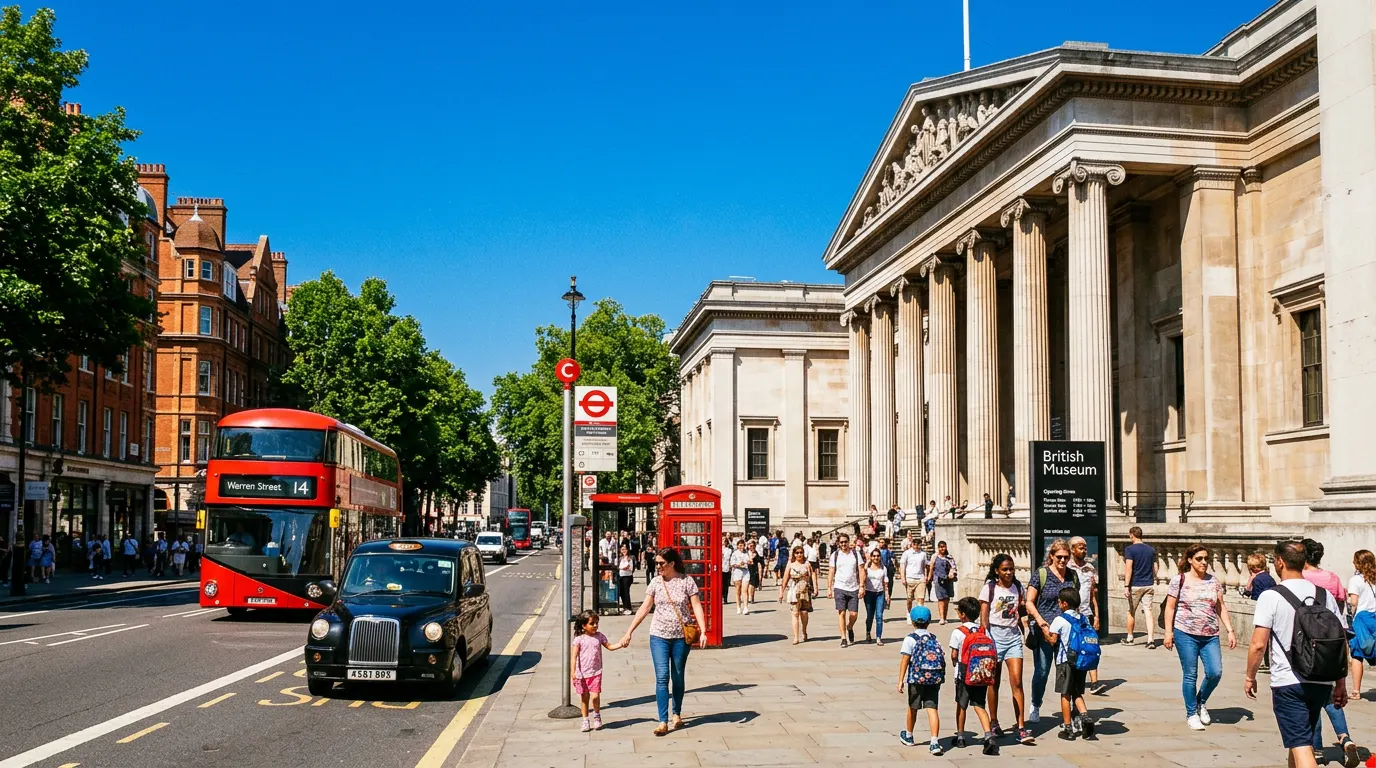
When it comes to the best science museums for kids travel in North America, Washington D.C. is unparalleled. The Smithsonian Institution provides an overwhelming array of educational riches, completely free of charge.
Space Shuttles and Deep Ocean Mysteries
The Smithsonian National Air and Space Museum on the National Mall is a holy grail for aviation and space-obsessed kids. Seeing the actual Apollo 11 command module and touching a lunar rock makes history incredibly tangible. The museum has recently undergone massive renovations, resulting in stunningly modern, interactive galleries that explain the physics of flight and the future of planetary exploration.
Just a short walk away is the National Museum of Natural History. Beyond the famous Hope Diamond and the towering elephant in the rotunda, the David H. Koch Hall of Fossils is an absolute triumph. It contextualizes dinosaurs not just as giant monsters, but as creatures living in complex, changing ecosystems. The Q?rius (pronounced "curious") interactive learning space on the ground floor allows older kids and teens to use microscopes, handle real specimens, and talk directly with working scientists.
Practical Details for Washington D.C.:
- Cost: Free admission to all Smithsonian museums.
- Opening Hours: Generally 10:00 AM to 5:30 PM.
- Stroller Accessibility: Superb. Wide aisles, large elevators, and plenty of ramp access.
- Food: Museum cafes are notoriously expensive and crowded. Food trucks line the National Mall, offering quick, kid-friendly options like hot dogs and falafel.
- Best Time to Visit: Spring and fall offer the best weather for walking between museums. Arrive early to avoid the peak afternoon crowds.
3. Chicago, Illinois, USA: Engineering and Hands-On Physics
Chicago treats science as a tactile, fully immersive experience. The city's institutions are massive, loud, and designed to encourage children to touch, build, and experiment.
Submarines and T-Rexes
The Museum of Science and Industry (MSI) is located in the beautiful Hyde Park neighborhood and is arguably the most impressive interactive science museum in the country. Housed in the only remaining building from the 1893 World's Columbian Exposition, MSI is enormous. Kids can step inside a real World War II U-505 submarine, descend into a replica coal mine, navigate a massive mirror maze to learn about geometry, and watch a 40-foot indoor tornado form before their eyes.
🎟️ Find family-friendly tours & activities →
Closer to downtown on the Museum Campus, the Field Museum is a must-visit for paleontology fans. It is the home of SUE, one of the largest and most complete Tyrannosaurus rex skeletons ever discovered. The museum's DNA Discovery Center allows kids to watch real scientists extracting DNA from specimens in a working laboratory.
Practical Details for Chicago:
- Cost: MSI basic entry is around $25 USD for adults, $14 USD for kids. The Field Museum runs $30 USD for adults, $23 USD for kids.
- Opening Hours: Generally 9:30 AM to 4:00 PM or 5:30 PM depending on the season.
- Stroller Accessibility: Excellent in both locations, though the U-505 onboard tour at MSI does not allow strollers.
- Time Needed: You will need a full day for MSI alone. It is too massive to rush.
4. Singapore: The Future of Science Travel

If you want to show your children what the future looks like, Singapore is the destination. The city-state itself feels like a massive feat of engineering and botanical science, making it a thrilling environment for young minds.
Art Meets Technology
The ArtScience Museum, housed in a stunning lotus-shaped building at Marina Bay Sands, offers a unique approach to learning. Their permanent exhibition, Future World (created in collaboration with teamLab), is a dazzling display of interactive digital installations. Kids can draw sea creatures, scan them, and watch them swim across massive digital aquarium walls. It is a brilliant fusion of coding, art, and environmental science.
Further out in Jurong East, the Science Centre Singapore is a traditional hands-on museum cranked up to maximum intensity. With over 1,000 interactive exhibits spanning 14 galleries, kids can navigate a laser maze, experience a fire tornado demonstration, and explore the physics of water at the massive outdoor Waterworks playground. Given Singapore's intense heat and humidity, these air-conditioned wonderlands are essential for traveling families.
Practical Details for Singapore:
- Cost: ArtScience Museum is roughly SGD 25-30 ($18-$22 USD). Science Centre is SGD 12 ($9 USD).
- Opening Hours: Typically 10:00 AM to 7:00 PM.
- Stroller Accessibility: Flawless. Singapore is highly accessible.
- Food: Both locations have excellent, affordable food courts nearby featuring diverse Asian cuisines that cater well to families.
5. Paris, France: Innovation Beyond the Louvre
While families understandably flock to Paris for art and architecture, the city boasts some of the most innovative and beautifully designed science institutions in Europe.
The City of Science and Industry
Located in the Parc de la Villette, the Cité des Sciences et de l'Industrie is the largest science museum in Europe. What makes it spectacular for families is the Cité des Enfants, which is strictly divided into two age-appropriate zones (2-7 years and 5-12 years). This means toddlers aren't getting trampled by eager pre-teens, and older kids have access to complex engineering and media challenges without boring the little ones. Sessions are timed to 90 minutes, ensuring the space never feels overcrowded.
On the other side of the city, the Muséum National d'Histoire Naturelle offers the Grande Galerie de l'Évolution. Instead of traditional dioramas, thousands of taxidermy animals are dramatically staged as if marching together across the room under shifting lighting that simulates a passing thunderstorm. It is a breathtaking visual lesson in biodiversity and evolution.
Practical Details for Paris:
- Cost: Cité des Enfants is €13 ($14 USD). Grande Galerie is €13 ($14 USD).
- Opening Hours: Closed on Mondays. Usually open 10:00 AM to 6:00 PM.
- Stroller Accessibility: Very good within the museums, though getting there via the Paris Metro with a stroller can be challenging due to stairs.
- Best Time to Visit: Book your Cité des Enfants time slot weeks in advance, as they sell out quickly.
6. San Francisco Bay Area, California: The Ultimate Interactive Playground
The San Francisco Bay Area approaches science with a distinctively playful, maker-culture mentality. It is a region that celebrates asking questions and getting your hands dirty.
The Gold Standard of Tinkering
The Exploratorium at Pier 15 is frequently cited by educators as the best interactive science museum in the world. There are no velvet ropes here. Instead, there are hundreds of exhibits built in the museum's on-site workshop that explore light, sound, biology, and human perception. Kids can step inside a tornado, build electrical circuits, and explore the pitch-black Tactile Dome (reservations required).
🎟️ Book family tickets & skip-the-line tours →
Across town in Golden Gate Park, the California Academy of Sciences is a brilliant architectural marvel that houses an aquarium, a planetarium, a natural history museum, and a four-story living rainforest all under one massive living roof. Kids can watch penguins being fed, feel the rumble of a simulated 1906 earthquake, and walk through a humid dome filled with free-flying tropical birds and butterflies.
Practical Details for San Francisco:
- Cost: Exploratorium is $39.95 USD for adults, $29.95 USD for kids. Cal Academy utilizes dynamic pricing, usually ranging from $35-$45 USD.
- Opening Hours: Generally 9:30 AM to 5:00 PM.
- Stroller Accessibility: Excellent. Both facilities are modern and highly accessible.
- Food: The Exploratorium's Seaglass Restaurant offers excellent, locally sourced food with beautiful views of the Bay.
7. Berlin, Germany: Dinosaurs and Industrial Might
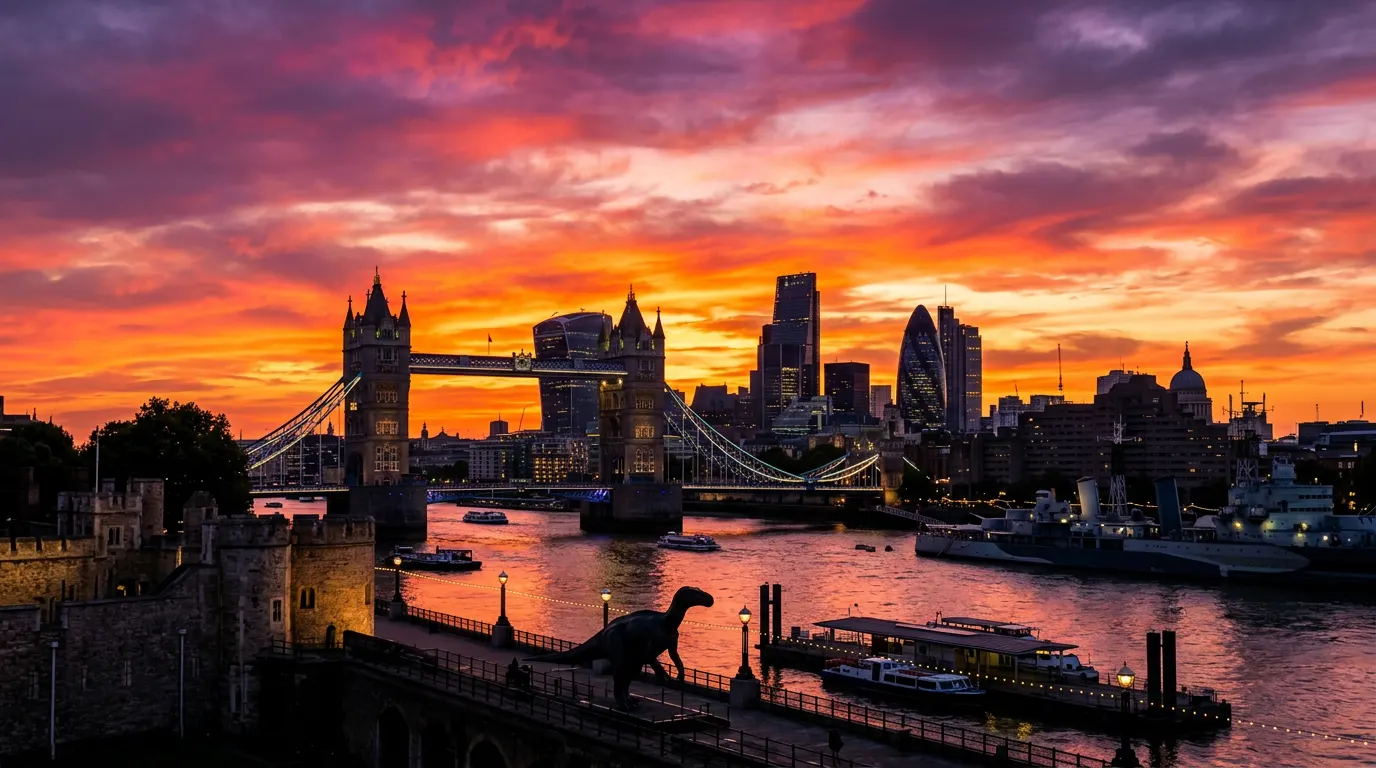
Berlin is a city of incredible contrasts, and its science institutions reflect a deep respect for both the natural world and industrial engineering.
Fossils and Physics
The Museum für Naturkunde (Natural History Museum) is famous for housing the largest mounted dinosaur skeleton in the world—a towering Brachiosaurus that will leave kids speechless. The museum also features a stunning "Wet Collection" where thousands of preserved specimens are displayed in a massive, glass-walled room that feels like a laboratory from a sci-fi movie.
For hands-on science, head to the Deutsches Technikmuseum (German Museum of Technology) and its adjacent science center, Spectrum. Spectrum is entirely dedicated to interactive physics experiments. Over 150 stations allow kids to explore acoustics, optics, and electricity. They can pull themselves up on giant pulleys, play with magnetic fields, and experiment with light prisms.
Practical Details for Berlin:
- Cost: Naturkunde is €11 ($12 USD) for adults, €5 ($5.50 USD) for kids. Technikmuseum/Spectrum is €12 ($13 USD) for adults, and free for kids under 18.
- Opening Hours: Closed Mondays. Usually open 9:00 AM to 5:30 PM (later on weekends).
- Stroller Accessibility: Great in both locations. The Technikmuseum is vast, so a stroller is highly recommended for younger kids.
- Time Needed: You can easily spend 4-5 hours at the Technikmuseum and Spectrum combined.
Age-By-Age Guide to the Best Science Museums for Kids Travel
Navigating massive science centers requires different strategies depending on your child's developmental stage. Here is how to approach these destinations based on age:
Toddlers (Ages 2-3)
At this age, science is pure sensory exploration. You aren't teaching them the periodic table; you are letting them discover cause and effect. Look for museums with dedicated early-childhood zones, like the Cité des Enfants in Paris or the Wonderlab in London. Focus entirely on water tables, soft building blocks, and light/shadow play. Keep visits to a strict two-hour maximum, and always locate the quiet zones and baby-changing facilities upon arrival.
Preschoolers (Ages 4-5)
Preschoolers are natural scientists constantly asking "why?" They thrive in environments where they can push buttons, turn cranks, and see immediate reactions. The Exploratorium in San Francisco and the Science Centre Singapore are perfect for this age. Focus on kinetic exhibits, simple physics demonstrations, and visually striking animal exhibits. Bring a lightweight travel stroller, as their little legs will give out long before their curiosity does.
School-Age (Ages 6-10)
This is the golden age for science museums. Children in this bracket have the attention span to engage with multi-step exhibits and understand the context of what they are seeing. They will be captivated by the U-505 submarine in Chicago or the massive dinosaur halls in Washington D.C. Let them take the lead on the museum map. This is the perfect age to sign up for scheduled science demonstrations, live chemistry shows, and interactive workshops.
Tweens and Teens (Ages 11-14)
Older kids need autonomy and respect for their growing maturity. Avoid anything labeled "kid zone" and steer them toward complex, real-world science. The Q?rius lab at the Smithsonian Natural History Museum or the Tactile Dome at the Exploratorium are massive hits. Give them a meeting point and a timeframe, and let them explore specific galleries on their own. Engage them by asking what they think about an exhibit, rather than explaining it to them.
What to Skip: Overhyped Traps in Top Museum Cities
When planning trips around the best science museums for kids travel, you will inevitably encounter heavily marketed tourist traps that promise family fun but deliver frustration. Using our deep data on London, here are three highly advertised places you should absolutely skip, and why:
- The London Dungeon: Heavily marketed to families, this is a high-priced, 90-minute walkthrough commitment in near-total darkness. Actors frequently jump out to scare visitors, and the historical content focuses on torture and disease. It is terrifying for younger kids and a waste of money for teens who would rather be doing real science.
- Jack the Ripper Museum: Do not be fooled by the word "museum." This attraction focuses entirely on the grisly details of serial murders. It is fundamentally inappropriate for children of any age and has no educational value regarding real forensic science or history.
- Harrods: While famous, Harrods is a luxury temple, not a playground. Between the crushing crowds, strict security guards who heavily police children touching items, and eye-watering prices, it is a highly stressful environment for parents. Skip it and take the kids to a park instead.
Pro Tips from Parents for Museum Travel
To ensure your science museum adventures go smoothly, lean on these battle-tested tips from parents who have navigated these cities:
- Solve the Food Equation First: Museum cafes are often overpriced and chaotic. When kids are tired after a museum run in London, chains like Giraffe, Wahaca, and Honest Burgers offer consistent quality, excellent kids' menus, and high chairs without the stress of a formal dining room.
- Plan Your Transit Carefully: Avoid using the London Tube or the Paris Metro if you have a heavy stroller. Many historic stations, like Covent Garden, rely on steep spiral stairs and lack elevators. Stick to the buses, which are highly stroller-friendly and offer a great view of the city.
- Take a Breather by the Water: After a busy morning at the Tower of London or the nearby museums, walk to St Katharine Docks. Just a short walk away, this marina offers a peaceful, enclosed environment to see boats and eat lunch away from traffic. Similarly, the South Bank car-free riverside path is perfect for strollers and letting active kids run off steam safely while watching world-class street performers.
- Consider Alternative Transport: If open-top tourist buses feel too exposed to the weather or too slow in traffic, book a private Black Cab tour in London. Cabs can fit up to six people, are fully wheelchair and stroller accessible, and the drivers know the city's history better than anyone.
Bringing the Science Home
Finding the best science museums for kids travel isn't just about filling an itinerary; it is about finding places that respect and nurture your child's intellect. Whether you are watching them figure out a friction slide in London, stand in awe beneath a space shuttle in Washington D.C., or build electrical circuits in San Francisco, these moments of discovery are the true souvenirs of family travel. By choosing cities that prioritize hands-on learning, you are giving your kids the tools to understand the world long after the vacation ends.