Traveling internationally with children often feels like a delicate balancing act. You want culture, history, and incredible food, but you also need walkable streets, engaging activities, and environments that won’t result in a mid-afternoon meltdown. Europe is traditionally the gold standard for this kind of travel, offering a mix of stunning architecture and family-friendly infrastructure. However, if you are willing to expand your horizons and look for the best family cities in other regions around the globe, you will find destinations that deliver that same magical blend of charm and accessibility.
In this guide, we are breaking down 12 European cities that genuinely work well with kids, from toddlers to teens. But we aren't stopping there. Because the demand for walkable, historic, and culturally immersive travel is so high, we are also dedicating a massive portion of this guide to a city outside of Europe that offers the exact same cobblestone charm and rich history: Antigua Guatemala.
Whether you are mapping out a summer in the Balkans or looking for the best family cities in other continents for a winter escape, this comprehensive guide has the practical details you need.
12 European Cities That Actually Work for Families
When planning a European family trip, the key is prioritizing cities with extensive pedestrian zones, interactive museums, and plenty of green space. Here are 12 cities that hit the mark.
1. Kotor, Montenegro
Nestled in a breathtaking bay, this medieval city is a dream for families. The entirely car-free Old Town means your kids can roam safely through the maze of stone streets. It is also famously known as the city of cats, which provides an endless scavenger hunt for toddlers and preschoolers. Check out our full City Guide: /city/kotor for details on navigating the fortress steps with little ones.
2. Plovdiv, Bulgaria
Often overshadowed by larger European capitals, Plovdiv boasts one of the longest pedestrian streets in Europe. You can seamlessly walk from ancient Roman ruins to vibrant urban parks without ever worrying about traffic. The Kapana art district is colorful and engaging, and dining out with children is incredibly relaxed here. Read our City Guide: /city/plovdiv to plan your itinerary.
3. Copenhagen, Denmark
Copenhagen is built for families. Rent an electric cargo bike (a "Christiania bike") and load the kids in the front bucket to explore the city like a local. Between the magical Tivoli Gardens amusement park right in the city center and the sprawling interactive exhibits at the Experimentarium, you will easily fill a week here.
4. Valencia, Spain
While Barcelona gets the crowds, Valencia gets the families. The Turia Gardens—a massive park built in a diverted riverbed—snakes through the entire city, featuring massive playground structures like the beloved Gulliver Park. The City of Arts and Sciences offers awe-inspiring, stroller-friendly exploration.
5. Munich, Germany
Munich pairs Bavarian tradition with incredible outdoor spaces. The English Garden is perfect for letting kids burn off energy, and the city's famous beer gardens are surprisingly family-oriented, often featuring massive playgrounds right next to the dining tables.
6. Vienna, Austria
Vienna is immaculate, safe, and surprisingly fun for children. Beyond the stunning palaces, you have the Prater amusement park with its iconic Ferris wheel, and the Zoom Children’s Museum, which offers highly interactive, age-specific exhibits. Public transport is exceptionally easy to navigate with a stroller.
7. Amsterdam, Netherlands
Beyond its nightlife reputation, Amsterdam is deeply family-centric. Vondelpark is a sprawling green oasis with fantastic playgrounds and cafes. The NEMO Science Museum, housed in a building shaped like a massive ship, is one of the best hands-on children's museums in Europe.
8. Lisbon, Portugal
While the hills require a baby carrier rather than a stroller, Lisbon rewards families with the incredible Oceanarium, historic tram rides that feel like theme park attractions, and pastéis de nata (custard tarts) that will instantly cure any travel fatigue.
9. Stockholm, Sweden
Stockholm is a masterclass in child-friendly urban design. Skansen, the world’s oldest open-air museum, features Nordic animals and historical actors. The Vasa Museum, housing a nearly fully intact 17th-century warship, completely captivates school-aged kids and teens.
10. London, United Kingdom
London’s sheer volume of free, world-class museums makes it a top tier choice. The Natural History Museum and the Science Museum are right next to each other and offer days of exploration. Coupled with massive royal parks and the novelty of double-decker buses, it is an easy win.
11. Edinburgh, Scotland
Edinburgh feels like stepping into a storybook. Exploring Edinburgh Castle and walking the Royal Mile sparks incredible imaginative play. The National Museum of Scotland is brilliantly designed with interactive science and nature exhibits that appeal to all ages.
12. Reykjavik, Iceland
While known as a gateway to nature, Reykjavik itself is wonderfully manageable. The local culture revolves around geothermally heated public pools (sundlaugs), which feature warm water, water slides, and shallow play areas that are perfect for kids after a day of sightseeing.
Looking for the Best Family Cities in Other Regions? Welcome to Antigua Guatemala
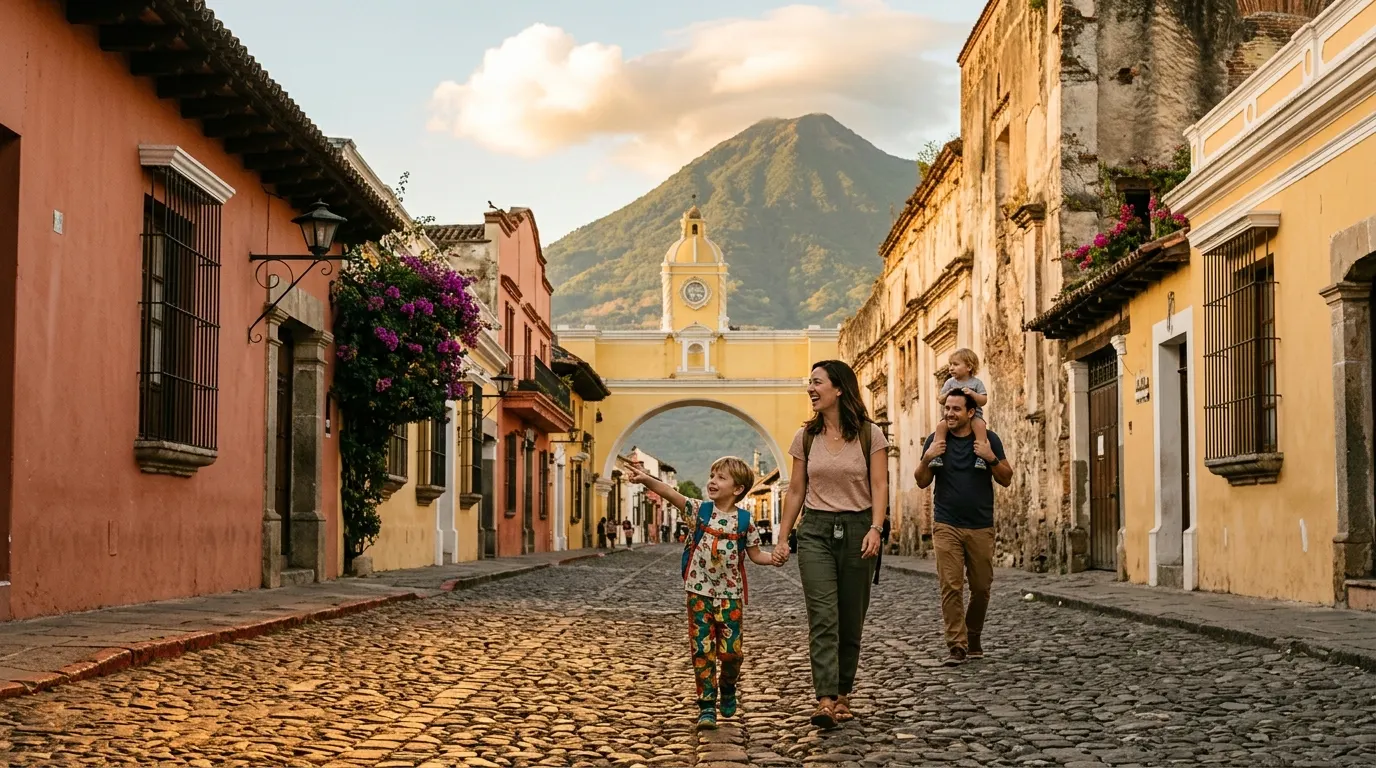
If you love the pedestrian-friendly, historic nature of European cities but want to explore the best family cities in other parts of the world, Antigua Guatemala should be at the absolute top of your list. It offers cobblestone charm, stunning colonial architecture, and incredible food, all framed by breathtaking volcano vistas.
Here is exactly how to tackle City Guide: /city/antigua-guatemala with kids.
History and Culture They Can Actually Touch
European cities are known for their history, but Antigua makes its past incredibly accessible. A must-visit is the Hotel Museo Spa Casa Santo Domingo - Ruinas. This is a sprawling, magical complex built into the ruins of an 18th-century convent. History feels completely alive here; kids can explore underground crypts, walk past ruined pillars, and spot tropical birds on the grounds. Entry to the museum areas is around 50 GTQ (about $6.50 USD), and it is beautifully shaded for midday visits.
For a classic family photo, take the gentle, paved walk up to Cerro de la Cruz. This iconic viewpoint offers the quintessential photo of Antigua with Volcán de Agua towering in the background. It takes about 15-20 minutes to walk up, and there are vendors selling fresh fruit and ice cream at the top. Back in town, stop by the Iglesia y Convento de La Merced. This iconic yellow baroque church is more than just a photo op; its adjacent convent ruins house the largest fountain in Central America, which is shaped like a water lily and fascinating for kids to run around.
If you want to introduce your family to Mayan history without a grueling jungle trek, the Iximché Archaeological Site is about an hour outside the city. It is a manageable, park-like Mayan ruin site that serves as a perfect introduction to archaeology for families. The flat, grassy plazas are great for kids who need to move.
Hands-On Food and Farm Experiences
Antigua is a sensory delight. Start your morning at Finca Filadelfia Coffee Resort & Tours. This is a sprawling, historic coffee estate where kids can ride in the back of unimog trucks and see exactly where their parents' morning brew comes from. The open spaces and machinery keep little ones engaged.
Later, dive into the local cuisine at the Guatemala Cooking School (Antigua Guatemala). This is a hands-on cultural immersion where families learn to cook traditional Guatemalan staples like pepián. The instructors are incredibly patient with children, giving them tasks like grinding spices or patting out tortillas.
But the absolute highlight for kids will be Fernando's Kaffee (Chocolate Workshop). This cozy, family-run cafe and workshop is where kids can get hands-on with the entire bean-to-bar process, roasting cacao beans and pouring their own chocolate molds. It costs around $25 USD per person and takes about two hours—the perfect afternoon activity.
🎟️ Book family tickets & skip-the-line tours →
Volcanoes and Nature That Won't Exhaust Them
You cannot visit Antigua without experiencing the volcanoes, but you must choose the right ones. Antigua Volcano Tours (Pacaya with Old Town Outfitters) offers a professionally guided hike up one of Guatemala's most active volcanoes, specifically tailored for families. The hike up Pacaya Volcano takes about 1.5 to 2 hours of moderate walking. It is a manageable, high-reward hike where the main event is roasting marshmallows over geothermal hot spots in the lava rock. If little legs get tired, you can rent a horse from local guides near the trailhead for about 150 GTQ ($20 USD) to carry them up.
For a change of scenery, book a Lake Atitlán Day Trip. This is a high-stakes, high-reward excursion to a stunning volcanic crater lake surrounded by three massive volcanoes. If you decide to stay overnight, base yourself at Lake Atitlán (Panajachel), which has the best infrastructure for families, or book the Posada de Santiago (Lake Atitlán), a rustic-chic lakeside lodge that serves as an excellent home base with fantastic food.
While at the lake, do not miss the Reserva Natural Atitlán. This former coffee plantation turned eco-reserve features a massive butterfly geodome, roaming coatis, and gentle trails with suspension bridges.
🎟️ Find family-friendly tours & activities →
World-Class Cultural Festivals
If you time your visit right, you can experience events that rival any European festival. Antigua's Semana Santa (Holy Week) Processions are a world-class cultural spectacle where cobblestone streets are covered in intricate, hand-made sawdust carpets (alfombras). Kids will be mesmerized by the colors, though the crowds require keeping a close hand on toddlers.
In November, the Giant Kite Festival (Festival de Barriletes Gigantes) - Sumpango is a breathtaking cultural spectacle where massive, hand-crafted tissue-paper kites—some reaching 15 meters across—are flown to honor ancestors. It is loud, vibrant, and unforgettable for school-aged kids and teens.
What to Skip: Tourist Traps and Exhausting Treks in Antigua
Not every highly rated attraction makes sense when you have children in tow. Protect your family's energy and budget by skipping these spots.
- Volcán de Fuego Viewpoints: While the sight of an erupting volcano is mesmerizing, the physical trek to the viewpoints on the slopes of Acatenango to see Fuego is grueling, freezing at night, and fundamentally unsafe for little legs. Stick to Pacaya for a family-friendly volcano experience.
- San Lucas Sacatepéquez Food Market: While famous for authentic Guatemalan street food, the soul-crushing traffic on the highway to reach San Lucas can trap you in a car for hours. You can find equally delicious, authentic food right in Antigua without the transit nightmare.
- Public Laundry Lavandería (Santa Clara): This historic site is an active communal laundry where the stone floors are perpetually wet and extremely slippery. It is very difficult to navigate with young children, and there isn't much for them to engage with safely.
- Cerro Alux Nature Reserve: This cloud forest reserve lacks the basic infrastructure families need, featuring poorly marked trails and very limited facilities.
- The Nightlife Scene: Avoid booking accommodation near Las Vibras de la Casbah or the Nightclubs on 4a Calle Oriente. This is the epicenter of Antigua's nightlife, which transforms into a loud, alcohol-fueled corridor that will absolutely keep your kids awake.
- Yoga Forest (Lake Atitlán): This is a dedicated spiritual retreat center that requires a grueling 20-minute uphill hike from the dock. It is not designed for the energy or volume of young children.
- La Casa del Ron (Antigua Guatemala): This is a high-end rum cellar and tasting room dedicated to Zacapa rum, making it fundamentally an adult-only space with zero appeal or space for kids.
Even More Global Inspiration
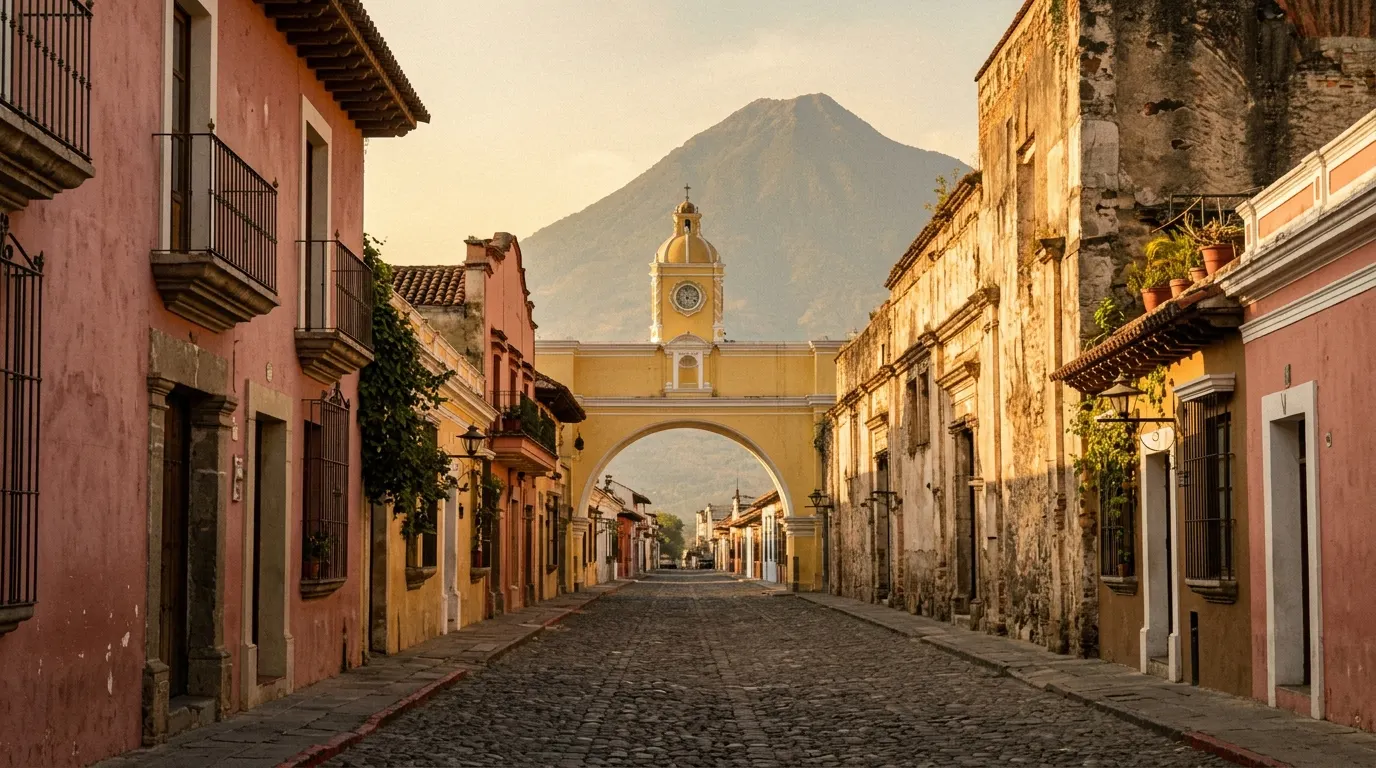
If you are building a bucket list of the best family cities in other parts of the world, don't stop at Central America. For island charm with incredible British colonial history and safe beaches, check out our City Guide: /city/bermuda. For an incredibly clean, safe, and progressive introduction to East Africa, our City Guide: /city/kigali-rwanda is essential reading. And if you want a relaxed, walkable capital city that serves as a gateway to epic safaris, our City Guide: /city/windhoek-namibia breaks down exactly how to do it with kids.
Age-by-Age Guide to City Travel
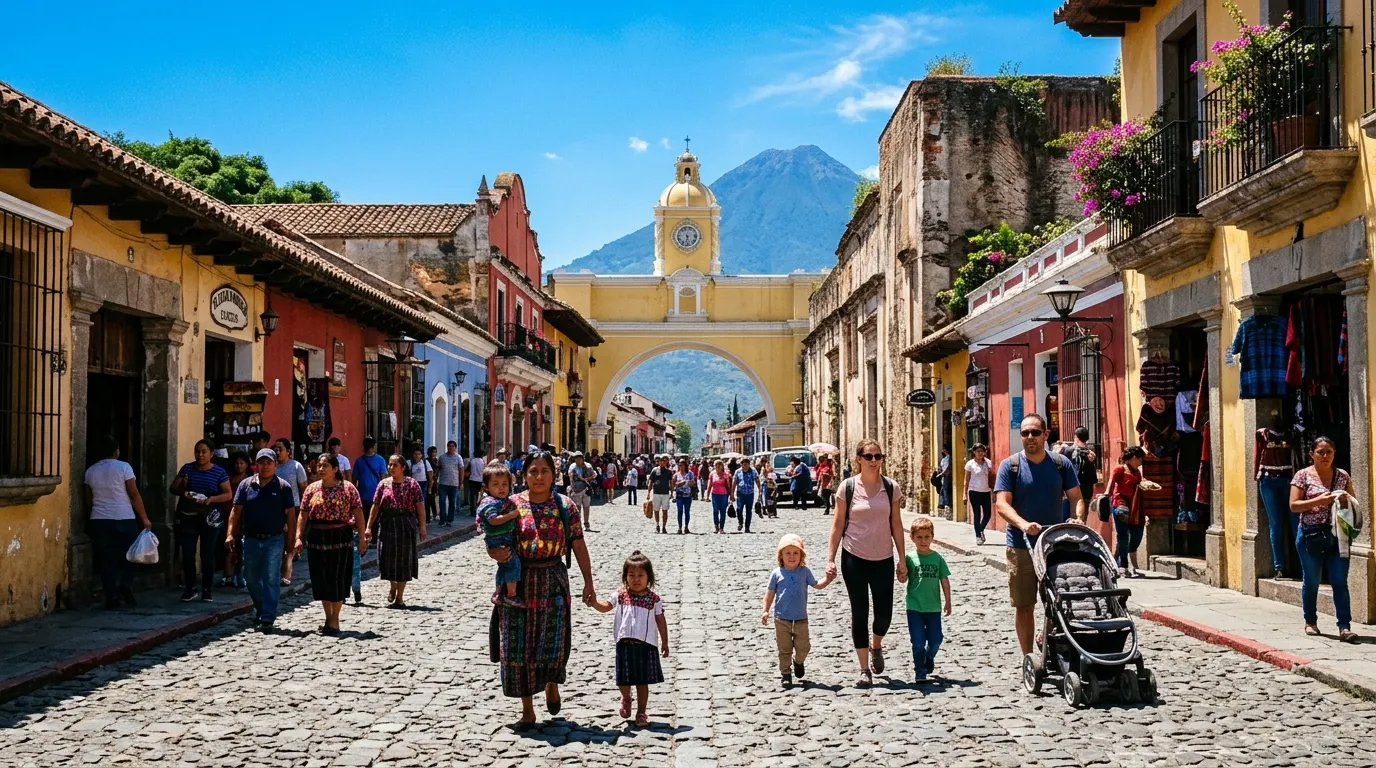
Navigating cobblestone streets and historic sites requires different strategies depending on who is in your travel crew.
Toddlers (Ages 2-3)
Cobblestones are the enemy of standard strollers. In European cities like Rome or Central American cities like Antigua, you need a heavy-duty jogging stroller with pneumatic tires, or better yet, a comfortable structured baby carrier. Plan your days around early morning explorations when the streets are empty, and rely heavily on enclosed courtyards (like Casa Santo Domingo) where toddlers can safely wander without traffic concerns.
Preschoolers (Ages 3-5)
This age group thrives on novelty but fatigues quickly. Break up historical sightseeing with tactile experiences. In Antigua, the chocolate-making workshop is the perfect two-hour reset. Keep snacks on hand constantly. When visiting ruins or churches, give them a simple scavenger hunt (e.g., "Find three yellow flowers" or "Spot a statue with a sword") to keep them moving forward without complaining.
School-Age (Ages 6-10)
School-aged kids are ready for bigger adventures but still need motivation. This is the perfect age for the Pacaya Volcano hike. The promise of roasting a marshmallow over actual volcanic rock will power them up the trail. They are also old enough to appreciate the scale of things like the Giant Kite Festival or the massive ships in Stockholm's Vasa Museum. Give them their own digital camera or an old smartphone to take photos—it completely changes their engagement level.
Tweens & Teens (Ages 11-14)
Autonomy is the name of the game. Let them navigate the local markets to buy fruit, or put them in charge of mapping the walking route to Cerro de la Cruz. Teens will appreciate the aesthetic, highly photographable nature of these cities. Engage them in the cooking classes where they can use knives and learn real culinary skills, and allow for some slower mornings where they can sleep in while you grab a local coffee.
Pro Tips from Parents for City Travel
- Pace for the Slowest Walker: Calculate how long Google Maps says a walk will take, and double it. Between looking at stray cats, stopping for ice cream, and navigating uneven sidewalks, you will move slowly. Embrace it.
- Book Accommodations with Kitchens: Even if you plan to eat out for lunch and dinner, having the ability to make a quick, familiar breakfast and store cold milk or fresh market fruit is a massive stress reliever.
- The "One Big Thing" Rule: Schedule only one non-negotiable activity per day. If you do a volcano hike in the morning, leave the afternoon completely open for resting or wandering.
- Embrace the Midday Break: Both in Southern Europe and Central America, the midday sun is intense. Follow the local rhythm: explore in the morning, retreat to your accommodation for a rest or pool time from 1:00 PM to 4:00 PM, and head back out as the city cools down.
- Carry Local Currency in Small Bills: Whether buying a carved wooden toy in a European square or tipping a horse guide on Pacaya, having small denominations of local cash prevents awkward moments and allows kids to practice buying small treats themselves.
Building a family travel itinerary doesn't mean you have to sacrifice your own interests for theme parks and resort pools. By targeting destinations that offer rich history alongside walkable, engaging environments, you can create trips that resonate with everyone. Whether you stick to the classic European capitals or venture out to find the best family cities in other regions like Antigua Guatemala, the shared memories of exploring ancient ruins, tasting fresh chocolate, and navigating new cultures together are worth every bit of the planning.